In people's minds, most common turtles are no bigger than the palm of a hand, and even the slightly larger ones are no bigger than a plate. However, in the wonderful world of nature, there are many giant turtles with enormous bodies, some of which are even taller than humans.
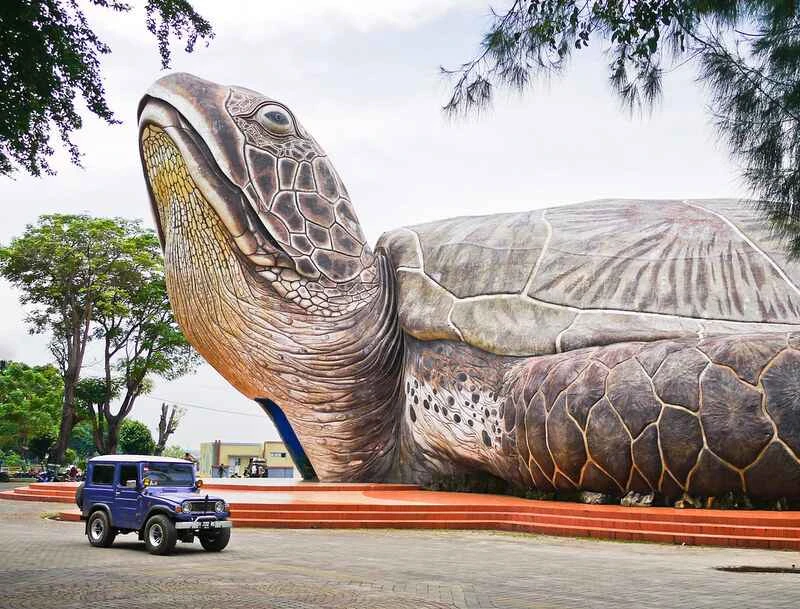
Today, we've compiled a list of the world's ten largest turtles, including: leatherback tortoises , Aldabra giant tortoises , Galapagos giant tortoises , loggerhead turtles , green sea turtles , hawksbill turtles , Sulcata giant tortoises , alligator snapping turtles , Malayan giant tortoises, and giant side-necked turtles . Let's learn about the spectacular nature of these amazing creatures!
1. Leatherback turtle (2 meters)

Leatherback turtles are enormous marine creatures and the largest species in the order Testudines. They average over 2 meters in length and typically weigh over 100 kilograms. Leatherback turtles primarily inhabit the upper and middle layers of tropical waters, distributed across the Atlantic and Pacific Oceans, feeding on fish, shrimp, crabs, squid, jellyfish, and seaweed. A stranded leatherback turtle measuring 2.5 meters long and weighing a whopping 916 kilograms was once found in Wales, resembling a miniature submarine moored on a beach from a distance.
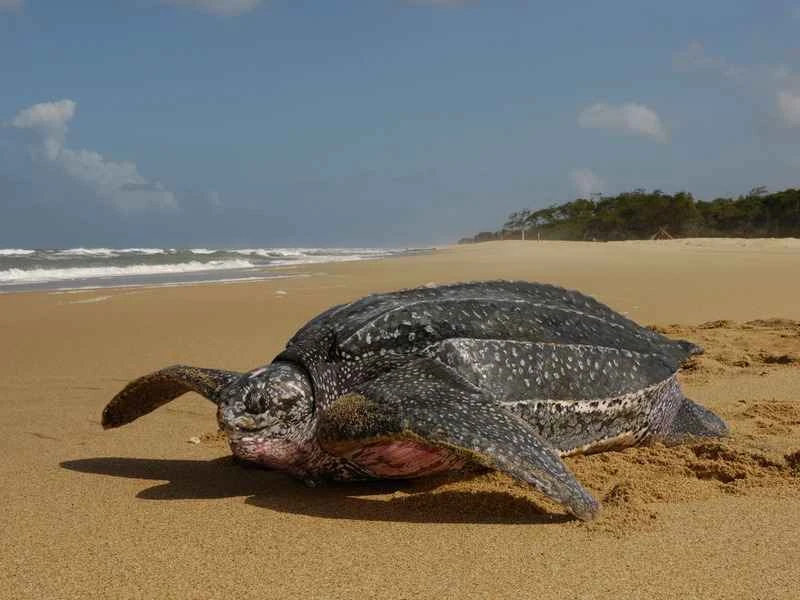
Sadly, even these magnificent deep-sea creatures cannot escape the impact of human activities. Due to increasing marine pollution, the leatherback turtle population is declining rapidly, and perhaps in the future, people will only be able to see these amazing creatures in museums through specimens.
2. Aldabra giant tortoise (1.8 meters)
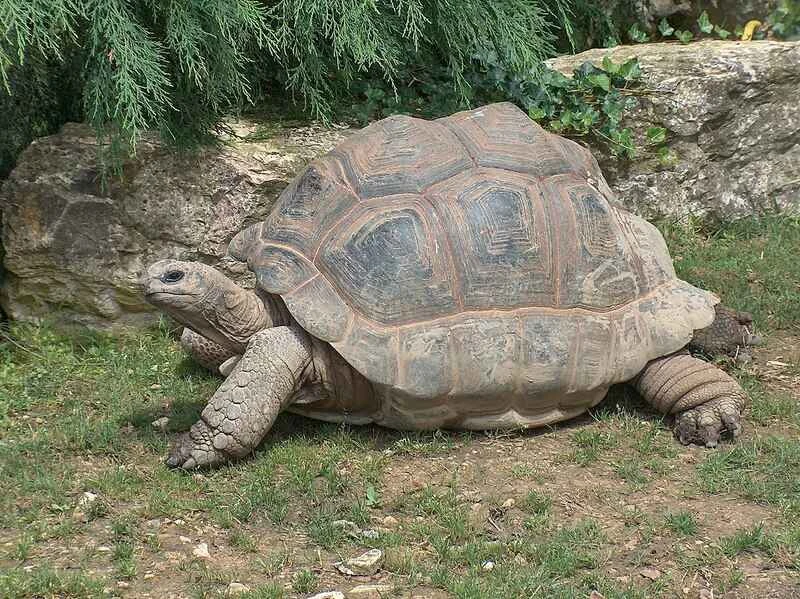
The Aldabra giant tortoise is the second largest tortoise after the Galapagos giant tortoise, with adults reaching a carapace length of up to 1.8 meters and a weight of up to 375 kilograms. They mainly inhabit the Aldabra Islands of the Seychelles. Due to the remoteness of these islands, the Aldabra giant tortoise's habitat has been well protected, resulting in a large population that is more than five times the size of the Galapagos giant tortoise population, making it arguably the world's largest tortoise population.
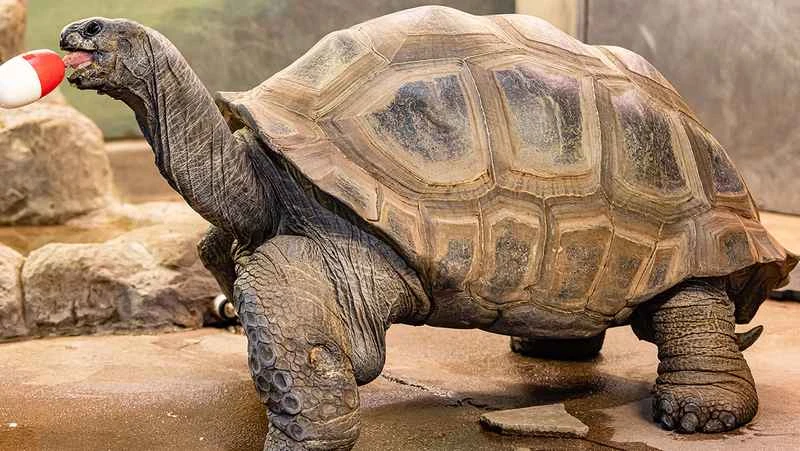
Aldabra giant tortoises are herbivores, primarily feeding on grass, leaves, and plant stems, but they will occasionally prey on small invertebrates and even scavenge carrion. Their lifespan is astonishing; one Aldabra giant tortoise named "Adevita" was recorded to have died at the age of 255, considered one of the longest-living tortoises in history.
3. Galapagos tortoise (1.2 meters)
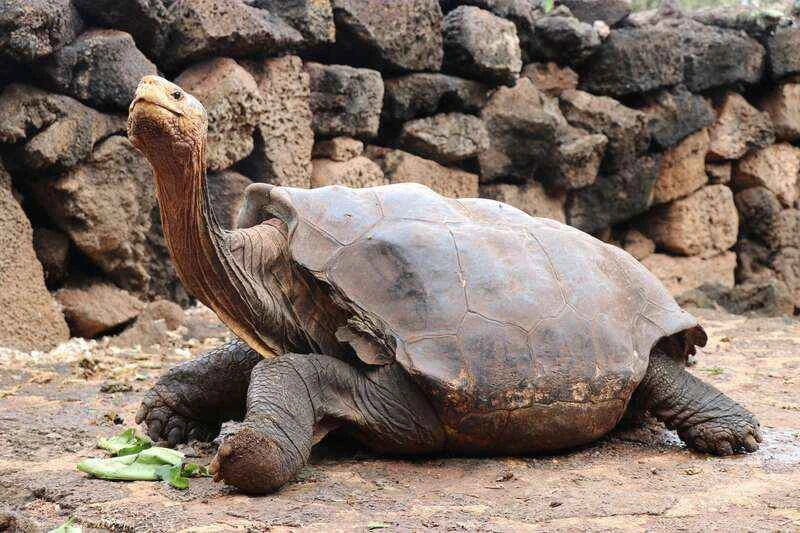
The Galapagos tortoise is the largest living land tortoise, hence its name. They typically reach a length of 1.2 meters, with adult males weighing approximately 272 to 320 kilograms, while females weigh between 136 and 180 kilograms.
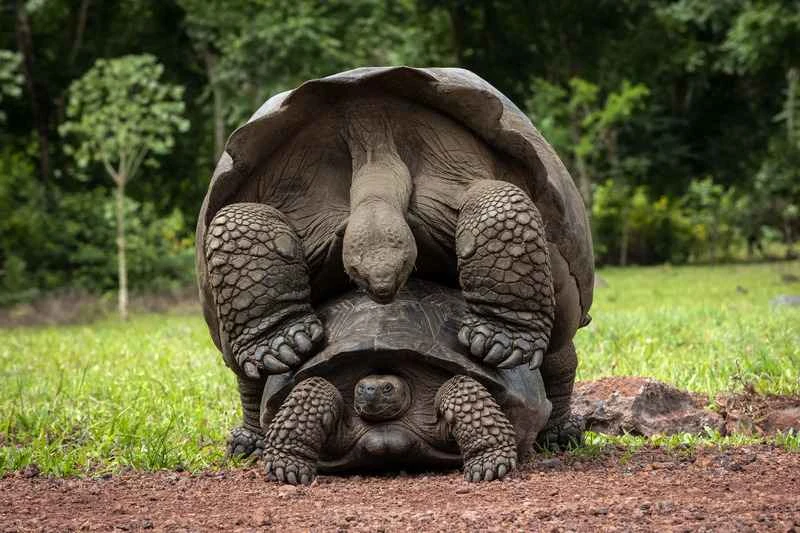
Galapagos tortoises are mainly distributed in the Galapagos Islands of Ecuador, typically inhabiting densely vegetated areas. Their diet includes cacti, grasses, leaves, moss, lichens, and berries. These enormous creatures are not only massive in size but also have an astonishing lifespan. In the wild, they can live for over 100 years, making them one of the longest-living species in the animal kingdom and a true symbol of longevity.
4. Loggerhead turtle (1-2 meters)
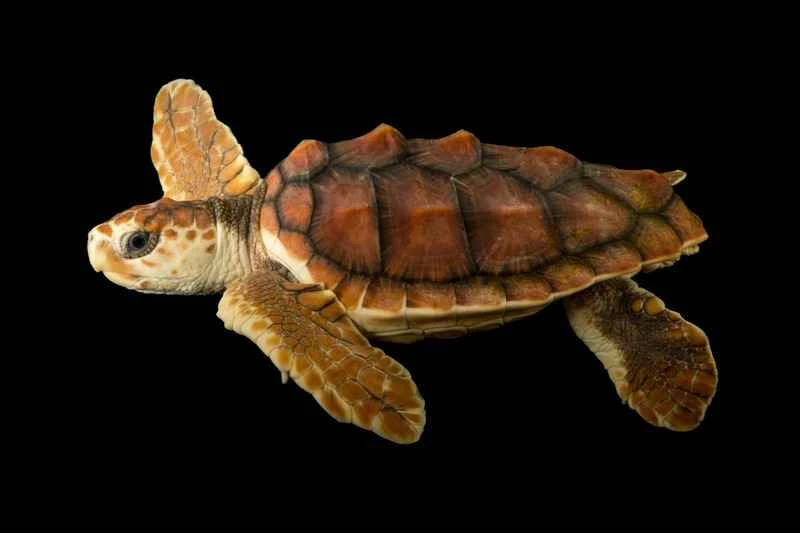
Loggerhead turtles are among the larger members of the Cheloniidae family, measuring approximately 100 to 200 centimeters in length, with a carapace length between 740 and 870 millimeters, and a weight reaching around 100 kilograms. They primarily inhabit the warm waters of Southeast Asia and the Indian Ocean, often found in coral reefs and continental shelf areas, and sometimes also in bays, estuaries, and saltwater lakes.
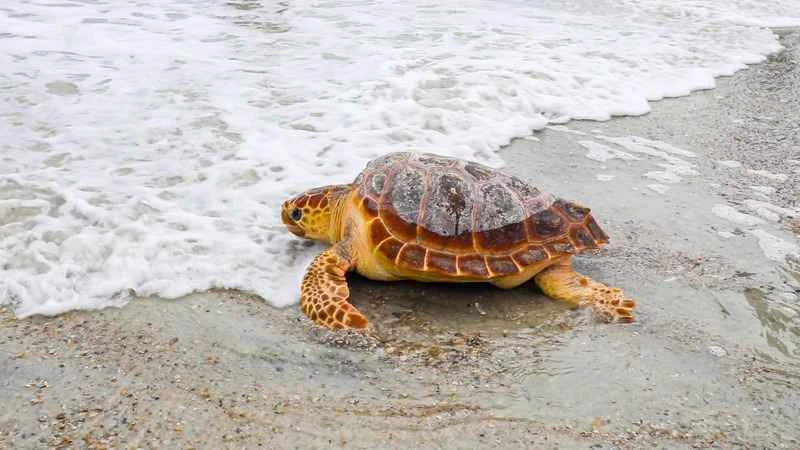
Loggerhead turtles primarily feed on benthic or floating crustaceans and mollusks, with a particular preference for cephalopods. They also prey on jellyfish, fish eggs, and sometimes consume seaweed and other plant-based foods. However, due to overhunting and the indiscriminate harvesting of their eggs by humans, the loggerhead turtle population has declined sharply, and they are now listed as a Class II protected wild animal in China.
5. Green sea turtle (80-150 cm)
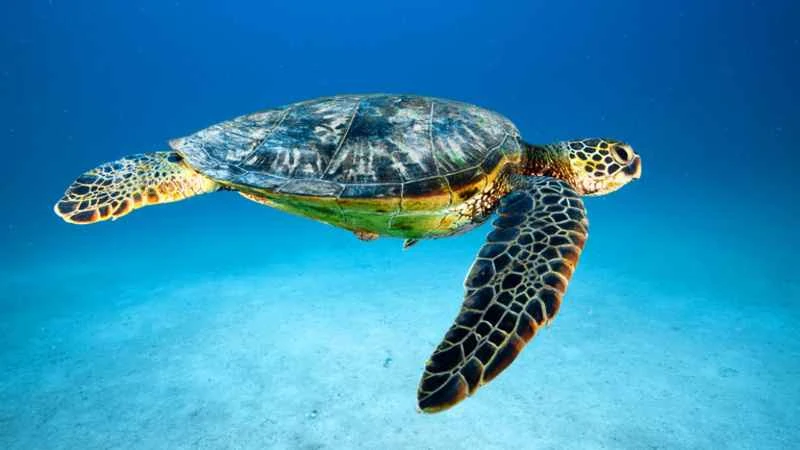
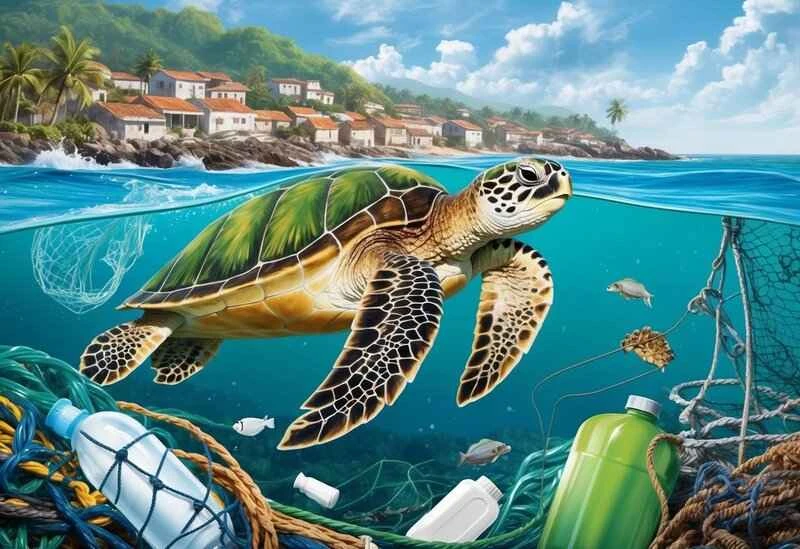
Green sea turtles are among the larger species of sea turtles, named for the green fat inside their bodies. They range in length from 80 to 150 centimeters and weigh between 65 and 136 kilograms, with the largest individuals reaching a carapace length of 153 centimeters and a weight of up to 250 kilograms.
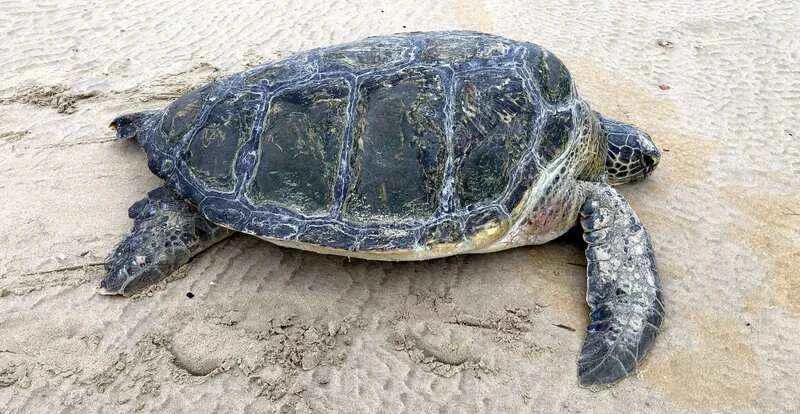
Green sea turtles spend their entire lives in the ocean, widely distributed in tropical and subtropical waters worldwide, especially favoring warm, shallow waters near the coast where the water temperature is suitable and food resources are abundant. They forage in specific areas and lay their eggs in another fixed location. Green sea turtles primarily feed on seaweed, but sometimes also prey on mollusks, arthropods, and small fish. Notably, green sea turtles consume the most seaweed among sea turtle species and are the only sea turtles that bask on beaches.
6. Hawksbill turtle (60-170 cm)
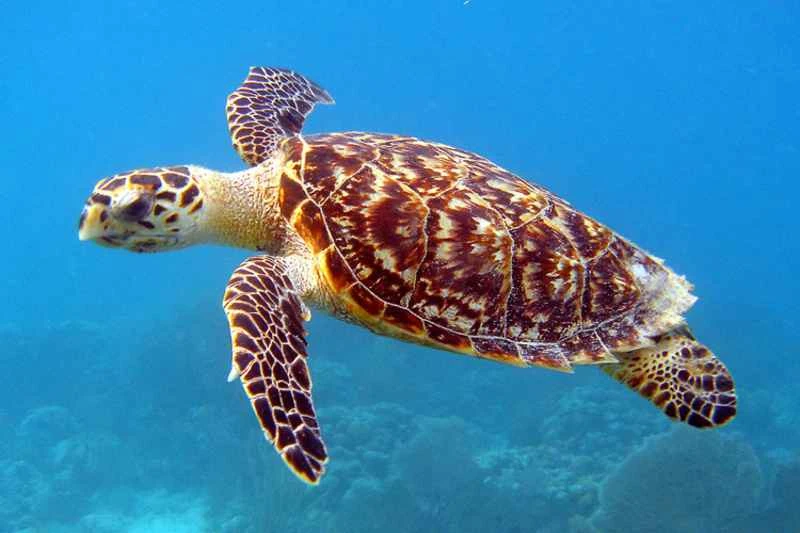
Hawksbill turtles, often called "jewels of the sea," are extremely rare animals. Because their beaks resemble bird beaks, they are also known as hawksbill turtles. The hawksbill turtle's carapace is flat, brownish-red in color, and covered with light yellow markings, giving it a striking and highly prized appearance. They range in length from 60 to 170 centimeters and typically weigh about 45 kilograms, making them one of the smaller members of the sea turtle family.
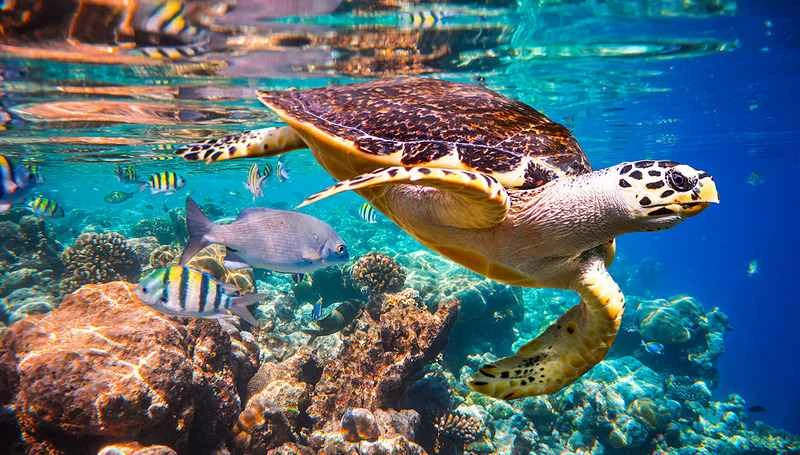
Hawksbill turtles are mainly distributed in tropical and subtropical waters of Southeast Asia and the Indian Ocean, often inhabiting shallow waters such as coral reefs, bays, estuaries, and clear lagoons along the coast. However, due to overfishing and excessive demand for their shells, the hawksbill turtle population has declined sharply and is now on the verge of extinction, listed as a Class II protected wild animal in China.
7. Sulcata tortoise (83 cm)
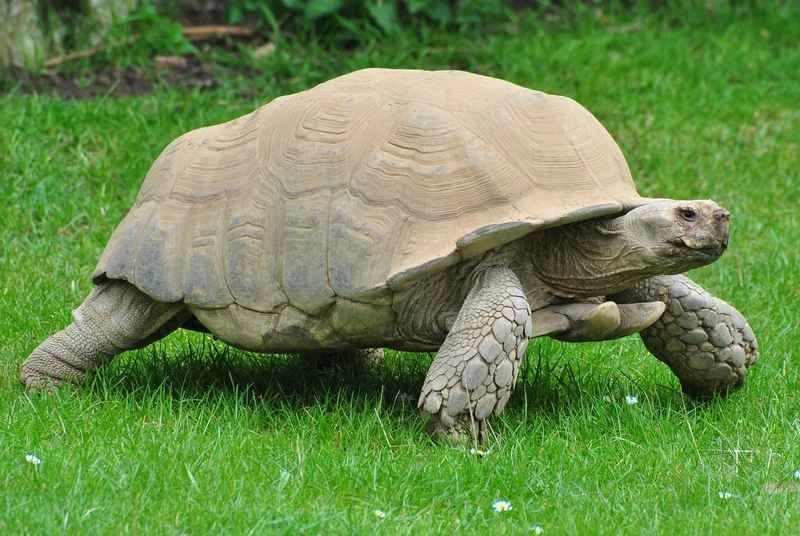
The Sulcata tortoise, also known as the Sulcata giant tortoise or Sulcata giant tortoise, is the third largest land tortoise in the world. Adult Sulcata tortoises can reach 83 cm in length and weigh about 105 kg, with a distinctly convex carapace. Although their shells do not have the bright patterns of radiated tortoises, they are still highly sought after for their rugged and powerful appearance and wild style.
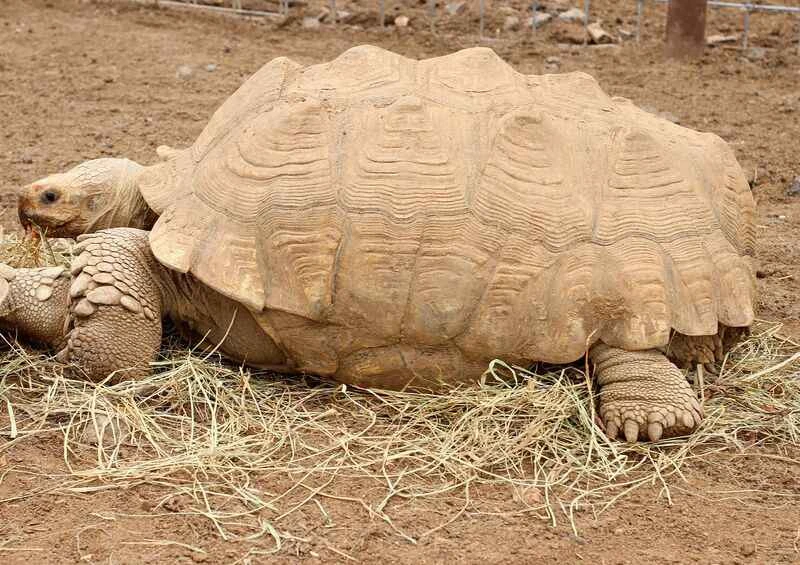
Sulcata tortoises are mainly distributed in African countries such as Chad, Egypt, and Nigeria, and typically inhabit deserts and arid grasslands. To avoid the scorching heat of the day, they usually begin their activity at dawn or dusk. Their diet consists mainly of high-fiber plants, such as grass, cacti, and lettuce, which not only provide them with nutrition but also replenish the water they lack in the desert environment.
8. Alligator snapping turtle (75-90 cm)
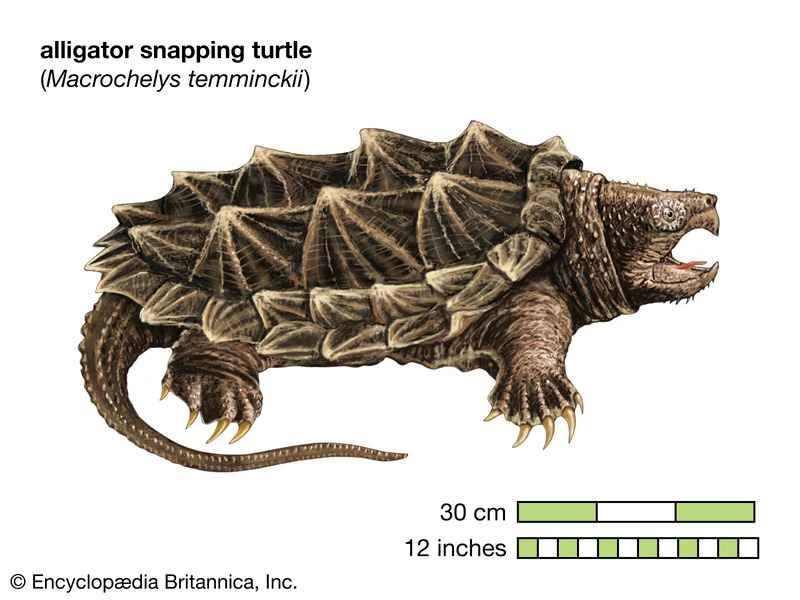
The alligator snapping turtle is one of the largest freshwater turtles in the world, retaining many primitive turtle characteristics. Their carapace is undulating like mountains, their beaks are sharp like eagle beaks, their body length is usually between 0.75 and 0.9 meters, their weight is about 45 to 75 kilograms, and the largest individuals can reach 107 kilograms.
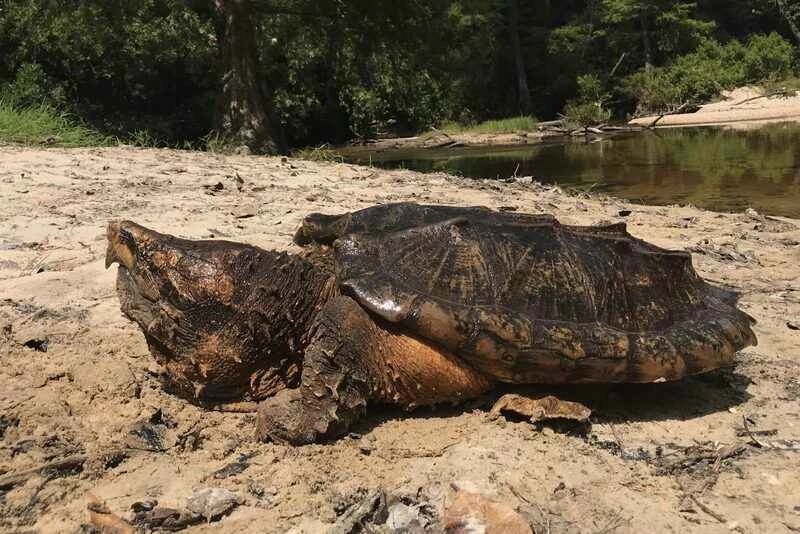
Alligator snapping turtles are mainly distributed in the Mississippi River basin of the United States, and commonly inhabit rivers, lakes, ponds, and swamps. They are adept at camouflaging themselves as a piece of decaying wood, lying still in the mud and sand of the water, and using a small red worm-like "lure" at the tip of their tongue to attract prey. When fish, water birds, snails, shrimp, or water snakes approach, the alligator snapping turtle will quickly strike and swallow its prey whole.
9. Malaysian Giant Tortoise (50-80 cm)
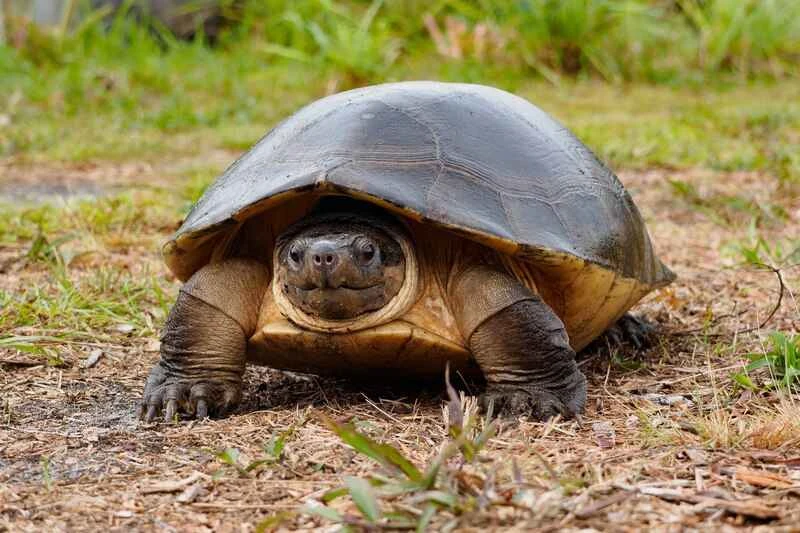
The Malayan giant tortoise is a large freshwater turtle with a dark brown carapace. It typically measures 0.5 to 0.8 meters in length, but can reach up to 1.2 meters. This giant tortoise has a wide distribution, but is mainly concentrated in Borneo. Malayan giant tortoises are gregarious, often living in groups of three to four. They are omnivorous, consuming pork, beef, poultry offal, and various fruits and vegetables.
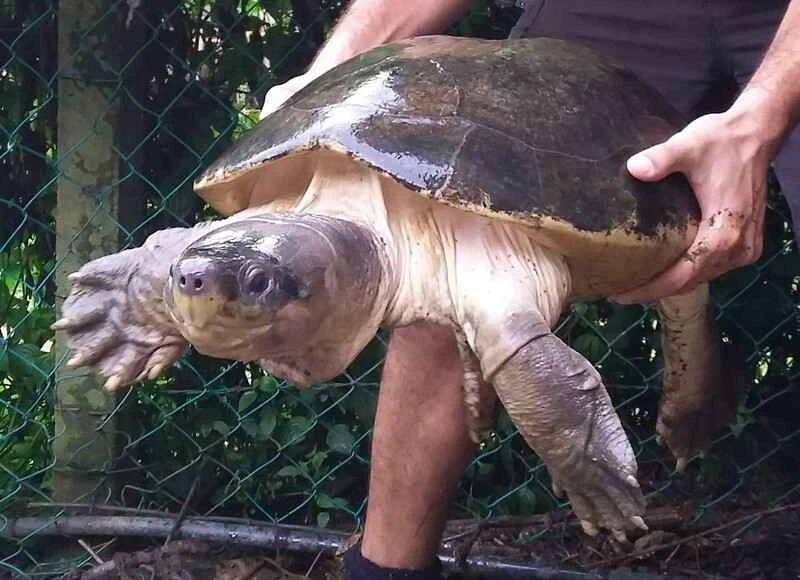
Young Malaysian giant tortoises are docile, timid, and shy, while adults are relatively aggressive and will often retaliate with a powerful bite if captured. It's worth mentioning that these enormous creatures can be trained to perform simple tricks, such as feeding acts and climbing stairs, which is quite entertaining.
10. Giant side-necked turtle (55-75 cm)
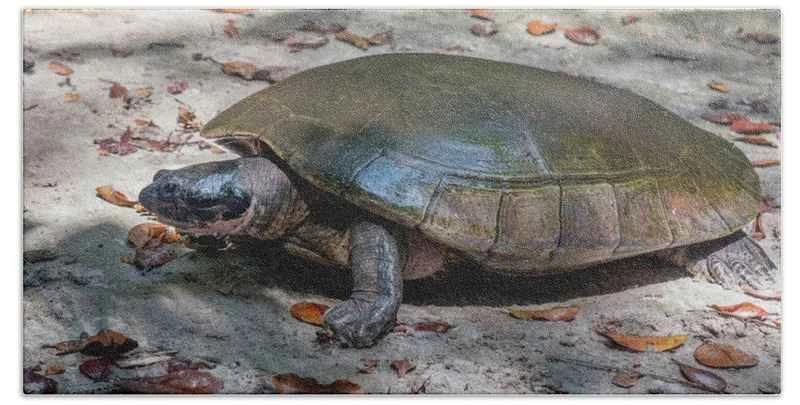
The giant side-necked turtle, also known as the South American river turtle, is the largest living freshwater turtle in South America and also the largest side-necked turtle. This species exhibits significant sexual dimorphism; adult males have an average carapace length of 55 cm, while adult females can reach an average carapace length of 75 cm, with some even approaching 100 cm.
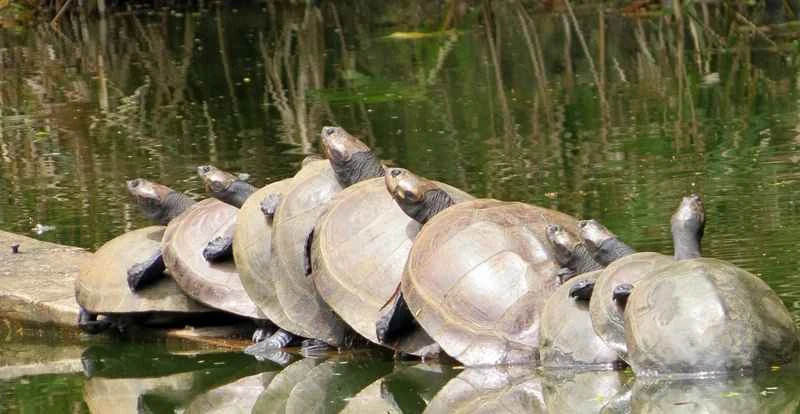
Giant side-necked turtles have an extremely wide distribution, found almost throughout northern South America. They are primarily herbivorous and are highly sought after by turtle enthusiasts due to their distinctive markings and large size. In the Western pet market, juvenile giant side-necked turtles are among the most popular turtle species, with extremely high demand.
The list of the world's ten largest turtle species was compiled based on a comprehensive consideration of their morphological characteristics, popularity, and influence. If you have any questions, please feel free to comment/criticize at the end.