Koi are among the world's most popular ornamental fish, beloved for their vibrant colors and elegant swimming style. Among the many varieties of koi, the butterfly koi is a particularly noteworthy and special breed. So, what exactly are the differences between butterfly koi and common koi? This article will explore in detail the differences in appearance, characteristics, temperament, and care requirements, helping you better understand these two beautiful fish and make informed decisions about choosing the right koi to keep.
Appearance differences: The distinction between common koi and butterfly koi
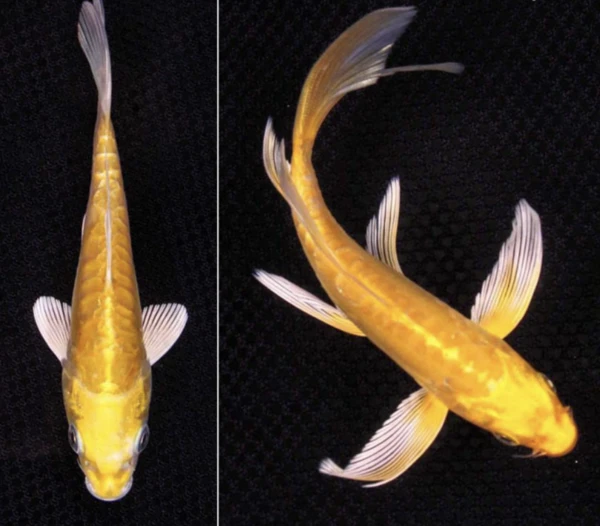
The most significant difference between common koi and butterfly koi is their body shape and fin shape.
1. Length and shape of the fins
The most distinctive feature of Goi Butterfly koi is their longer and more elegant fins. Compared to ordinary koi, their caudal, dorsal, and pelvic fins are all longer, presenting a graceful shape like butterfly wings. In particular, the caudal fin is long and wide, resembling the fluttering wings of a butterfly, hence the name "Butterfly Koi".
While ordinary koi have relatively short fins, and although they also have a good streamlined shape and graceful swimming posture, their appearance is more compact and standard compared to butterfly koi.
2. Body type and height
Butterfly koi are generally more slender than ordinary koi, with a longer body and sometimes exhibiting a long, flowing shape. Ordinary koi, on the other hand, are relatively wider, especially in the back and abdomen.
3. Colors and Patterns
Like regular koi, butterfly koi have a rich variety of colors and patterns, such as red, white, black, and yellow. However, butterfly koi usually have a more even color distribution and smoother patterns, while regular koi may have more irregular spots or color variations.
Personality Differences: The Personality Differences Between Butterfly Koi and Regular Koi
1. Activity level
Butterfly koi are generally more active than common koi, preferring to swim in ponds and displaying their beautiful fins and elegant swimming style. Common koi, on the other hand, may be slightly quieter, especially in stable environments, and they usually maintain a more peaceful swimming motion.
2. Adaptability
Because of their unique body shape and fins, butterfly koi require more space to display their elegant swimming posture. Therefore, butterfly koi may have relatively higher environmental adaptability requirements. Common koi, on the other hand, are more adaptable, can live in smaller ponds, and are suitable for most beginners.
Care requirements: Differences in care between butterfly koi and ordinary koi
Although the basic care requirements for butterfly koi and regular koi are similar, there are still some subtle differences in their care due to their different appearances.
1. Pond and Space Requirements
Butterfly koi, due to their longer body and larger fins, require more space to swim. The ideal pond size should be at least 1,000 gallons (about 3,800 liters) or more, and the pond depth should be sufficient for them to swim freely. In contrast, ordinary koi require relatively less pond space, with about 600 gallons (about 2,300 liters) being sufficient.
2. Water quality requirements
Both types of koi have very high requirements for water quality, needing to maintain clean and stable water. The suitable water temperature is 18℃ to 24℃, the pH value should be maintained between 7.0 and 8.0, and the concentrations of ammonia and nitrite must be kept as low as possible. In terms of water quality management, there is no significant difference between butterfly koi and ordinary koi; both are very sensitive to changes in water quality.
3. Feeding and Diet
Butterfly koi have basically the same dietary requirements as regular koi. They are omnivorous fish and prefer high-quality koi food, insects, and small aquatic plants. It's important to control the amount of food given to avoid overfeeding, which can pollute the water.
4. Health Management
Like regular koi, butterfly koi are susceptible to common health problems including parasite infections, skin diseases, and fin rot. To maintain their health, it is crucial to regularly check their fins and bodies for abnormalities and to keep the water clean.
Price Difference: Price Comparison Between Butterfly Koi and Regular Koi
Because of their longer fins and elegant shape, butterfly koi require more sophisticated breeding and rearing techniques, making them generally more expensive than common koi. Especially high-quality butterfly koi with exceptionally beautiful colors and patterns can cost several times more than common koi. Common koi, on the other hand, are more affordable and suitable for enthusiasts with limited budgets.
Below is a comparison table between butterfly koi and ordinary koi:
| Comparison Projects | Butterfly Koi | Common Koi |
|---|---|---|
| Appearance features | Long and elegant fins, a tail fin like butterfly wings, a slender body, and evenly distributed color. | The fins are relatively short, the body is broad, and the color is sometimes irregular or spotted. |
| Fin morphology | The fins are long and streamlined, resembling butterfly wings. | The fins are relatively short, a standard koi fin shape. |
| Body type and height | Its body is slender and relatively large, making it suitable for spacious ponds. | The body type is relatively compact, with a wider back and abdomen. |
| Activity | Swims gracefully and actively, and enjoys showing off her swimming style. | Moderate activity level, relatively steady swimming. |
| Adaptability | It has high environmental requirements, requiring a large space and stable water quality. | Highly adaptable, it can live in relatively small ponds. |
| Pond size requirements | A pond of at least 1000 gallons is needed. | Suitable for ponds of 600 gallons or more |
| Water quality requirements | The water quality requirements are strict; it must be kept clean and stable. | The water quality requirements are equally high, but it is slightly more adaptable to changes. |
| Dietary habits | Omnivorous, they prefer koi food, insects, and aquatic plants. | Also omnivorous, with a relatively simple diet. |
| Health Management | Easily affected by water pollution, fins and body need to be checked regularly. | Highly adaptable, but also requires regular health checkups. |
| price | Higher, especially varieties with distinctive colors and patterns. | The price is relatively affordable, making it suitable for most beginners. |
The comparison shows that butterfly koi have a more elegant appearance and longer fins, making them suitable for larger ponds and environments with high water quality requirements. Common koi, on the other hand, are more resilient and adaptable, suitable for ponds of all sizes, and are the first choice for many novice fishkeepers. Based on your fishkeeping experience, pond conditions, and personal preferences, you can choose the koi variety that best suits you.
Summary: The main differences between butterfly koi and ordinary koi
In general, the main differences between butterfly koi and common koi lie in their appearance, swimming style, and care requirements. Butterfly koi, with their long, graceful fins and slender bodies, appear more elegant and captivating, but they require slightly more space and water quality. Common koi, on the other hand, are more resilient and adaptable, making them suitable for most beginners. If you prioritize appearance and elegant swimming movements when choosing koi, butterfly koi are a good choice; if you prefer a more resilient and adaptable koi, then common koi may be more appropriate.
Regardless of the type of koi you choose, proper care is key to ensuring their healthy growth. Hopefully, this article will help you understand the differences between butterfly koi and ordinary koi, and provide valuable guidance for your koi breeding endeavors.