Overview
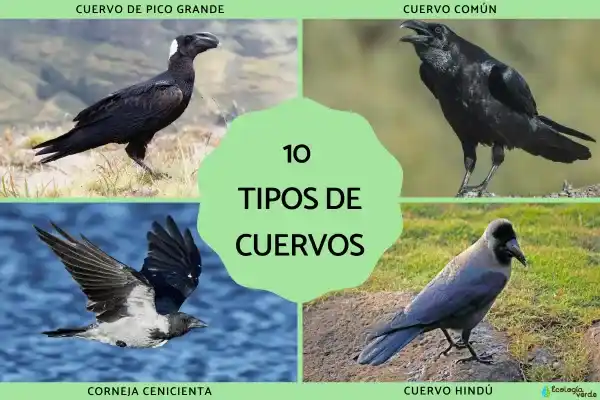
Crows and ravens both belong to the genus *Corvus * and are among the most intelligent and adaptable birds in the world. They are known for their entirely black plumage, strong learning abilities, excellent tool-using skills, and their mystical symbolism in various cultures.
Although they often give the impression of being similar in appearance, different species of crows vary significantly in size, habitat, plumage color, behavior, and distribution. This article introduces 10 representative crow and raven species and provides more in-depth information on their habits and ecology.
1. The large-billed raven ( Corvus crassirostris )
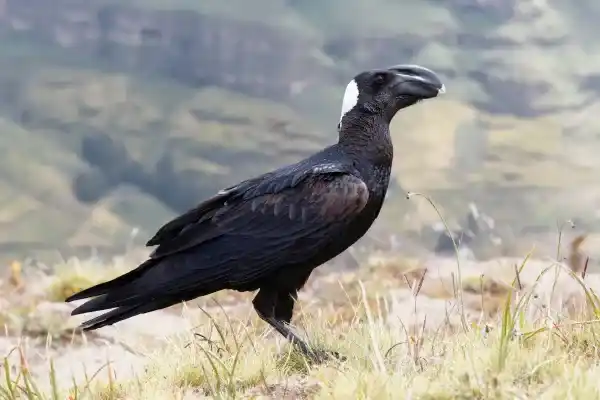
The most distinctive feature of the large-billed raven is its exaggeratedly large, thick beak, almost comparable to that of the toucan. The beak is entirely black with a slight white tip, making it quite unique.
Features
It is one of the largest and heaviest crows, with a body length of about 65 cm.
Weight can reach 1–1.5 kg
There are noticeable white patches on the back of the neck.
Found only in the highlands of the Horn of Africa: Ethiopia, Somalia, and Eritrea
As heavy crows, they possess high intelligence and a strong ability to adapt to survival.
2. Common Raven ( Corvus corax )
The common raven is widely distributed in the Northern Hemisphere and is the most well-known and widespread raven.
Features
It is about 63 cm long and is a large crow.
They inhabit forests, mountains, coastlines, and areas near human settlements.
Known for its complex calls and intelligent behavior
Sensitive to rapid environmental changes, they may migrate due to stress.
It plays an important role in mythology, literature and culture around the world.
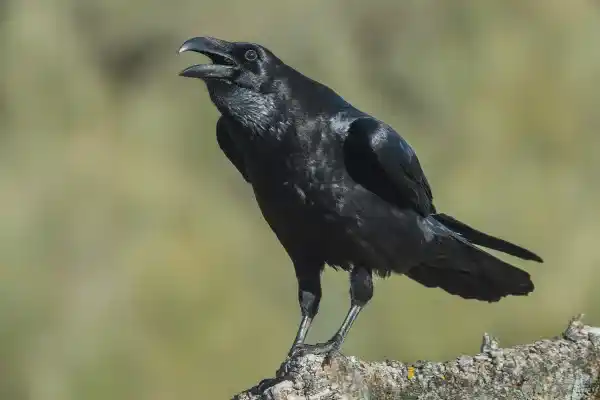
3. Desert Raven ( Corvus ruficollis )
It looks somewhat like a common raven, but it is more slender overall and has a thinner, longer beak.
Features
Body length approximately 50 cm
The entire body is black, with the head and neck area displaying a golden-bronze sheen in sunlight.
The remaining feathers shimmered between blue-purple and metallic sheen.
They live in the desert regions of North Africa, the Middle East, and the Arabian Peninsula.
It is one of the crows that are specifically adapted to arid environments.
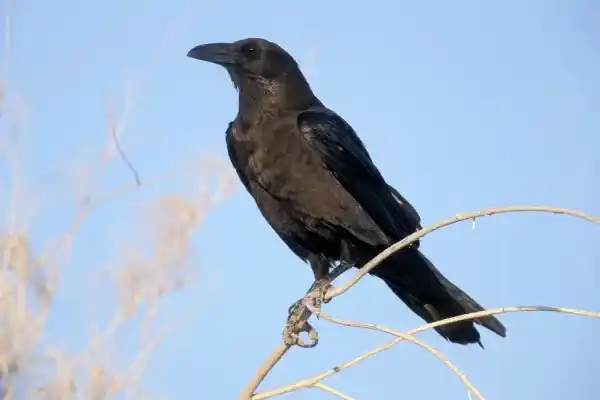
4. Magpie-crow / Pterobreasted Crow ( Corvus albus )
It gets its name from the large patch of white feathers covering its chest and abdomen, resembling a "white vest," and is one of the crows with the most striking contrasting colors.
Features
Active in a wide area south of the Sahara
Commonly found in open areas, farmland, and grasslands
Omnivorous and adept at scavenging, it steals eggs, eats carrion, and feeds on injured animals.
Often found near landfills and slaughterhouses
Its strong adaptability has made it a very successful crow population in Africa.
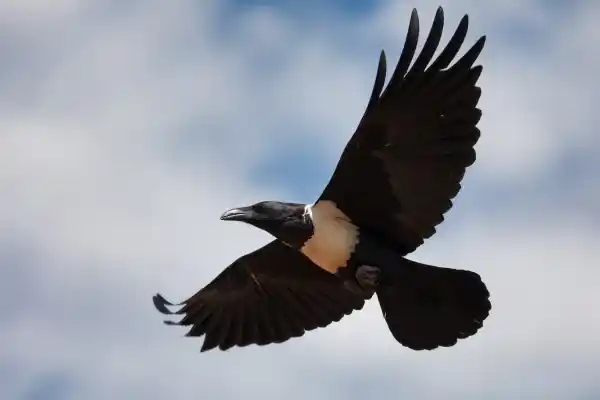
5. Crow ( Corvus corone )
Often called a "Carrion Crow" in English, it is very common in Eurasia.
Features
Body length approximately 48 cm
The feathers are black and glossy with a greenish sheen.
They often follow foxes and take advantage of the situation to steal the leftovers of their prey.
Largely distributed around human settlements
The number of mature individuals is estimated at 54-92 million.
It is one of the crows that is extremely adaptable to urban environments.
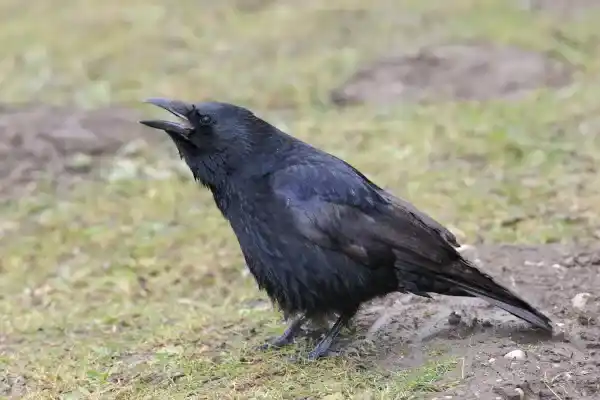
6. Cuban Raven ( Corvus nasicus )
It is found only in the Caribbean region and is endemic to Cuba and surrounding islands.
Features
Able to adapt to logging and drastically changing environments
While it can tolerate human activity, it still relies on a certain amount of tree cover.
Diverse vocalizations, unique calls
It is extremely resilient in agricultural landscapes and is one of the most common crows in the area.
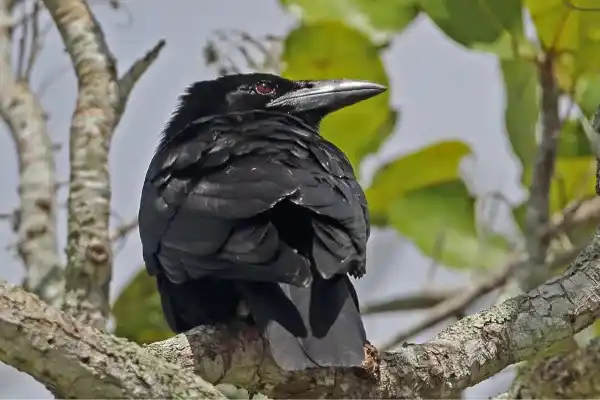
7. Grey Wood Crow ( Corvus cornix )
Commonly known as the "hooded crow" because the gray and black colors create a distinct "cloak" pattern.
Features
Body length approximately 45 cm
The body and neck are grayish-white, while the head, wings, and legs are black.
Distributed in northeastern Europe, parts of West Asia and the British Isles
Some ethnic groups migrate in winter.
It is very closely related to Corvus corone (the crow), and they can even interbreed.

8. American Raven ( Corvus brachyrhynchos )
Commonly found in the United States and Canada, it is one of the most common crows in North America.
Features
Body length 40–54 cm , smaller than common ravens
The mouth is relatively short, but the head is thick.
The tail is fan-shaped or slightly diamond-shaped.
Extremely adaptable, it can survive in cities, farmlands, and forests.
It can recognize human faces (proven experimentally).
Social structures are complex and often form family groups.

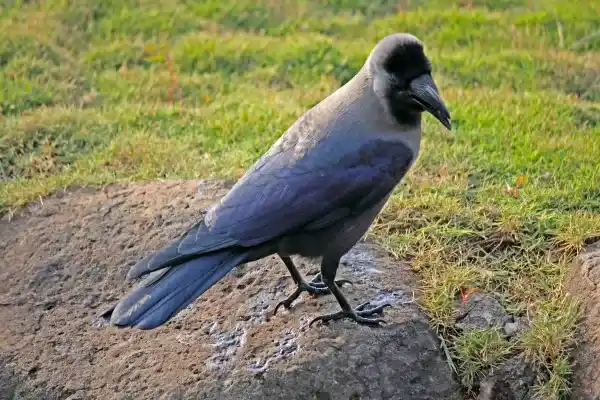
9. House Crow/Indian Crow ( Corvus splendens )
Also known as the "domestic crow", it originated in South Asia and Southeast Asia, and is now considered an invasive species in many parts of the world.
Features
It has a slender body, a gray chest, and a black head, wings, and feet.
Highly associated with humans, they are often found in markets, ports, and garbage dumps.
With a wide range of food sources and strong adaptability
In some countries, these species impact local bird populations and are considered ecologically problematic.
Their ability to spread is astonishing, making them one of the most invasive crows in the world.
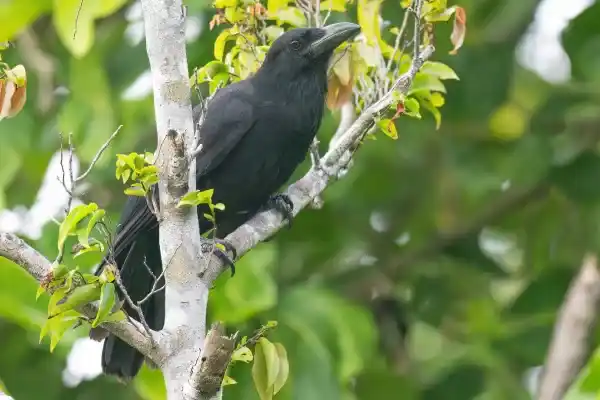
10. The Leader Raven ( Corvus kubaryi )
It gets its name from the distinctive white "collar" on its chest and is a characteristic crow of East Asia.
Features
Distributed in parts of China, Vietnam and Taiwan
Prefers farmland, open spaces and rice paddies
Compared to other crows, they don't go near densely populated areas.
Sensitive to habitat change
Its black and white plumage makes it one of the most visually recognizable crows.
Other notable crow species
There are many more Corvus members worldwide, such as:
Palm crow ( Corvus palmarum )
Fishing crow ( Corvus ossifragus )
Gray crow ( Corvus tristis )
Violet Raven ( Corvus violaceus )
Torres Raven ( Corvus orru )
Bennett's Raven ( Corvus bennetti )
Flores raven ( Corvus florensis )
Somali crow ( Corvus edithae )
Jamaican crow ( Corvus jamaicensis )
Mariana Raven ( Corvus kubaryi )
Each species has its unique distribution, size, behavior, and ecological role.
Summarize
Crows and ravens are among the most fascinating groups in the bird world. They possess not only remarkable intelligence and adaptability, but also hold a unique place in human culture, stories, and research. From the largest ravens in East Africa to the intelligent American ravens of North America, each species showcases the remarkable diversity of the genus *Corvus *.
References
SEO BirdLife (no date) Crow Search. URL: https://seo.org/guia-de-aves/?_nombre_del_ave=cuervo
EBird (undated) search for crows. URL: https://ebird.org/explore
Data Zone by BirdLife (no date) Crow Search. URL: https://datazone.birdlife.org/search?search=crow