Jellyfish, these mysterious marine creatures, have existed on Earth for hundreds of millions of years. Their soft, umbrella-shaped bodies resemble crystal-clear, transparent umbrellas. Different species of jellyfish vary greatly in size; some larger jellyfish can have bell diameters exceeding an astonishing 2 meters. So, do you know which jellyfish in the world are the largest?
Today, we'll be listing the world's ten largest jellyfish, including: Lion's Mane Jellyfish, Nomura Jellyfish, Portuguese Manta Jellyfish, Styx Jellyfish, Shark Jellyfish, Pacific Golden Jellyfish, and Red Moon Jellyfish. Let's step into this world of giant jellyfish floating in the deep sea.
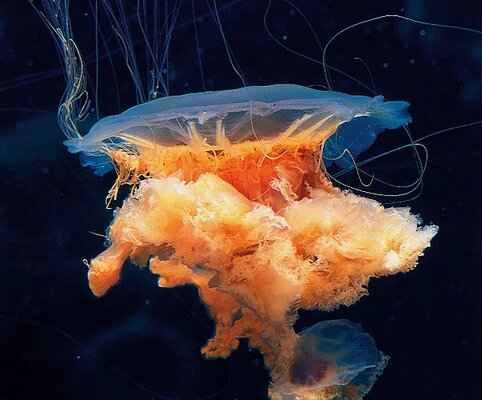
1. Lion's mane jellyfish (umbrella diameter 2.29 meters / tentacles 36.6 meters)
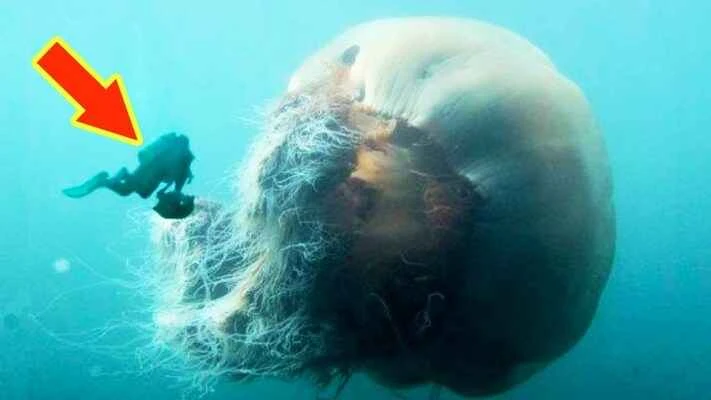
The lion's mane jellyfish, also known as the Arctic mane jellyfish or hairy mane jellyfish, belongs to the family Lepidoptera and is the largest known jellyfish species. It primarily inhabits cold seas such as the Arctic Ocean, the North Atlantic, and the North Pacific, and is rarely found south of 42 degrees north latitude. Its name, "lion's mane jellyfish," comes from its dense, orange-red tentacles, which resemble the mane of a lion.
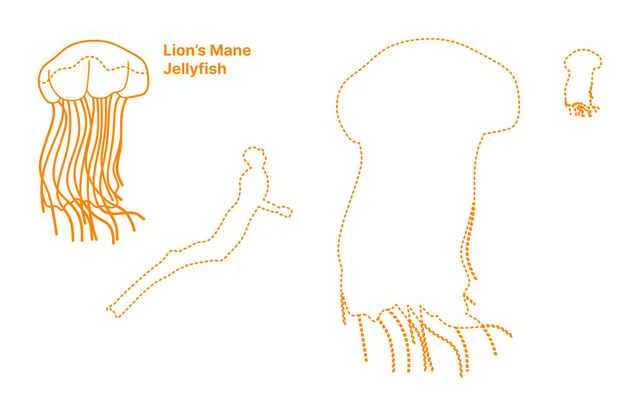
Lion's mane jellyfish typically have a bell-shaped body that can reach 2 meters in diameter and weigh between 200 and 400 kilograms. Their tentacles are divided into eight groups, with a total of up to 150 tentacles; some individuals even have tentacles exceeding 35 meters in length. While most lion's mane jellyfish have a bell diameter of around 50 centimeters to 1 meter, extremely large individuals occasionally appear. The largest lion's mane jellyfish ever recorded had a bell diameter of 2.29 meters, and its longest tentacle extended an astonishing 36.6 meters, making it a true behemoth of the ocean.
2. Nomura jellyfish (umbrella diameter 2-3 meters)
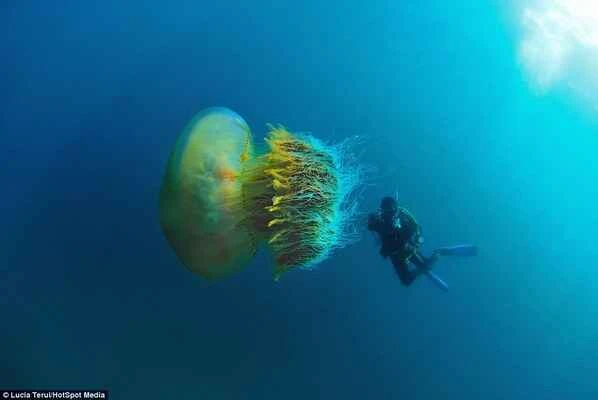
The Nomura jellyfish, also known as the Echizen jellyfish, is one of the largest jellyfish species. If the diameter of its bell is used as a standard to measure jellyfish size, then the Nomura jellyfish is undoubtedly the largest jellyfish species in the ocean. This jellyfish is commonly found in the waters from the Yangtze River Delta to the Sea of Japan, and is abundant in number, occasionally experiencing explosive proliferation. It can weigh up to 200 kilograms, with a bell width comparable to the height of an adult, generally exceeding 1 meter in diameter, and some individuals even reaching 2 to 3 meters in size.
Despite its impressive width, the Nomura jellyfish is slightly inferior to the Lion's Mane jellyfish in terms of tentacles length, thus falling short in the competition for the "world's largest jellyfish." However, in terms of overall magnificence, the Nomura jellyfish remains one of the undisputed giants of the sea.
3. Portuguese man-of-war (tentacles exceeding 25 meters)
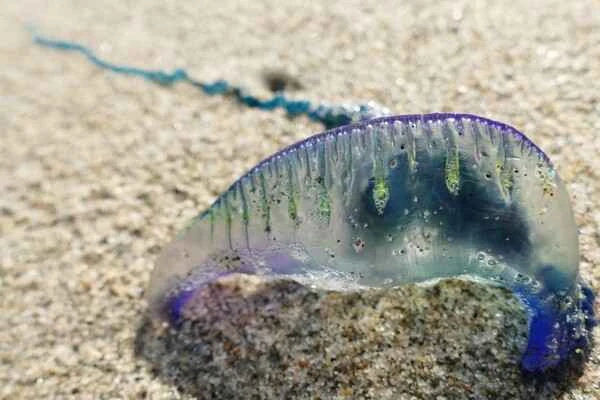
The Portuguese man-of-war, also known as the ghost jellyfish, is a mysterious marine creature. It possesses a sail-like, luminous cap on its top float, allowing it to adjust its direction and drift slowly across the water like a sailboat, aided by the wind. Unlike other actively swimming jellyfish, the Portuguese man-of-war cannot swim on its own; its movement is entirely dependent on the propulsion of sea breezes and ocean currents.
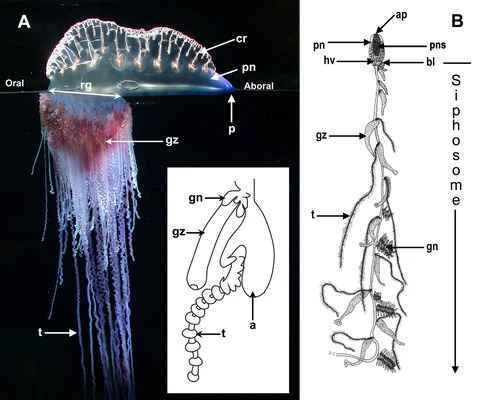
Unable to actively hunt prey, the Portuguese man-of-war has evolved organs that emit a faint, captivating blue fluorescence. This dim, alluring blue light has a natural attraction for many marine creatures, helping them lure and capture approaching prey. As one of the larger members of the jellyfish family, marine biologists have recorded that the average tentacles of the Portuguese man-of-war can reach 15 meters in length. Records show that super-giant Portuguese man-of-wars with tentacles exceeding 25 meters have been discovered, truly deserving the title of "ghost behemoths" of the sea.
4. Styx jellyfish (umbrella diameter approximately 1.4 meters)
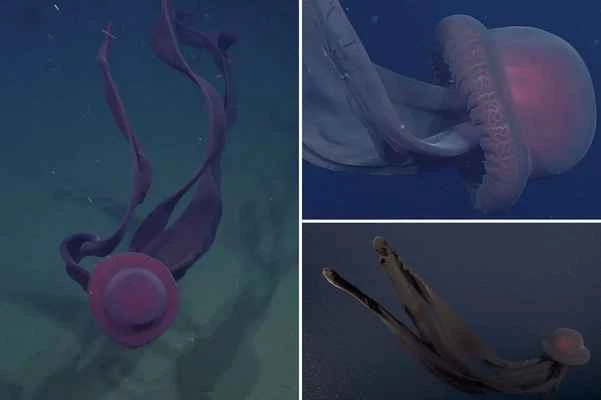
The Styx jellyfish is one of the world's ten largest jellyfish, renowned for its mystery and rarity. Although only about 116 sightings have been recorded in the past 110 years, scientists generally believe that this deep-sea jellyfish is actually widely distributed in many oceans around the world, including the Atlantic, Pacific, and Arctic Oceans.

The Styx jellyfish primarily inhabits areas at depths of approximately 500 to 2000 meters in the ocean and is one of the largest known invertebrate carnivores in the deep-sea ecosystem. According to existing records, its maximum bell diameter can reach 1.4 meters, and its overall length, including its tentacles, can reach about 11 meters, making it an astonishingly large and formidable creature in the deep sea.
5. Shark jellyfish (maximum bell diameter exceeds 1 meter)
The shark jellyfish is a large deep-sea jellyfish, first discovered and named in 2003 by the Monterey Bay Aquarium Research Institute in the United States. Due to its large size and entirely red body, it is also known as the "big red jellyfish".
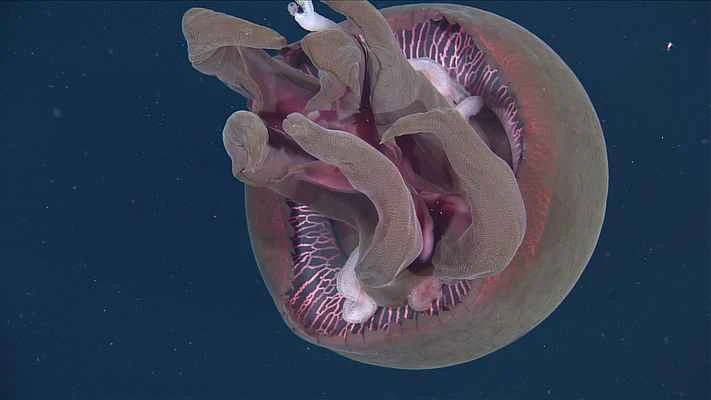
This type of jellyfish primarily inhabits the middle layer of the ocean, at depths ranging from approximately 400 to 1500 meters, and has been sporadically recorded in several areas of the Pacific Ocean. The shark jellyfish's bell is hemispherical, with a bright, deep red color that makes it highly recognizable. Its diameter typically ranges from 45 to 75 centimeters, with some individuals exceeding one meter. The bell's edge has numerous lobes, but it lacks limbs, a key characteristic that distinguishes it from other jellyfish.
6. Pacific Golden Jellyfish (umbrella diameter 0.5-1 meter / length 3.6-4.6 meters)
The Pacific golden jellyfish is one of the larger known jellyfish, mainly distributed in the eastern Pacific Ocean, extending from the coast of Canada to Mexico. It is most common along the coasts of California and Oregon, and can also be found in the waters off Japan.
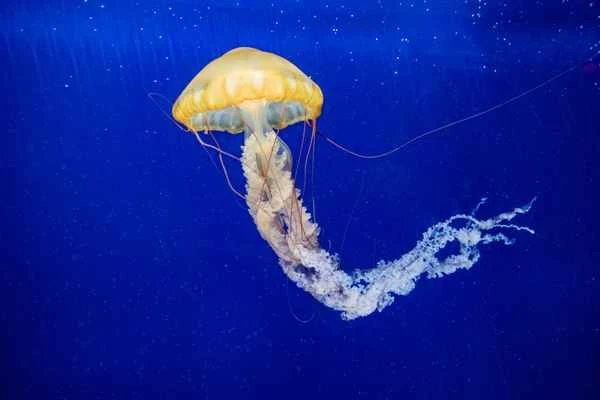
This jellyfish is highly recognizable, being predominantly golden with a hint of red. Its bell diameter can reach 50 to 100 centimeters, and it possesses 24 chestnut-colored tentacles, measuring approximately 3.6 to 4.6 meters in length. Although it possesses a stinging ability, its venom is relatively weak and poses little danger to humans. The Pacific golden jellyfish is a typical carnivorous jellyfish, feeding on plankton, crustaceans, small fish, and other jellyfish.
7. Red Moon Jellyfish (umbrella diameter up to 1 meter)
The red moon jellyfish, also known as the "sea jellyfish," resembles a mushroom in appearance. Its body is mainly composed of two parts: the bell and the oral arms. The bell is hemispherical, typically 30 to 60 centimeters in diameter, with some individuals reaching up to 1 meter. Its outer surface is smooth and delicate, with a thick mesoglea layer, and it is transparent and crystalline overall, making it highly ornamental.
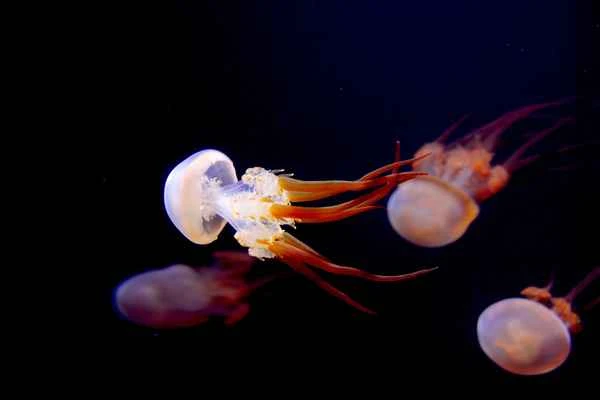
Interestingly, the red moon jellyfish lives in symbiosis with a type of single-celled algae called zooxanthellae. These algae produce oxygen through photosynthesis and supply some of the products to the jellyfish. Therefore, the red moon jellyfish is suited to living in low-light environments. It is recommended to keep the light intensity below 2400 lux, and a coral blue light lamp can be used in conjunction with it. The lighting time does not need to be too long.
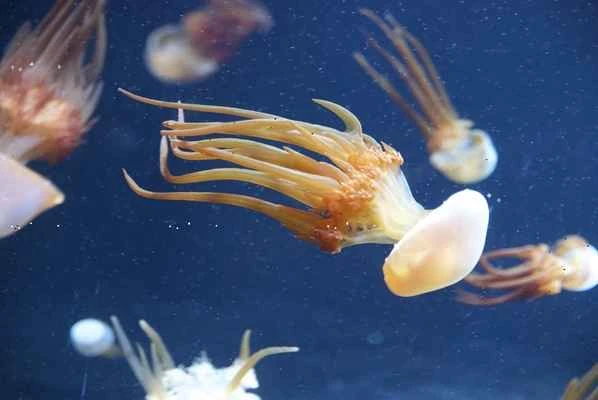
Besides its ornamental value, the red moon jellyfish also has significant nutritional and medicinal value. Rich in protein, carbohydrates, calcium, iodine, and various vitamins, it is a highly nutritious marine food. Traditional Chinese medicine believes that jellyfish has the effects of clearing heat and detoxifying, resolving phlegm and softening hard masses, lowering blood pressure and reducing swelling. It is often used in medicine or medicinal cuisine, making it a "treasure of the sea" that combines deliciousness and therapeutic benefits.
8. Barrel jellyfish (maximum bell diameter exceeds 0.9 meters)
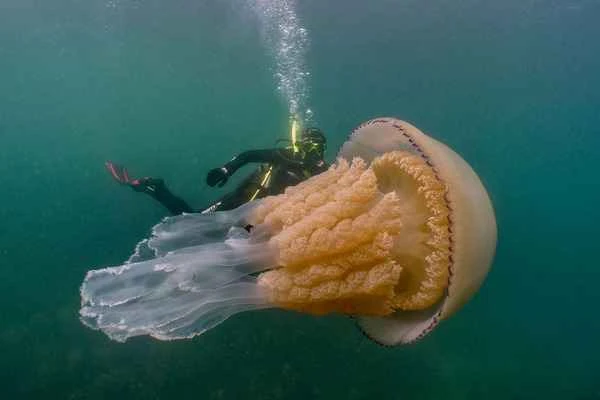
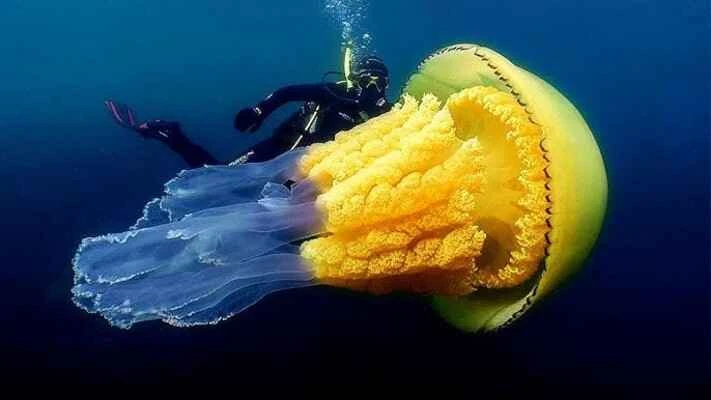
Barrel jellyfish were first discovered in the northeast Atlantic and Mediterranean regions and are among the largest jellyfish species in British waters. Although they can sting, they usually do not cause serious harm to humans and primarily feed on plankton.
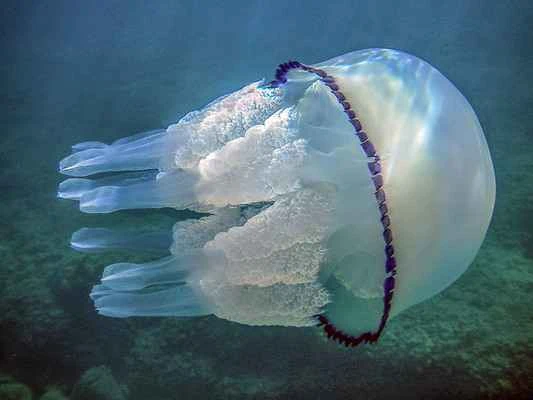
In 2015, tens of thousands of giant barrel jellyfish suddenly appeared near several popular coastlines in the UK, drawing attention. Off the coast of Dorset, England, a group of these enormous creatures, reaching lengths of up to 1.5 meters and weighing up to 32 kilograms, were spotted. It is speculated that this surge in numbers may be related to overfishing, which reduced the number of natural predators in their juvenile stage, allowing the population to grow significantly. Barrel jellyfish typically have a bell-shaped body diameter of around 0.9 meters and are known for their spectacular appearance, making them one of the most common giant jellyfish in British coastal waters.
9. Purple-striped sea nettle jellyfish (maximum bell diameter exceeds 0.7 meters)
The purple-striped sea nettle jellyfish is a relatively large jellyfish species, mainly distributed in the Pacific Ocean. In its juvenile stage, the bell is pale pink with eight slender, black tentacles along the edge; as it grows, the bell gradually turns pale purple, and the tentacles become thicker, shorter, and stronger.
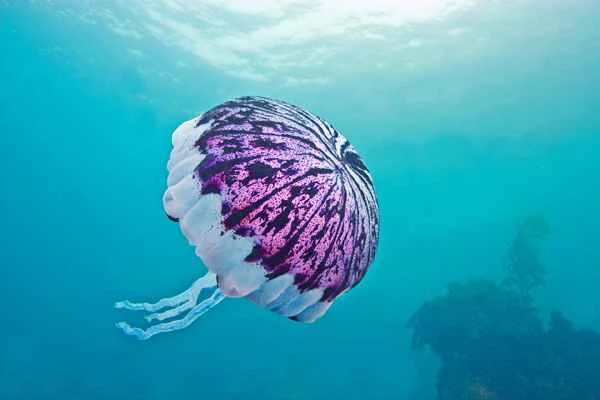
These jellyfish are visually captivating due to their dreamy, pale purple appearance. Their long tentacles, resembling those of the Pacific sea nettle, add to their mystique and romance. Adult purple sea nettles can reach a bell diameter of up to 70 centimeters. They primarily feed on small crustaceans, mollusks, fish eggs, and other small jellyfish, making them one of the most striking large jellyfish in the ocean.
10. Australian Spotted Jellyfish (umbrella diameter 0.5-0.6 meters)
The Australian spotted jellyfish is a relatively large jellyfish, with its bell reaching a maximum diameter of 50 to 60 centimeters. It is mainly distributed in the southwestern Pacific Ocean. It feeds on tiny plankton in the ocean, with its main prey including krill, brine shrimp, algae, and moon jellyfish. It is also a frequent target of giant fried egg jellyfish.
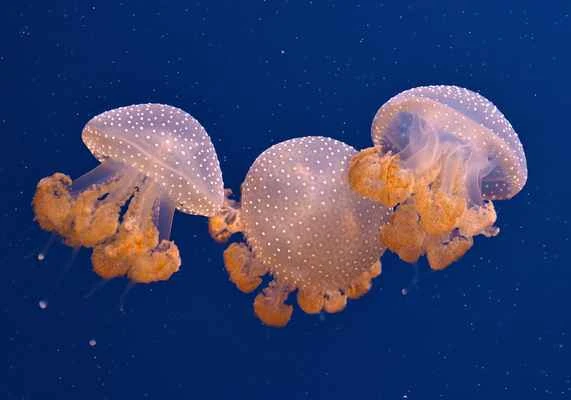
To enhance its survival capabilities, the Australian spotted jellyfish has evolved robust defense mechanisms. For example, the white spots on its bell not only serve a decorative purpose but also contain stinging cells, providing it with a degree of offensive and defensive capabilities. When hunting, it extends its rear tentacles to capture prey.
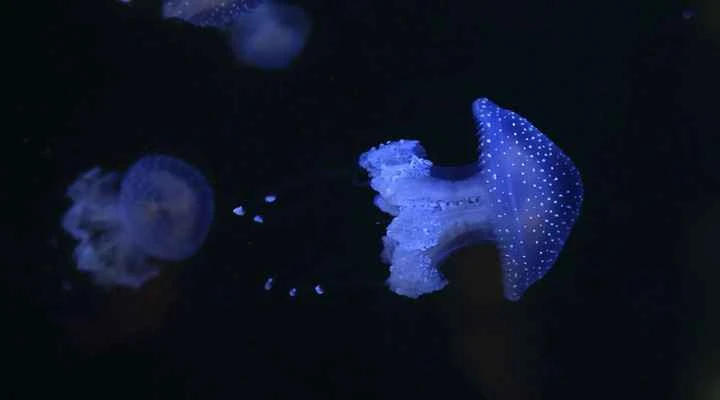
The jellyfish's bell is hemispherical, pale blue in color, and covered with tiny white spots, making it visually appealing. Its tentacles are flower-shaped, with trailing tentacles at the ends, and it has the ability to photosynthesize in synergy with symbiotic algae, providing itself with additional energy.
The list of the 10 largest jellyfish species in the world is based on data such as bell diameter and body length, and also takes into account relevant information from the internet. The data is current as of April 2, 2025. If you have any questions, please feel free to comment/criticize at the end.
Other well-known large jellyfish :
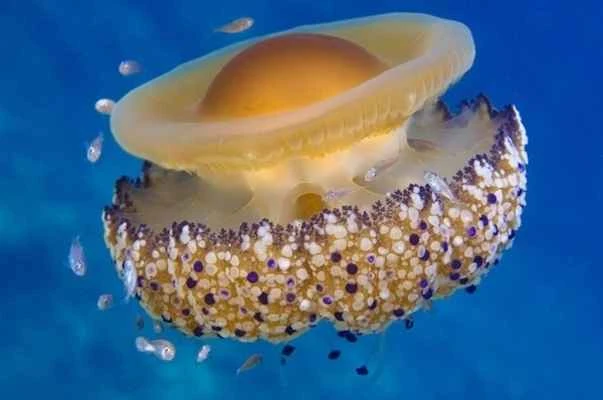
Egg Yolk Jellyfish
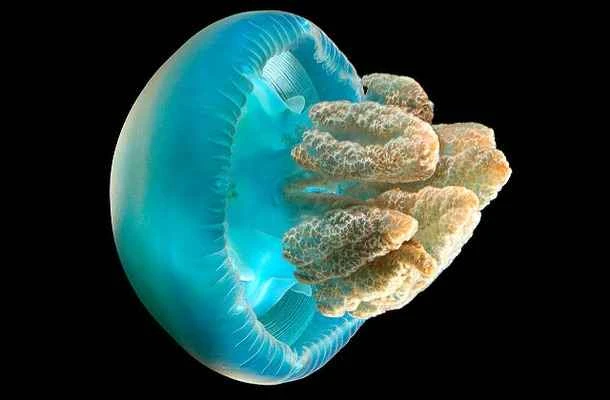
Mosaic Jellyfish
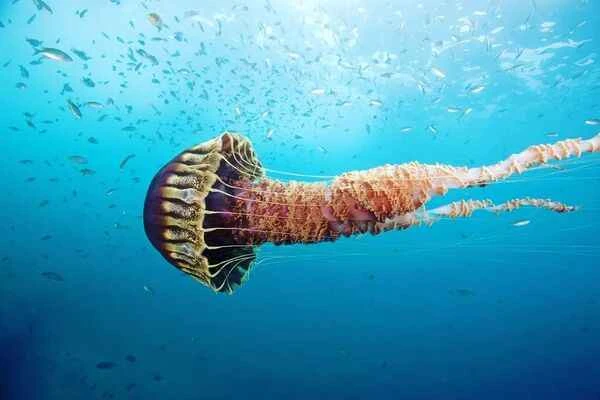
Black Star Sea Cutter Jellyfish

Paraya jellyfish
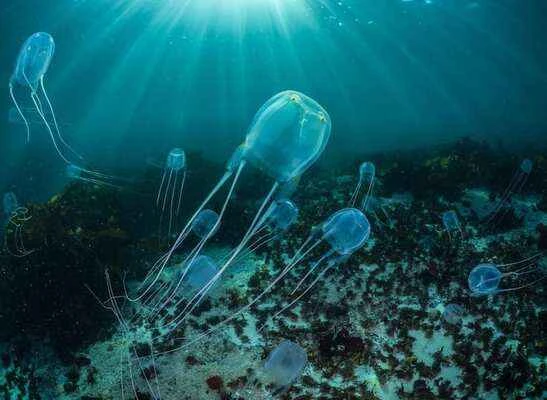
Australian box jellyfish
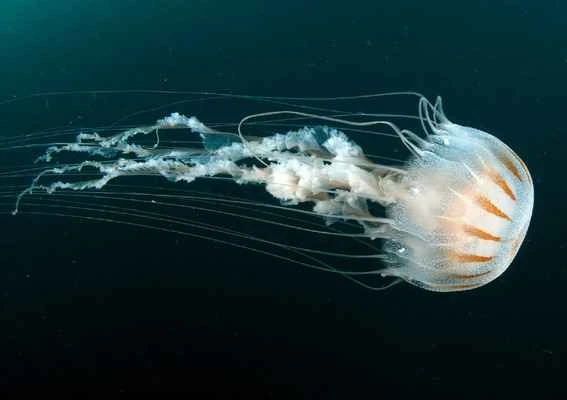
Atlantic sea nettle jellyfish
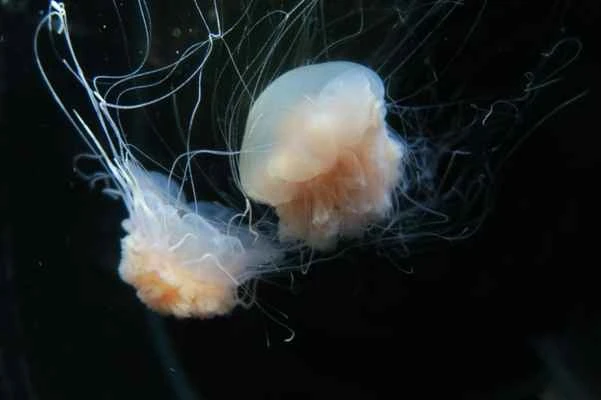
White jellyfish
Brown jellyfish, etc...