There are many types of squid, including common squid (Loligo vulgaris), diamond-shaped squid (Thysanoteuthis rhombus), Argentine squid (Illex argentinus), giant squid (Mesonychoteuthis hamiltoni), giant squid (Architeuthis dux), and others.
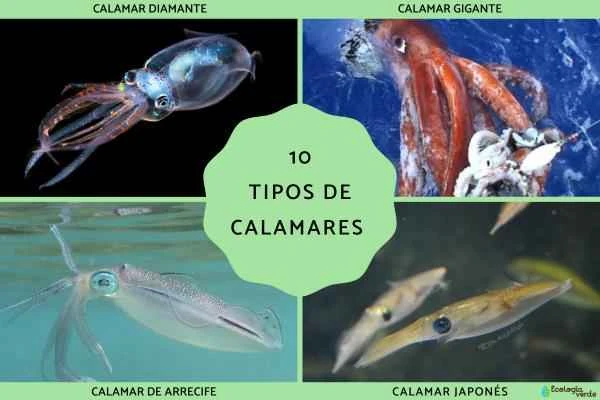
Table of contents
Common squid (European squid)
Diamond Squid
Argentine squid
Giant Squid
King Squid
Coral Reef Squid
Humboldt squid
Longfin squid
Black squid
Japanese squid
1. Common squid (Loligo vulgaris)
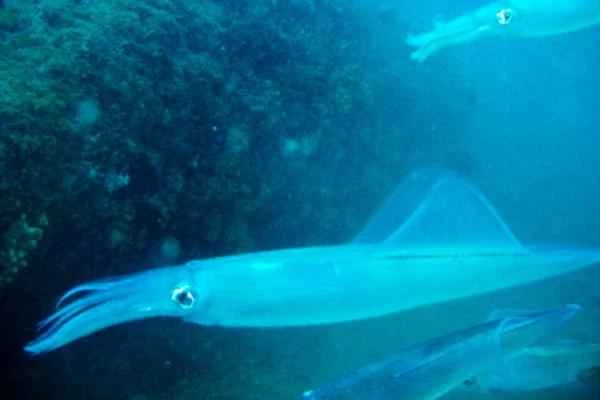
The common squid, also known as the European squid, is one of the most common and important economically important squids in the North Atlantic. It can reach 40 cm in length, has a slender, cylindrical shape, and two diamond-shaped fins at the tail. It has 10 tentacles at its mouth, 8 of which are shorter and used for grasping food, while the other 2 are extremely long and equipped with suckers, specifically used for capturing prey. Due to its high yield and excellent taste, the common squid is a common species in global fisheries and cuisine.
2. Diamond Squid (Thysanoteuthis rhombus)
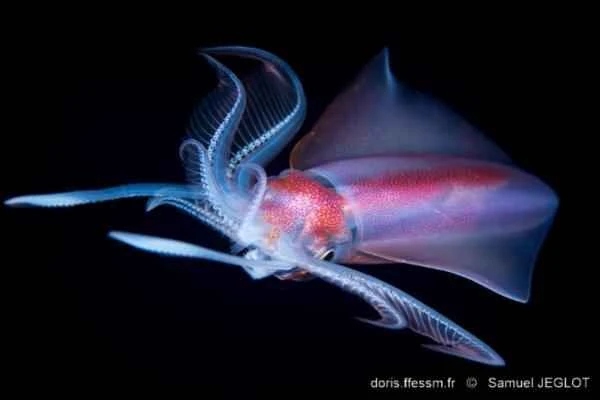
Diamond squid are widely distributed, inhabiting tropical, subtropical, and some temperate waters influenced by warm currents worldwide. Their name comes from their distinctive triangular fins. Diamond squid can reach up to 2 meters in length, and females lay gelatinous egg sacs containing numerous pink eggs that float on the surface. Due to overfishing, their wild populations are under threat.
3. Argentine squid (Illex argentinus)
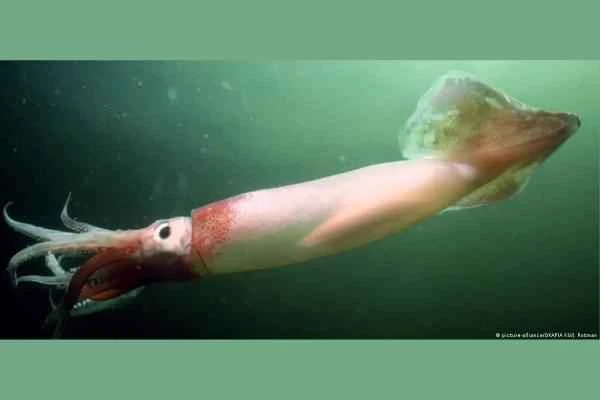
Argentine squid are mainly distributed in the waters of South America, from Brazil, Argentina, and the Falkland Islands to southern Chile. They feed on crustaceans, fish, and other cephalopods. Females are usually larger than males, and males have specialized reproductive arms used to transfer spermatophores. Argentine squid are extremely abundant, making them one of the most caught squid species globally.
4. Giant squid (Mesonychoteuthis hamiltoni)
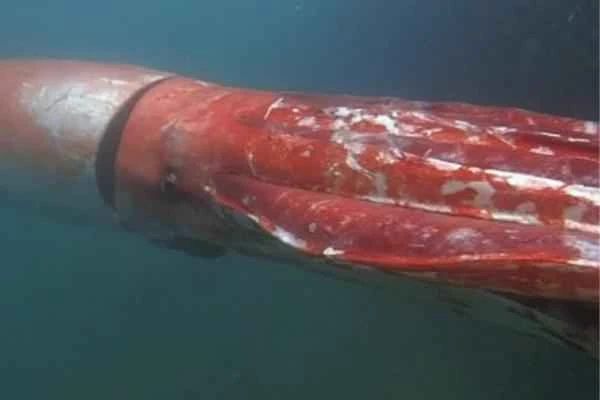
The giant squid, also known as the Antarctic squid, is found in the Antarctic Ocean and is the largest known squid, reaching lengths of up to 15 meters and weighing up to 750 kilograms. It possesses the largest eyes in the animal kingdom, adapted to the low-light environment of the deep sea. Its tentacles have rotating hooks that allow it to firmly grasp its prey. Its main predator is the sperm whale.
5. Architeuthis dux (King Squid)
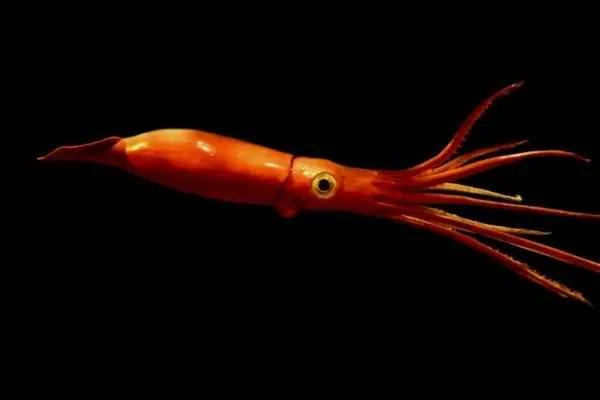
Giant squid are known for their enormous size, reaching up to 13 meters in length. They have a wide distribution, including the mid-to-deep waters of the North Atlantic, North Pacific, and the waters off South Africa and New Zealand. Similar to other giant squid, they primarily feed on fish and other cephalopods, and are an important food source for sperm whales. Their bodies are rich in ammonium ions, thus they are rarely commercially caught by humans.
6. Reef squid (Sepioteuthis lessoniana)
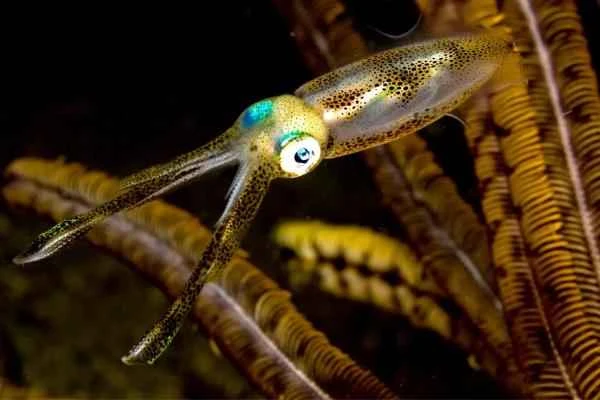
Coral reef squid are small fish commonly found in the shallow coral reefs and seagrass beds of the Atlantic and Caribbean Seas. They possess abundant pigment cells, enabling them to rapidly change color and patterns to camouflage their environment or communicate. Males also attract females with distinctive body colors, making them a prime example for studying animal color-changing and courtship behaviors.
7. Humboldt squid (Dosidicus gigas)
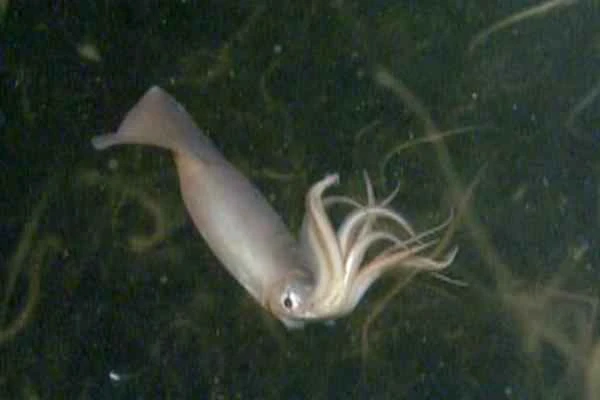
The Humboldt squid, also known as the Pacific flying squid, is a large, migratory squid found in Peru, Mexico, Chile, and the west coast of the United States. It is an important economic species with a broad diet, including small fish, crustaceans, and other squid. Due to its high yield and value, the Humboldt squid fishery has developed rapidly, but the risk of overfishing needs to be addressed.
8. Longfin squid (Doryteuthis pealeii)
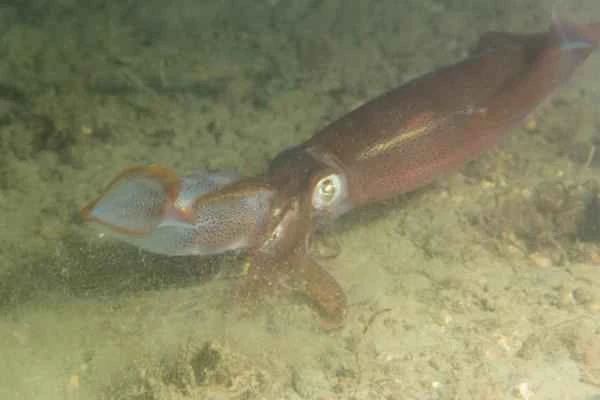
Longfin squid inhabit the Atlantic continental shelf, from southern Newfoundland to the Gulf of Venezuela, the Gulf of Mexico, and the Caribbean Sea. They are agile, fast swimmers, and possess prominent long fins. They migrate seasonally to reproduce and forage; smaller individuals feed on benthic organisms, while larger individuals primarily feed on fish and crustaceans. They have a relatively short lifespan, with most not surviving more than a year.
9. Black squid (Martialia hyadesi)
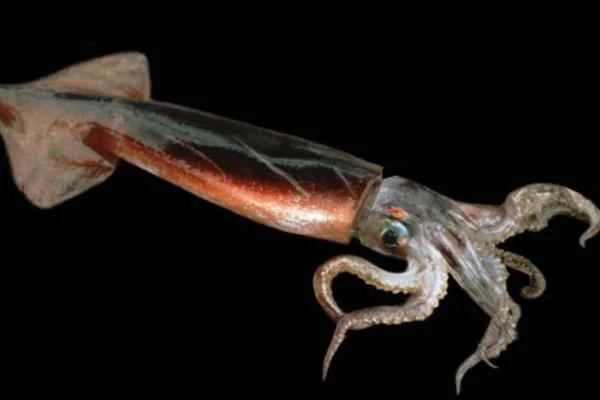
Black squid are distributed in Antarctic polar waters, including the Patagonian Plateau, Macquarie Island, Cape Horn, and southern New Zealand. They occupy an important position in the Antarctic ecosystem and are a primary food source for many albatrosses. In recent years, black squid have gradually replaced some fish niches in the Antarctic food web.
10. Japanese squid (Loliolus japonica)
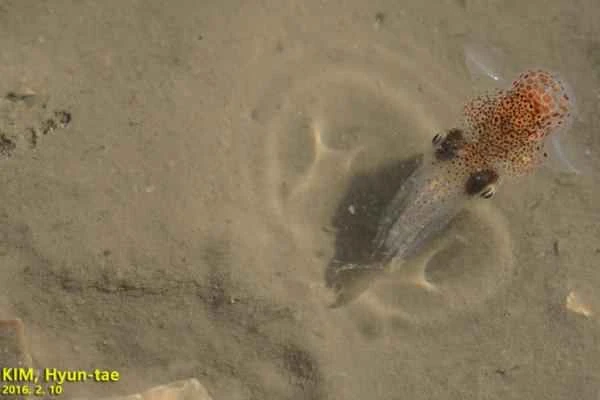
Japanese squid are relatively small and are found in the shallow waters of Vietnam, China, Taiwan, and Japan. They have robust bodies and heart-shaped fins. Japanese squid are extremely common in coastal fisheries, but their ecological importance is threatened by overfishing.
Summarize
The above 10 squid species cover the most widely distributed and ecologically important major squid types globally. Understanding the types and characteristics of squid not only helps scientific research and fisheries management, but also enhances our understanding of marine biodiversity.