Fire coral is a type of marine sessile animal belonging to the family Milleporidae. While stings from fire coral are not fatal, they can cause severe localized pain and skin irritation, and may even lead to inflammation and blisters.
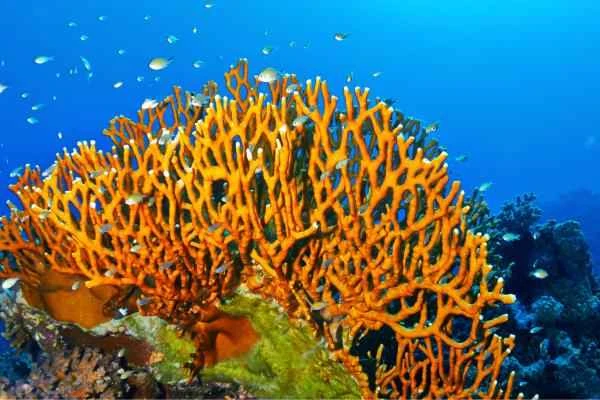
Tropical marine ecosystems are renowned for their diverse coral reefs in shallow waters, primarily composed of hard and soft corals. However, in addition to these two types of corals, there is a species called "fire coral" or "false coral," which, while sharing some similarities with hard and soft corals, exhibits significant differences in its life cycle.
What is fire coral?
Fire coral belongs to the class Hydrozoa within the phylum Anthozoa, unlike hard corals (which only exist in a sessile multicellular stage, belonging to the class Anthozoa). Fire coral has both a polyp stage and a medusa stage, therefore it does not entirely belong to the traditional coral category. It is named "fire coral" because it causes a burning pain when touched, and is also known as "false fire coral" or "hydra coral".
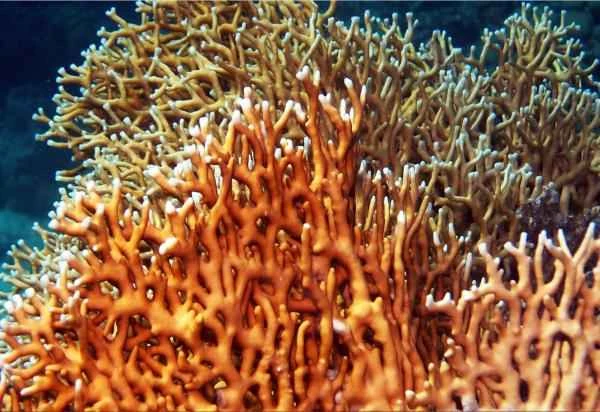
Fire corals belong to only one genus—Millepora, which includes the following common species:
Millepora tenera
Millepora tuberosa
Millepora dichotoma
Millepora platyphylla
Millepora intrincata
Millepora boschmai
Millepora alcicornis
Characteristics of fire coral
Fire corals have a hard, calcareous skeleton and range in color from yellow to brown. They come in various shapes and sizes, some resembling large, branching trees, others flat like discs, or attached to the base of coral reefs. Fire corals are composed of multiple polyps with tentacles that appear as long, thin hairs, hanging from the skeleton.
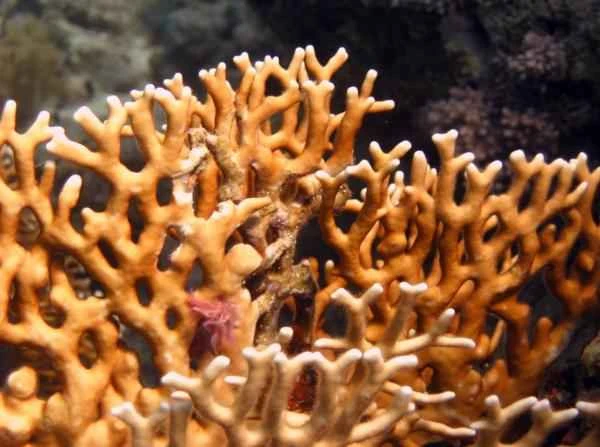
Fire corals are found in tropical and subtropical shallow seas, with the deepest known locations reaching depths of approximately 40 meters. They often attach themselves to rocks or hard corals and are an important member of the coral reef ecosystem.
Fire coral's predation and symbiosis
Fire corals are predatory organisms, capable of quickly catching and killing small fish, mollusks, and crustaceans. In addition, fire corals form a symbiotic relationship with zooxanthellae, which produce nutrients through photosynthesis for the corals to use, while the corals provide shelter and dispose of metabolic waste. This mutually beneficial symbiotic relationship is a crucial way for fire corals to survive.
Fire corals contain specialized cells called cnidocytes, which contain venom sacs and barbs. When touched, they can shoot out venomous barbs to paralyze prey or defend against threats.
Symptoms and treatment of fire coral stings
A sting from fire coral will immediately cause intense pain, accompanied by redness, swelling, itching, blisters, and even ulceration of the skin. The pain at the sting site usually lasts for several days, and in severe cases, up to two weeks. The coral's hard skeleton rubbing against the skin can also lead to bacterial infection.
First aid advice for stab wounds:
Immediately wash the wound with a solution containing 10% vinegar to help neutralize the toxins.
Topical antihistamines can be applied to relieve itching and allergic reactions; oral antihistamines may be necessary in some cases.
Avoid rinsing with fresh water to prevent activating any remaining stinging cells.
Seek medical attention promptly for examination and receive professional treatment.
Preventive measures
If you are aware of fire coral while diving or swimming, it is recommended to wear a wetsuit to prevent stings. When encountering coral reef areas with warning signs, try to avoid entering or stepping on the seabed to protect the coral ecosystem and your own safety.