Ruminants are herbivores that can convert plant matter with very low nutritional value into important resources such as their own meat, dairy products, and leather. Because of their highly efficient cellulose digestion, ruminants have been domesticated and utilized by humans since ancient times, becoming a crucial cornerstone of livestock production. So, what are ruminants? What's special about their digestive system? What are some common ruminants? This article will provide you with a comprehensive overview!
Definition and basic characteristics of ruminants
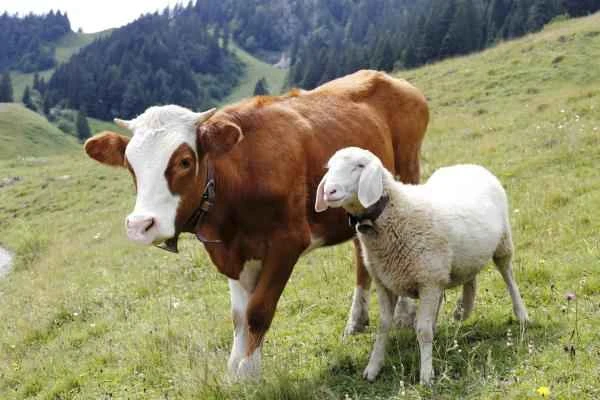
Ruminants are a class of mammals that can repeatedly chew and digest their food. Their typical characteristics include:
Food is repeatedly chewed : plants are first swallowed into the stomach, and then refluxed into the mouth to be chewed again, which is the behavior of "rumination".
Herbivorous : The vast majority feed on various plants, herbs, leaves, and tender branches;
Molars are flat and wide : suitable for grinding coarse fibers laterally, reducing tooth wear;
The biting motion involves lateral movement , which helps to thoroughly break down the fibers.
Distribution and Habitat of Ruminants
Ruminants are widely distributed around the world, in various ecological environments including tropical grasslands, temperate plains, plateaus, mountains, forests, tundra, deserts, and semi-deserts. Due to their strong adaptability, ruminants exhibit an extremely rich diversity in nature.
Digestive system structure of ruminants
Ruminants, also known as "multistomes," possess a highly specialized multi-chambered stomach. Unlike monogastric animals (such as humans, horses, and pigs), ruminants' stomachs are divided into four parts:
Rumen : The largest chamber, a fermentation tank containing a large number of microorganisms that can break down plant fibers;
Reticulum : Connected to the rumen, it captures large food particles and participates in rumination;
Omasum : Absorbs a large amount of water and some nutrients;
The abomasum functions similarly to the stomach of a monogastric animal, secreting gastric acid and enzymes to digest proteins.
The first three cavities are filled with bacteria, protozoa and other microorganisms, which can ferment cellulose and nitrogen sources to produce short-chain fatty acids (such as acetic acid, propionic acid and butyric acid), providing energy for ruminants, and finally further absorbing nutrients in the abomasum and small intestine.
The multi-stomach digestive system of ruminants is highly adapted to digesting herbaceous plants that are difficult to break down, giving them a huge advantage in the competition in nature.

Diet and ecological role of ruminants
Ruminants primarily feed on various grasses, leaves, twigs, and shrubs, and can digest the vast majority of plant matter containing cellulose, hemicellulose, pectin, and other substances that are difficult to break down. They can transform low-nutrient plants into high-quality meat, milk, fur, and leather, which is of great importance to both the ecosystem and humans.
However, the digestion of ruminants also produces a large amount of methane, which is one of the main sources of greenhouse gases and has attracted much attention in the field of environmental protection.
Examples of common ruminants
1. Cow (Bos taurus)
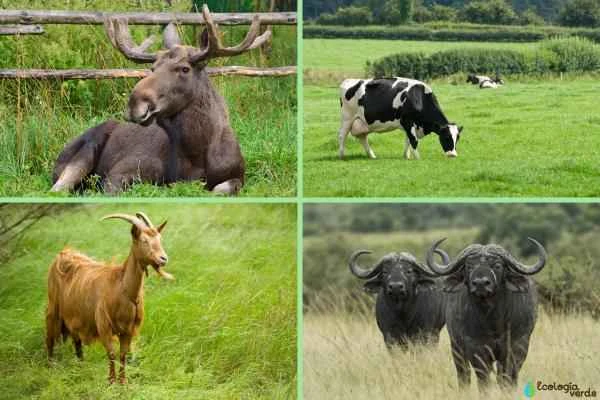
One of the most common domesticated animals, cattle are used by humans for meat, dairy products, leather, and draft work. Depending on the feed composition, cattle can produce different types of meat and milk. Their efficient fiber digestion makes them one of the most important food animals for humans.
2. Sheep (Ovis orientalis aries)
It is also one of the earliest ruminants domesticated by humans. It is adapted to harsh environments such as arid and semi-arid regions and can produce mutton, sheep milk, wool, etc. It is an important livestock breed worldwide.
3. Goat (Capra aegagrus hircus)
Goats are highly adaptable and can survive in complex environments such as steep slopes, arid areas, and thickets, producing milk, meat, and cashmere. They were also one of the most important domestic animals for humans in early times.
4. Deer (Cervidae)
This includes sika deer, reindeer, and Père David's deer. Deer are widely distributed, and some species can adapt to extremely cold regions. Reindeer feed on moss, while Père David's deer are adept at consuming aquatic plants.
5. Bison (Bison bison)
A representative ruminant of North America, weighing up to 1400 kg, it can efficiently convert coarse plant matter into meat. Due to the value of its fur, it was once heavily hunted, but is now protected and sustainably managed.
Conclusion
Ruminants, with their unique digestive systems and highly efficient cellulose-decomposing abilities, are key players in ecosystems such as grasslands, deserts, and plateaus, and are also important production animals for humans. Understanding the types, digestive structures, and ecological significance of ruminants is helpful for scientific animal husbandry and ecological conservation. If you would like to learn more about ruminants such as cattle, sheep, and deer, please follow our animal encyclopedia!
References
De Lucio, M. (2007). Volatile fatty acids: an energy source for ruminants. Veterinary Medicine: National Autonomous University of Mexico.
Ramírez-Pérez, AH, Buntinx, D., & Silvia, E. (2010). Carbohydrate, lipid, and protein metabolism. Nuts, Animals and Biochemistry, 2(12), 9.
Ramírez Lozano, R. (2017). Principles of Ruminant Nutrition. Bloomington: Palibrio Press.