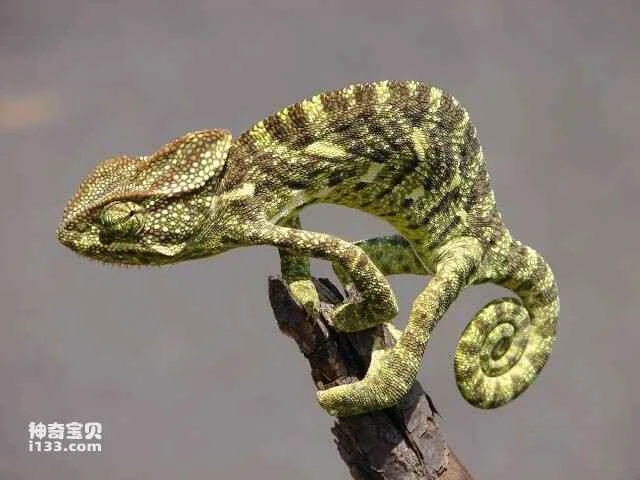
The isolated island ecosystem of Madagascar has given rise to countless strange and unique creatures, among which the lemur is undoubtedly one of the most representative primitive primates. They are one of the oldest primate groups in the world and are endemic to Madagascar ; wild lemurs cannot be found anywhere else on Earth.
This article will give you a comprehensive overview of the 11 major known lemur species and briefly introduce several extinct giant lemur species.

Basic characteristics of lemurs
Belonging to the Strepsirrhini primate , they have a sensitive sense of smell and a moist nose;
It has a long tail, which helps it maintain its balance among the trees;
It walks on four legs and has opposing thumbs, making it easy to grasp tree branches;
It is found only on Madagascar and some surrounding islands;
It has long, thin fingers and nails, not claws;
They have relatively small brains but are highly social , communicating through a lot of vocalizations;
Most varieties are arboreal and active both day and night .
I. Lemuridae – Typical Lemur Representatives
This is the most common and "standard" type of lemur. Most of them are medium-sized and live among the treetops, but they also come down to the ground.
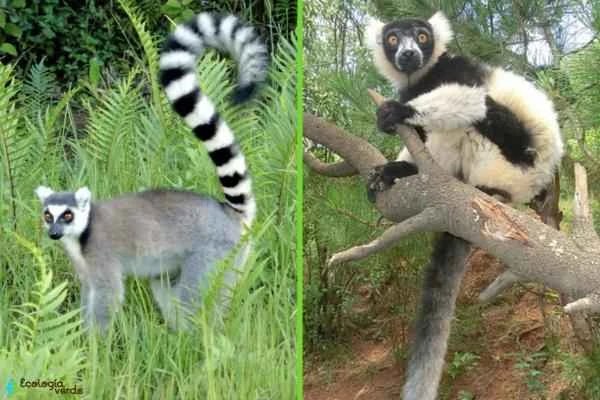
1. Ring-tailed lemur (Lemur catta)
The most representative type of lemur;
It has a long, black and white striped ringed tail ;
They are extremely social animals, and can form groups of up to 25 individuals .
Their staple foods are fruits, tree bark, resin, and roots.
2. Woolly lemur (Varecia variegata)
They are 50-60 cm long and come in a variety of colors, including white, red, and black.
What makes them special is that they build nests for their young using leaves, making them one of the few lemurs that build nests to raise their offspring .
II. Cheirogalidae – The smallest primate family
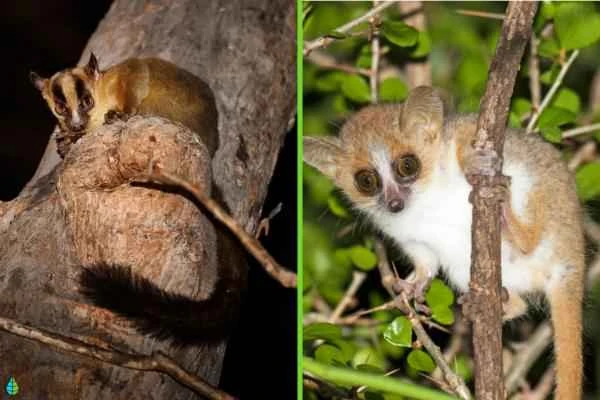
Also known as the " mouse lemur " or " dwarf lemur ," it is extremely small in size but very active and mostly nocturnal.
3. Pale-masked lemur (Phaner pallescens)
It is about 30 centimeters long and has a thick tail.
It has a long tongue and well-developed premolars , enabling it to gnaw on tree sap and bark;
They are adept at peeling bark from trees for food , making them a highly adaptable species in terms of diet.
4. Gray mouse lemur (Microcebus murinus)
With a body length of only 10-15 centimeters, it is one of the smallest primates;
Omnivorous , feeding on fruits, flowers, and insects;
Females carry their young in their mouths , a unique parenting behavior.
III. Lepilemuridae – The Elegant "Tree Jumpers"
Also known as the " weasel lemur ," it is adept at leaping between branches but rarely touches the ground. It feeds on leaves , has a low energy intake, and moves slowly.
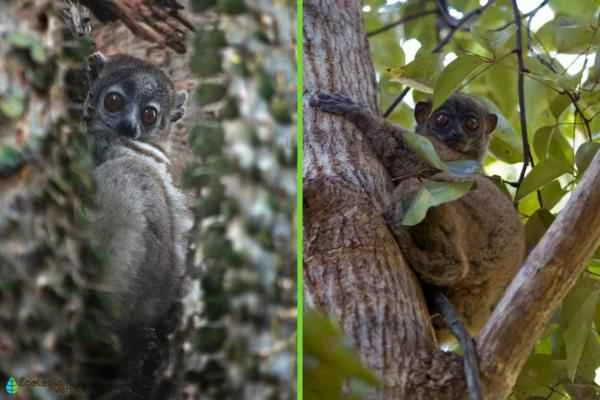
5. White-footed leaping lemur (Lepilemur leucopus)
Gray back, white belly and feet;
They typically perch vertically on tree trunks, making them a typical static observation species .
6. Grey-backed leaping lemur (Lepilemur dorsalis)
Small ears, grayish-red fur;
They are mainly distributed in northern Madagascar and its adjacent islands.
IV. Indriidae – The largest lemur population
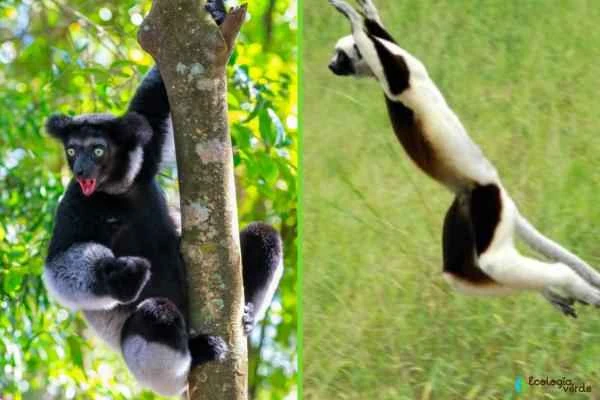
These lemurs include the Sifaka and the Indri , which have well-developed hind limbs and are adept at leaping between trees.
7. Crowned lemur (Indri indri)
It is the largest living lemur , reaching up to 75 centimeters in length;
It has no real tail, only traces of degeneration ;
It emits a high-pitched, horn-like call for communication and territorial assertion .
8. Coquereli (Propithecus coquereli)
White body with brownish-red patches;
They are agile, with strong hind limbs, enabling them to run or jump upright .
It is a unique way of jumping sideways while moving forward on the ground.
V. Daubentoniidae – The most mysterious lemur family
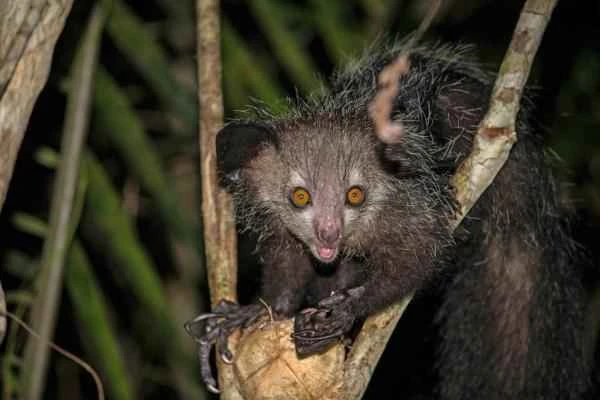
9. Aye-aye (Daubentonia madagascariensis)
It has a particularly long and thin middle finger , which it uses to tap tree trunks to search for insects;
It has a strange appearance, with messy hair and large ears ;
It is the only primate that uses "tapping to locate" for food .
VI. Extinct Lemur Species
Ecological stress and human activities in Madagascar have led to the extinction of many lemur species.
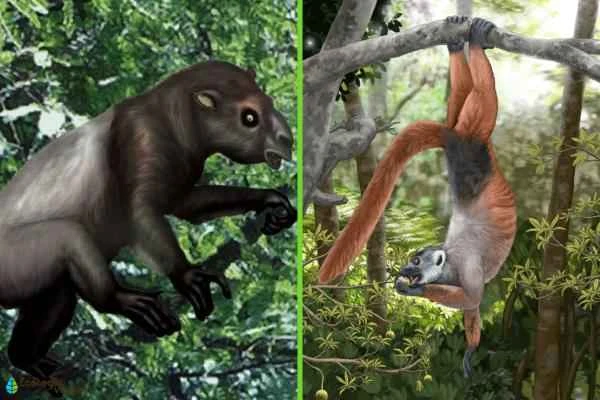
10. Giant lemur (Megaladapidae)
It once weighed 140 kilograms , making it the largest lemur on Earth;
They went extinct about 500 years ago , likely due to human hunting and habitat loss.
11. Pachylemur spp.
It belongs to the "true lemur" lineage;
They can weigh up to 10 kilograms and mainly eat fruit.
They became extinct due to changes in the island's ecology and the depletion of its resources.
Conclusion: Protecting Madagascar's Primate Treasures
Lemurs are primates endemic to Madagascar and an integral part of the island's ecosystem. However, they face severe threats to their survival . Habitat loss, illegal hunting, invasive species, and climate change are pushing these rare animals to the brink of extinction.
If you'd like to learn more about how to protect these unique primates, please read the article: "Are Lemurs Endangered?"