The dugong is one of the oldest marine animals in the world, a Class I protected animal in China, and also one of my country's endangered species. Because it needs to surface periodically to breathe, it is often mistaken for a "mermaid." Humans have been hunting dugongs for four thousand years, using their meat for oil, their bones for carving, and their hides for leather. Today, the dugong population is extremely small.
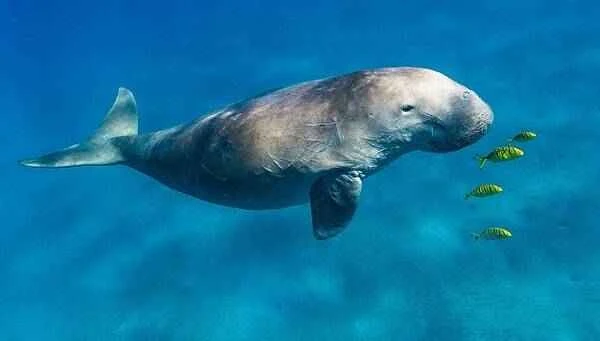
Adult dugongs can reach 3 meters in length and weigh over 300 kilograms. During lactation, the mother often uses her forelimbs to cradle her cub, keeping her head and chest above the water while emitting melodious calls. Historically, many navigators have been captivated by this sight, leading to shipwrecks. There are many beautiful legends surrounding dugongs, and they are often referred to as mermaids. In reality, however, they bear little resemblance to the fairies of mythology. They are stout, slow-moving, and often wander listlessly in groups, much like a herd of cattle moving from one pasture to another.
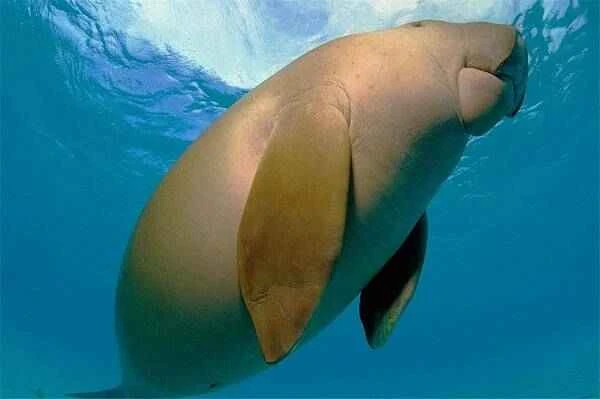
Dugongs prefer to live in nearshore waters rich in seaweed. They primarily feed on seaweed and have a large appetite, consuming up to 40 kilograms of food a day. Every 10-15 minutes, they surface with their round, animal-like faces, briefly opening and closing their large nostrils to breathe before diving back down. Sea hunters then seize the opportunity to attack with harpoons. A high hit rate is crucial; otherwise, the injured dugong will scream and flee, scaring away its companions. Therefore, the locals train harpoon handlers rigorously, with the chief personally instructing them from a young age. The locals consider hunting sacred. Before setting out to sea, they pray to their ancestors for a large dugong catch. Along the Torres Strait off the north coast of Australia are many islands inhabited by dark-skinned, bearded Aboriginal people who are "sea hunters," primarily hunting dugongs. This is one of the few remaining dugong habitats on Earth.