1. Wukong Pterosaur
Middle Jurassic period, 160 million years ago
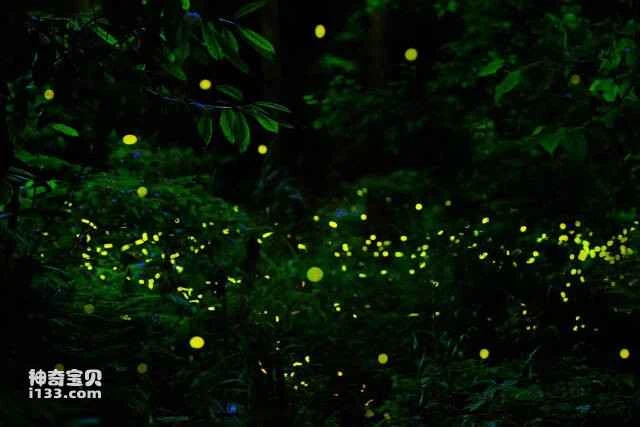
Wukongopterus is a new species of pterosaur, with fossils discovered in Daohugou, Liaoning Province.
2. Chaoyang Dragon
Late Jurassic period, 156 million years ago
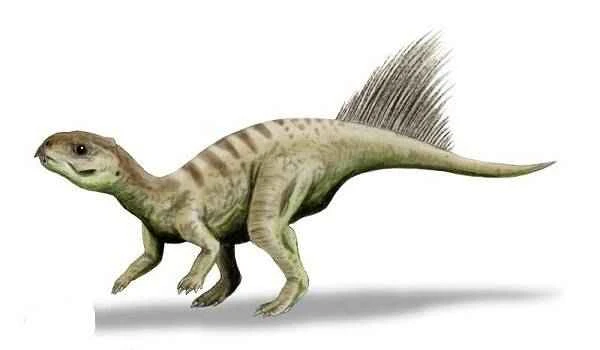
Chaoyangsaurus is a ceratopsian dinosaur that lived in China during the Late Jurassic period. Belonging to the order Ceratopsaurus, it was a herbivorous dinosaur with a parrot-like beak, primarily distributed in North America and Asia during the Cretaceous period. The earliest fossils of Chaoyangsaurus were discovered in Chaoyang, Liaoning Province, my country, hence its name. However, the name Chaoyangsaurus was actually based solely on an incomplete skull fossil.
3. Celestial Dragon Thief
Late Jurassic period, 155 million years ago
Microraptor augensis was a small theropod dinosaur belonging to the Microraptor group within the Dromaeosauridae. Its fossils were discovered in Liaoning Province, China, and it lived during the Early Cretaceous period. Currently, only one species exists in this genus, the type species *Microraptor augensis*. Unlike other Microraptors, *Microraptor augensis* had shorter forelimbs and a smaller furcula.
4. Climbing dinosaurs
Late Jurassic period, 154 million years ago
Scansoriopteryx (meaning "climbing wing") is a genus of maniraptorosaur, a sparrow-sized animal exhibiting arboreal adaptations (based on the only single juvenile fossil specimen found in Liaoning, China). The fossil includes an unusually elongated third digit, possibly supporting the wing membrane, as well as feather imprints. Most researchers consider Epidendrosaurus to be a variant of Scansoriopteryx.
5. Tail Feather Dragon
Early Cretaceous, 136-120 million years ago
*Caudipteryx*, also known as the tailed bird, is a genus of small theropod dinosaurs, about the size of a peacock, that lived during the Barremian stage of the Early Cretaceous (approximately 124.6 million years ago). Its scientific name means "tail feather." They were covered in feathers, giving them a bird-like appearance. Two species of *Caudipteryx* have been named: the type species *Caudipteryx zoui* and *Caudipteryx dongi*.
6. Sinusoids
Late Jurassic period, 136 million to 130 million years ago
Sinusaurus belongs to the Troodontidae family and lived in the Early Cretaceous period. It was an omnivorous dinosaur.
7. Sinosauropteryx
Late Jurassic period, 135 million to 121 million years ago
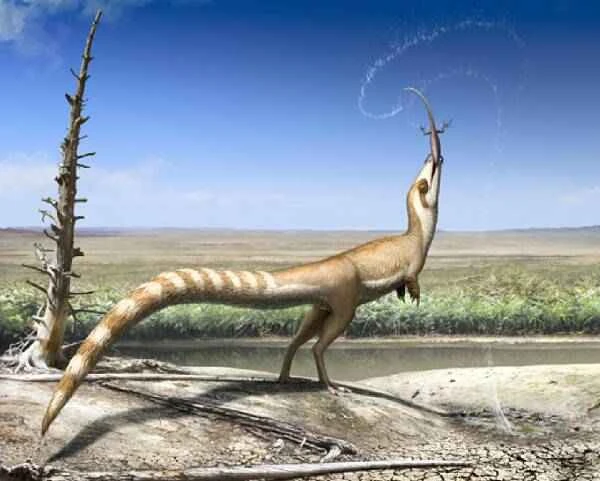
Sinosauropteryx is a compsognathid discovered in China. Like most compsognathids, Sinosauropteryx was quite small. Based on holotype specimens, its body length is estimated to be around 1 meter. Initially, due to its filamentous feathers, Sinosauropteryx was thought to be closely related to birds and a key species in solving the mystery of bird origins. However, current research indicates that the compsognathid group to which Sinosauropteryx belongs is the most primitive among the maniraptorids.
8. Northeast Giant Dragon
Early Cretaceous, 133 million to 120 million years ago
Dongbeititan was a herbivorous dinosaur that lived during the Early Cretaceous period, 133 million to 120 million years ago.
9. Rehe Dragon
Early Cretaceous, 130 million to 125 million years ago
Jeholosaurus is a genus of ornithopod dinosaur that lived in China during the Early Cretaceous period. Jeholosaurus was a small, primitive ornithopod dinosaur belonging to the phylum Hypnotosaurida (considered a paraphyletic group).
10. Jinzhou Dragon
Early Cretaceous, 130 million to 125 million years ago
*Jinzhousaurus* is a genus of iguanodontid dinosaur that lived during the Early Cretaceous period. Their fossils were discovered in China, including a nearly complete skeleton. The type species is also the only one known in the 21st century. *Jinzhousaurus* was first described by Wang Xiaolin and Xu Xing in 2001. They lived during the Barremian stage, approximately 125 million years ago. This genus is dedicated to Yang Zhongjian, considered the father of Chinese vertebrate paleontology and a pioneer in Chinese dinosaur research.
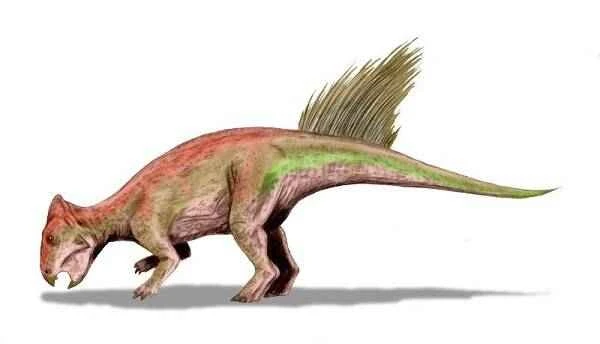
11. Liaoning horned dragon
Early Cretaceous, 130 million to 125 million years ago
Liaoningosaur is the earliest known neoceratops in the world. Living approximately 130 million years ago during the Early Cretaceous period, Liaoningosaur was about the size of a large dog, a quadrupedal herbivore. Unlike Triceratops, which had a long neck frill, Liaoningosaur had a short neck frill and weak cheekbones. Paleontologists have also discovered a series of important characteristics of ceratopsians, such as the slow evolution of their distinctive neck frill and specialized chewing structures.
12. Meilong
Early Cretaceous, 130 million to 125 million years ago
Meilong was a small theropod dinosaur discovered in China, measuring only about 53 centimeters in length. Fossil specimens of Meilong preserved its sleeping posture, indicating that many behavioral characteristics of modern birds already appeared in non-avian dinosaurs.
13. Nearby birds
Early Cretaceous, 130 million years ago
Anchiornis is a small theropod dinosaur discovered in China, measuring approximately 34 cm in length and weighing about 0.1 kg. Early taxonomic work classified it as belonging to the Troodontidae group; however, recent phylogenetic analyses of coelurosaurs support its classification as a basal member of the Avesalis. Anchiornis collections are very large, many preserving exquisite feather imprints. These specimens support a number of significant scientific findings, helping evolutionary biologists decipher the origins of birds.
14. Emperor Dragon
Early Cretaceous, 130 million years ago
Dilong is a small carnivorous dinosaur discovered in China, measuring about 2 meters in length. It lived during the Early Cretaceous period and its phylogenetic position is between proceratosaurids and the more advanced tyrannosaurids. The genus Dilong contains only one species, Dilongia spicata. Although small in size, Dilong already possessed some characteristics of advanced tyrannosaurids, such as relatively short forelimbs. In addition, Dilong retained fibrous feathers around its body.
15. Slender Velociraptor
Early Cretaceous, 130 million to 125 million years ago
*Microraptor* is a small theropod dinosaur discovered in Beipiao, Liaoning Province. It measures approximately 90 cm in length and belongs to the Microraptor group within the dromaeosaurids. *Microraptor*'s phalanges have greater curvature than those of many large terrestrial dinosaurs, suggesting it may have been an arboreal dinosaur. Currently, only one specimen of *Microraptor* exists. Due to the lack of preserved epidermal derivatives, paleontologists cannot determine whether *Microraptor* possessed metatarsal feathers like *Microraptor* and could glide on all fours.
16. Hongshan Dragon
Early Cretaceous, 130 million to 125 million years ago
Hongshanosaurus is a Psittacosaurid dinosaur from the Early Cretaceous period in East Asia. Although only two skull fossils exist, comparisons with its close relatives have revealed it to be a bipedal herbivorous dinosaur with a beak at the front of its upper and lower jaws. It is one of the most complete fossils discovered in the Jehe Formation in Liaoning Province, China.
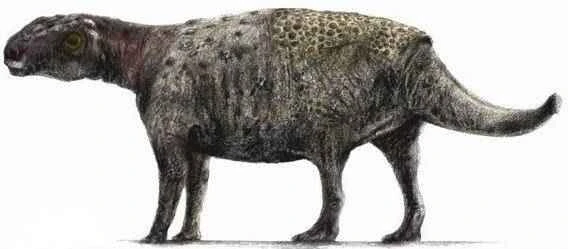
17. Liaoning Long
Early Cretaceous, 130 million to 125 million years ago
Liaoningosaurus is an unusual genus of ankylosaur from the Lower Cretaceous period.
18. Shenzhou Dragon
Early Cretaceous, 130 million to 125 million years ago
Shenzhousaurus is a primitive ornithischian dinosaur that lived in China during the Lower Cretaceous Barremian stage. The holotype was discovered in the basal fluvial alluvial deposits of the Yixian Formation in Beipiao City, Liaoning Province. This specimen consists of a partial skeleton situated on a sandstone block, with the head positioned above the torso, a typical death posture.
19. Mid-level Magnificent Feathered Dragon
Early Cretaceous, 130 million to 125 million years ago
*Mesohualiyusaurus* is a compsognathid discovered in Liaoning, China. This genus currently contains only one species, the giant *Mesohualiyusaurus*. Unlike other smaller compsognathids, *Mesohualiyusaurus* was quite large, being the largest known compsognathid. The holotype specimen is approximately 2.4 meters long, and another specimen included in the genus may have been even larger. There is evidence that this large compsognathid preyed on dromaeosaurids.
20. Chinese Dragon Hunting
Early Cretaceous, 130 million to 125 million years ago
The Chinese dinosaur was less than 1 meter long, making it a "small" creature in the dinosaur family. However, because its forelimbs had evolved into wings that could extend to the sides like those of a bird, and it had transitional features from dinosaurs to birds, it became another major piece of evidence for the theory that "birds originated from dinosaurs".
21. Tianyulong
Early Cretaceous, 130 million years ago
Tianyulong is a species of ornithischian dinosaur belonging to the family Heterodontosauridae. Its fossils were discovered in Jianchang County, Liaoning Province, China, dating back to the Early Cretaceous period, specifically the Jehol Group. The fossils of Tianyulong show feather-like indentations on its neck, back, and tail. These feather-like structures are tubular, unbranched, and are dermal derivatives; their structure is remarkably similar to the primitive feathers of known feathered theropod dinosaurs. Scientists speculate that these dinosaurs, which are quite distantly related in evolution, possessed similar...
22. Yixian Long
Early Cretaceous, 130 million to 125 million years ago
Yixianosaurus, meaning "Yixian lizard," is a maniraptorosaur that lived in China during the Aptian stage of the Early Cretaceous, approximately 122 million years ago. Only one pair of arms with fossilized feathers has been discovered. The exact position of Yixianosaurus within the maniraptorosaur group remains uncertain; it may belong to the Anchiornis family.
23. Primitive Archaeopteryx
Early Cretaceous, 128 million to 110 million years ago
*Protarchaeopteryx*, a turkey-sized feathered dinosaur, was discovered in China. It had a short, stout tail with well-preserved feathers; its hands were long and slender with three claws and carpal bones. The discovery of *Protarchaeopteryx* is significant for the study of bird origins because it possessed true feathers and was evolutionarily closer to birds than *Sinosauropteryx*. However, it is more...
24. Tyrannosaurus Rex
Early Cretaceous, 125 million years ago
The genus *Taurophorus* currently contains only one species, the type species *Taurophorus clarkii*, whose fossils were donated to the University of Chicago by Henry Christian for research. Serino et al., based on index fossils in the surrounding rock, dated this specimen to the Yixian Formation in China; however, recent studies suggest that the specimen may have originated from the Erlian Formation in Mongolia, and a more recent phylogenetic study of tyrannosaurids also uses this date. *Taurophorus* was a uniquely shaped small theropod dinosaur; adults...
25. Microraptor
Early Cretaceous, 124 million years ago
Microraptor is a small theropod dinosaur discovered in Liaoning, China. It belongs to the dromaeosaurid family within the crested raptors and is closely related to birds. Currently, this genus contains three species: the type species *Microraptor zhaoi*, and the classified species *Microraptor gui* and *Microraptor hanqing*. *Microraptor zhaoi* is likely one of the smallest theropod dinosaurs discovered to date. The fossil collection of *Microraptor* is also very large, including approximately 300 unpublished specimens in addition to officially published specimens.
26. Beipiaolong
Early Cretaceous, 124 million years ago
Beipiaosaurus was a feathered carnivorous dinosaur. Skin traces from the type specimen show that Beipiaosaurus's body was covered with down-like feathers, similar to Sinosauropteryx, but Beipiaosaurus's feathers were longer and hung vertically from its arms. Xu Xing et al. believe that the downy feathers of Beipiaosaurus indicate that it was an intermediate species between Sinosauropteryx and higher birds (avian-winged dinosaurs).
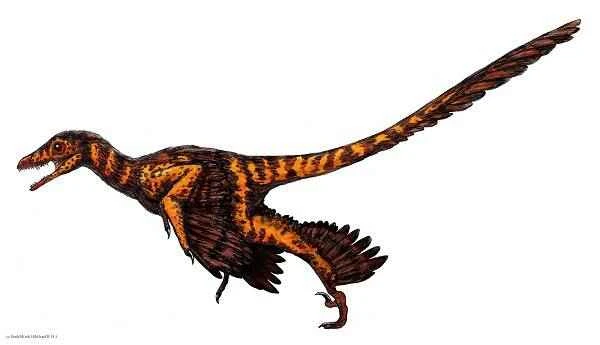
27. Sinornithosaurus
Early Cretaceous, 124 million years ago
Sinornithosaurus is a small dromaeosaurid discovered in Liaoning, China. Like Microraptor, it belongs to the Microraptor group within the dromaeosaurids, but is slightly larger. The genus Sinornithosaurus contains two species: the type species *Sinornithosaurus millennia* and the classified species *Sinornithosaurus haoni*. The fossils of Sinornithosaurus preserve an almost complete skull, providing many anatomical details. As a relatively primitive dromaeosaurid, the skull of Sinornithosaurus shows a very high degree of similarity to *Archaeopteryx* and other early birds.
28. Feathered Dragon
Early Cretaceous, 120 million years ago
The genus name *Cryptovolans* derives from the Latin words "Cypto-" (meaning "concealed, hidden") and "volans-" (meaning "flying"), thus meaning "the hidden flyer." The type species of *Cryptovolans* is named *Cryptovolans pauli*, in honor of the paleontologist Gregory S. Paul.
29. Dalian Bird
Early Cretaceous, 120 million years ago
Dalianraptor (scientific name meaning "thief of Dalian") is a genus of primitive birds that lived in prehistoric China, approximately 125 million years ago during the Early Cretaceous period. Dalianraptor was about 80 centimeters long and was discovered in the Jiufotang Formation in western Liaoning Province.
30. Resembles a tailed dragon
Early Cretaceous, 120 million years ago
Similiacaudipteryx (scientific name meaning "similar to a caudal dinosaur") is a theropod dinosaur belonging to the family Caudalosauridae. The type species is *S. yixianensis*, fossils of which were discovered in the Jiufotang Formation, dating back to the Early Cretaceous Albi to Aptian stages, approximately 112-120 million years ago.
31. Beipiao Jaw Dragon
Early Cretaceous, 120 million years ago
Beipiao Jaw Dragon was a small dinosaur that lived during the Early Cretaceous period, about 120 million years ago.
32. Psittacosaurus
Early Cretaceous period, 119 million to 97.5 million years ago
Psittacosaurus, also known as Psittacosaurid, is a genus of dinosaur belonging to the family Psittacosauridae within the order Ceratopsiana. It lived in Asia during the Early Cretaceous period, approximately 123.2 million to 110 million years ago. Like Protoceratops and Triceratops, Psittacosaurus possessed a hooked beak resembling that of a parrot. Based on its size and the era in which it lived, scientists believe that Psittacosaurus may have been an ancestor of most ceratopsian dinosaurs.
33. Kreutzornis
Late Cretaceous, 100-90 million years ago
Crichtonsaurus is dedicated to Michael Crichton, the famous science fiction writer and author of the film Jurassic Park; the species name Bulin is dedicated to Linus Brück, the Swedish paleontologist who made significant contributions to the study of vertebrate paleontology in China.
34. Double Temple Dragon
Early Cretaceous period, 100 million to 94 million years ago
Shuangmiaosaurus is a genus of iguanodontid dinosaur that lived in China during the Late Cretaceous period.
35. Northern Dragon
Late Cretaceous, 86-83 million years ago
Borealosaurus (scientific name: Borealosaurus) belongs to the phylum Chordata, class Sauropsidae, order Saurischia, family Saltasauridae, and genus Borealosaurus.