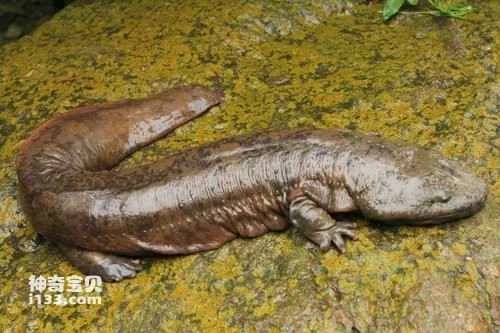
The physiology, hormones, and behavior of animals (including humans) are regulated by a roughly 24-hour circadian rhythm : when to be awake to forage and when to rest are all coordinated by this "biological clock." Based on the peak activity periods of the day , we usually classify animals into two main categories: diurnal (active during the day) and nocturnal (active at night). Very few species are highly active throughout the day; they all switch between periods of high activity and rest.
Below, we will guide you through a systematic understanding of the core characteristics and representative species of both species, and help you see the differences between them.
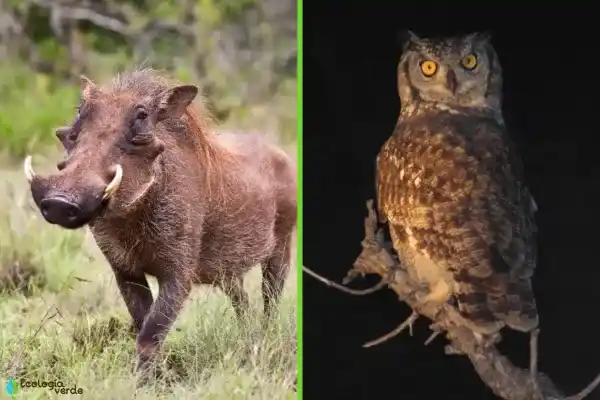
Tip: In addition to diurnal and nocturnal activities, there is another type called crepuscular , which are most active at dawn and dusk , such as deer, some felines and many insects; they are neither completely diurnal nor typical nocturnal.
Key characteristics of diurnal animals
Event Time
The peak activity period is from sunrise to sunset ; at night, people mainly rest, conserve energy, and avoid enemies.
Activity rhythms are driven by an endogenous biological clock and are also fine-tuned by external cues such as light, temperature, and food availability .
Senses and Behavior
They generally have highly developed vision : abundant cone cells, better color vision , and strong adaptability to strong light.
Many species change their daily routines according to the length of daylight in different seasons (the days are shorter in winter, and the period of daytime activity is also shortened).
They rely on resources available at specific times of the day (such as nectar, prey that are active during the day), thus their foraging window is more concentrated.
An exception to insects
A significant number of diurnal insects respond more strongly to external rhythmic signals (temperature, light, flowering), and external cues have a particularly significant impact on their "time schedule".
Common diurnal animals (examples)
mammals
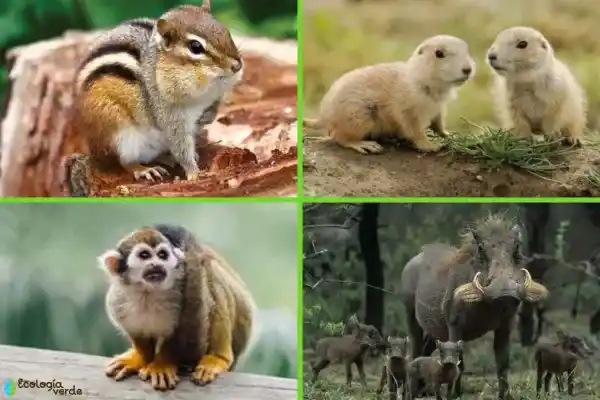
Chipmunks/ground squirrels (genus Spermophilus )
Prairie dogs ( Cynomys genus)
Squirrel monkeys ( Saimiri genus)
Warthog ( Phacochoerus )
Birds (mostly daytime visual predators or foragers)
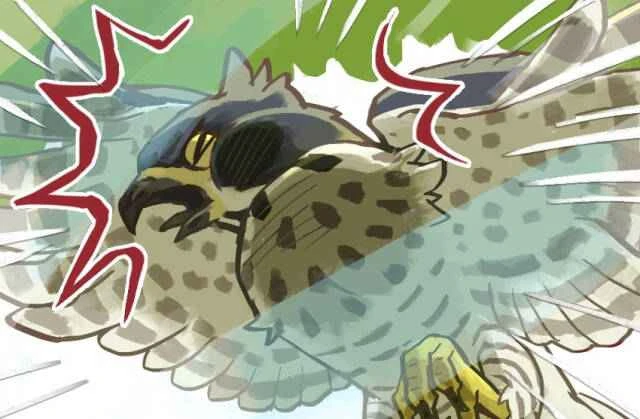
Falcon ( Falco genus)
Peacock ( Pavo cristatus )
Herons ( Ardeidae family)
Woodpecker ( Picidae family)

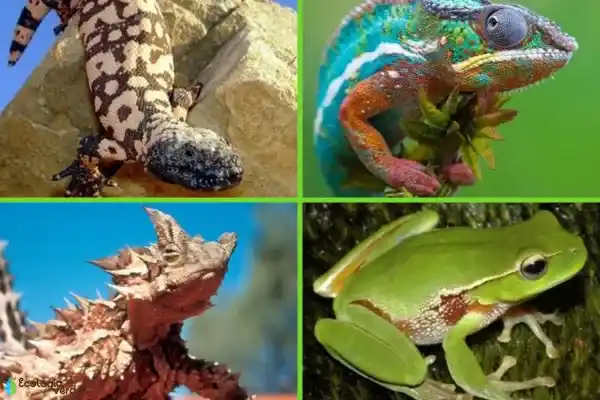
Reptiles and amphibians
Heloderma suspectum ( Gillard lizard )
Chameleon (family Chamaeleonidae )
Moloch horridus
Frogs ( Anura ; many species bask in the sun during the day to regulate their body temperature, and are more active at dusk)
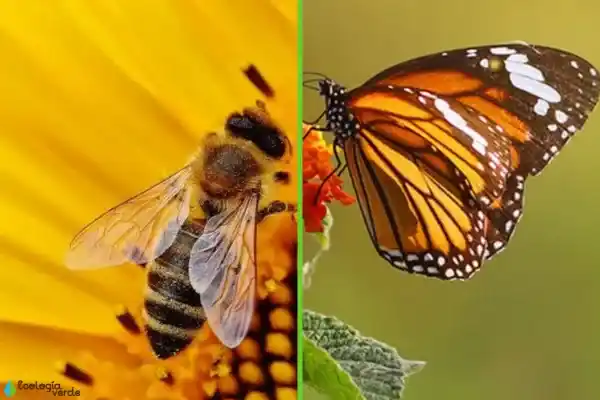
insect
Honeybees ( Apoidea , order Hymenoptera)
Butterflies ( Lepidoptera )
Key characteristics of nocturnal animals
Event Time
Sunset to sunrise is an important window for foraging, migration, socializing, and reproduction.
Lower nighttime temperatures, less evaporation, and avoidance of daytime predators and competitors are ecological benefits that many species “choose the night.”
Senses and Disguise
Visual adaptation to low light : commonly large eyes, pupils that can dilate significantly, and abundant rod cells ; some species have a retro-lens reflective layer (tapetum lucidum).
Auditory/olfactory enhancement : Asymmetrical ear openings in owls improve the accuracy of sound source localization; many mammals rely on olfactory marking and wind direction tracking.
Darker body color : fur/feather/scale color makes it easier to hide in dark environments.
Silent movement : Feline paw pads are soft, and owl wing edges are finely serrated to minimize movement and wingbeat noise.
Common nocturnal animals (examples)
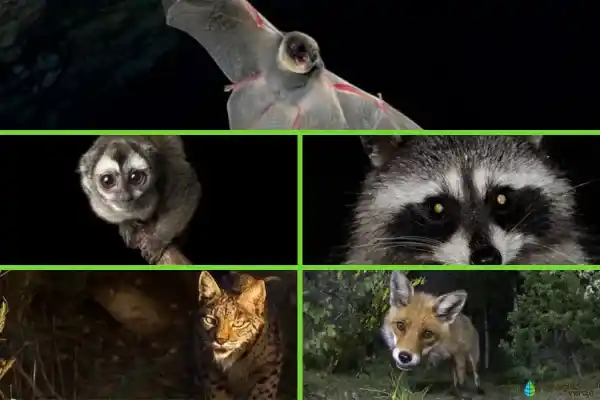
mammals
Bats ( Chiroptera ) – mostly rely on echolocation
Andean night monkey ( Aotus lemurinus )
Raccoon ( Procyon genus)
Iberian Lynx ( Lymph pardinus )
Red fox ( Vulpes vulpes )
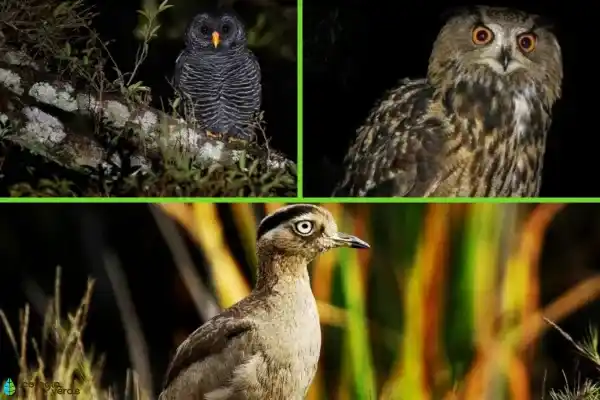
Birds (mostly birds of prey)
Black Owl ( Strix huhula )
Eagle Owl/Owl ( Bubo bubo )
Peruvian Stone Plover/Grey Night Hawk ( Burhinus superciliaris )
Reptiles and amphibians
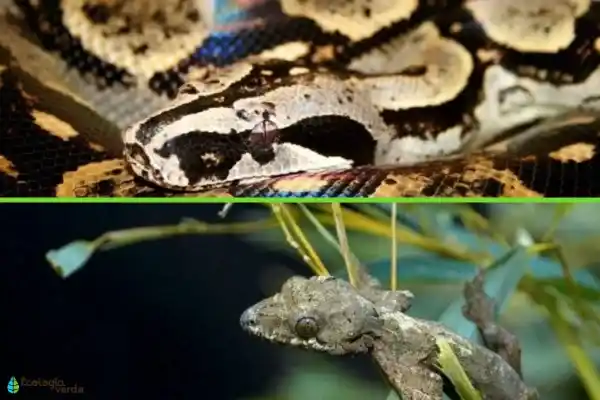
Tumbes anaconda ( Boa constrictor longicauda )
Geckos (most groups within the suborder Lacertilia are nocturnal)
Representatives of Insects and Arachnida
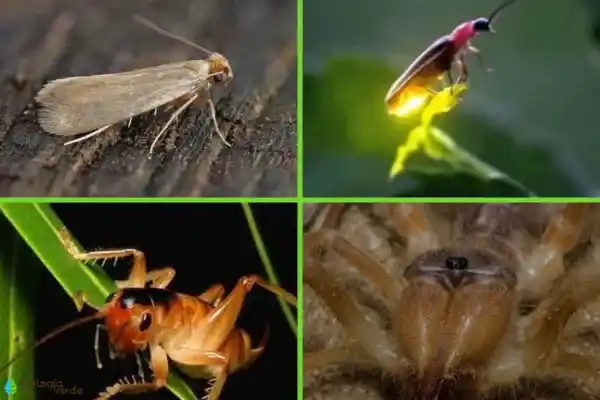
Moths (such as the clothes moth Tineola bisselliella )
Fireflies (family Lampyridae ; use bioluminescence for courtship)
Crickets ( Gryllidae family; they sing to attract mates)
Camel spider/day spider ( Solifugae order; mostly nocturnal)
Daytime travel vs. nighttime travel: Understand the key differences on one page
| Dimension | diurnal animals | nocturnal animals |
|---|---|---|
| Peak of the event | Sunrise — Sunset | Sunset — Sunrise |
| Dominant senses | Visual acuity (excellent color vision, strong adaptability to bright light) | Dark vision, enhanced hearing/olfaction, and common silent movements |
| Body color/morphology | More vivid or match the daytime background | Mostly dark-colored and low-contrast to facilitate concealment. |
| Resources and Risks | High resource visibility, but in the same area as daytime predators/competitors. | They need to avoid competition and high temperatures, but also need to forage and communicate efficiently in low light. |
| Biological clock regulation | Influenced by endogenous rhythms and strong synchronization with sunlight | Intrinsic rhythms, along with external cues such as darkness, temperature, and lunar phases, collectively shape the body. |
Scientific Frontiers: Although we know that circadian clock genes (such as CLOCK, BMAL1, PER, CRY, etc.) play a key role in regulating diurnal activity patterns, the question of why some lineages evolved to be diurnal and others to be nocturnal , involving multiple factors such as the visual system, metabolism, and predator-prey pressure, remains an active area of research.
summary
Diurnal and nocturnal behavior are not a matter of "which is better," but rather two successful strategies under different ecological niches and energy-risk trade-offs.
By observing the animal's activity time, eye shape, body color, and behavior , you can quickly determine whether an animal prefers to "work" during the day or at night.
Don't forget the "gray areas" such as twilight and multi-peak activity ; nature is never just black and white.
References
Martínez, Gladys (2009) Circadian regulation of behavior: differences between diurnal and nocturnal species. Konrad Lorenz University Foundation, Bogotá (Colombia), Vol. 8 (2), pp. 487–492.
Tomotani, B. and Oda, G. (2012) Diurnality: An exploration of activity patterns. Journal of Biology, University of São Paulo, Vol. 9 (3), pp. 1–6.
Luévano, J. et al. (2008) Nocturnal rodent communities in the transition zone between microphyte and stargrass in San Luis Portosi, Mexico. Mexican Journal of Biodiversity, Vol. 79 (1).
Hugues, B.; Navaroli, F.; Torres, M. & Soto, C. (2008) Color vision in animals. REDVET, Vol. 9 (11), pp. 1-6