On July 11, *Current Biology* published online the latest research findings of Zou Jingmei, Dong Liping, Zhou Zhonghe from the Institute of Vertebrate Paleontology and Paleoanthropology, and Zheng Xiaoting from the Tianyu Museum: A nearly intact, undigested lizard was preserved in the stomach of a new specimen of *Microraptor zhaoianus*, a dromaeosaurid from the Early Cretaceous Jehol Biota. This is the fourth reported example of a Microraptor specimen with food preserved in its stomach.
After observation and analysis, the research team concluded that this lizard specimen represents a new genus and species, naming it *Indrasaurus wangi*. The genus name "Indra" comes from the Vedic legends of ancient India, where the ancient god Indra was swallowed whole by a dragon (here alluding to Microraptor) in a famous battle. The species name "Wangi" is named after Wang Yuan, curator of the Paleozoological Museum of China and researcher at the Institute of Vertebrate Paleontology and Paleoanthropology, Chinese Academy of Sciences, to pay tribute to his outstanding contributions to the study of ancient amphibians and reptiles and to popularizing paleontology over the years.
Phylogenetic analysis revealed that *Indra wangi* is closely related to Cretaceous lizards, but more distantly related to modern lizards. Notably, its teeth differ from those of other lizards in the Cretaceous Jehol Biota, thus increasing the biodiversity of the Jehol Biota lizards and suggesting that its diet may have differed from that of other lizards.
The *Microraptor zhaoi* specimen reported in this study is the fourth *Microraptor* fossil to date to have food preserved in its stomach. Combined with previous research, *Microraptor* was a carnivorous dinosaur with a diet including birds, fish, mammals, and lizards, indicating that it was an opportunistic predator. The fact that it swallowed the lizard whole, head to tail, is similar to how modern carnivorous birds hunt lizards.
Even though the troodontid Anchiornis, which lived during the Jurassic period, possessed digestive features similar to modern birds (regurgitating indigestible bones, hair, insect shells, etc., in the form of boluses), Microraptor clearly lacked this digestive method. This suggests that in the evolution from dinosaurs to birds, closely related groups underwent parallel evolution, and some traits may have evolved independently many times.
Over the past 20 years of research on the Jehol Biota, researchers have collected more than 20 pieces of direct evidence indicating trophic interactions between organisms (mainly referring to the discovery of food in the stomachs of species). This study integrates existing research findings and attempts to reconstruct a preliminary food web of the Jehol Biota. The results show that fish are the most important food resource for secondary and tertiary consumers, providing new evidence for further understanding the ecosystem of the Jehol Biota.
This research was supported by the Chinese Academy of Sciences Strategic Priority Research Program and the National Natural Science Foundation of China.
Paper link: https://www.cell.com/current-biology/fulltext/S0960-9822(19)30713-4
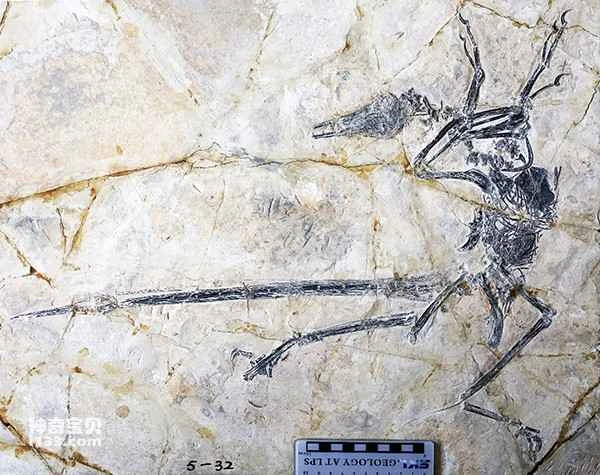
Photo of a Microraptor zhaoi (STM5-32) specimen (provided by Zou Jingmei)
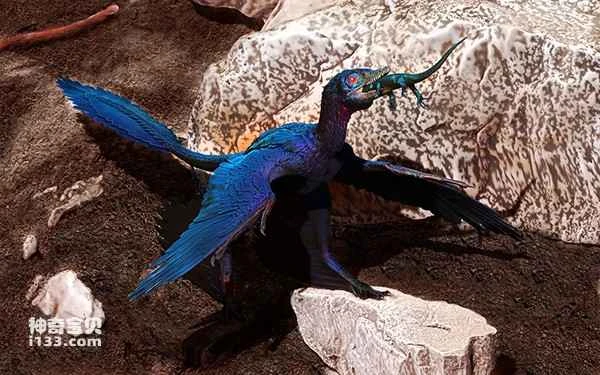
Reconstruction of a Microraptor zhaoi swallowing an Indra wangi (Photo provided by Zou Jingmei)