The success of bird evolution is inseparable from its unique reproductive and incubation system. On March 21, Zhou Zhonghe, Zou Jingmei, and Bajor's team reported online in the British journal Nature Communications the world's first extinct bird fossil containing an eggshell in its abdominal cavity—the enantiornithine. This provides new information for the study of the reproduction and breeding of ancient birds, and further provides new evidence for exploring the evolutionary history of early birds.
This specimen, discovered in Yumen City, Gansu Province, China, is a completely new genus and species found in lacustrine sediments of the Early Cretaceous Xiagou Formation, dating back 110 million years. It has been named *Avimaia schweitzerae*. The specimen is preserved within flattened shale; although the head is missing, the largely intact eggshell (including the outer membrane and cuticle) inside the body cavity has been remarkably well-preserved.
Tissue sections and scanning electron microscopy revealed an abnormally thin eggshell with a double-layered, pathological structure (this is the first time a double shell has been found in an enantiornithine egg fossil). Researchers speculate that this female bird exhibited "egg-holding syndrome," a common condition in modern reptiles, where the egg fails to be laid in time and remains inside the body cavity for an extended period. This symptom can occur in some modern birds under high stress or due to malnutrition; it is also relatively common in some modern turtles and even in some sauropod dinosaur fossils.
The study also found that the outermost membrane of the eggshell is composed of small spherical mineral particles. This dense membrane of spherical mineral particles is often found in modern birds that build their nests in humid environments (such as quails, ducks, and flamingos). This structure can isolate the eggs from humid air, thus avoiding the corresponding infection problems. This is consistent with the enantiornithine birds' habit of partially burying their eggs in their nests. The presence of the protective layer of spherical mineral particles may represent a more primitive form of bird egg.
Furthermore, suspected medullary bone was found in the leg bone fragments of this specimen. Medullary bone is formed in the cavities of long bones during egg-laying in female birds, providing calcium for the eggs. However, most previous reports of "medullary bone" are debatable, as many are actually caused by pathology or other reasons. This specimen, however, is a rare find, possessing two conclusive pieces of evidence for sex identification: egg and medullary bone. This allows researchers to determine the sex of ancient birds and further explore the sexual dimorphism of primitive birds.
This research was supported by the National Natural Science Foundation of China Basic Science Center Project "Craton Destruction and Terrestrial Biological Evolution", the Chinese Academy of Sciences International Talent Program (PIFI) Project, and the Chinese Academy of Sciences Pilot Project.
Original link: https://www.nature.com/articles/s41467-019-09259-x
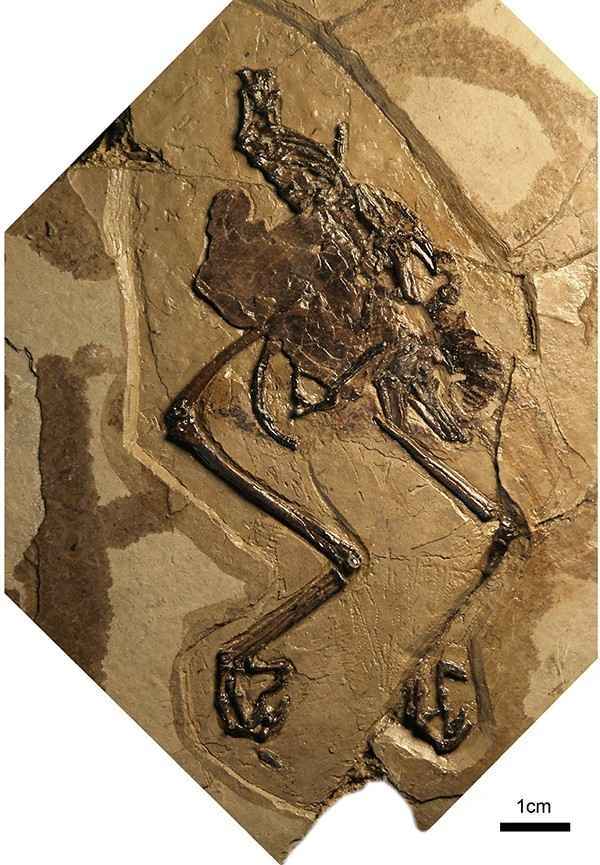
Figure 1. Photograph of the holotype of the Shih's Motherbird (Photo courtesy of Alida Bailleul)
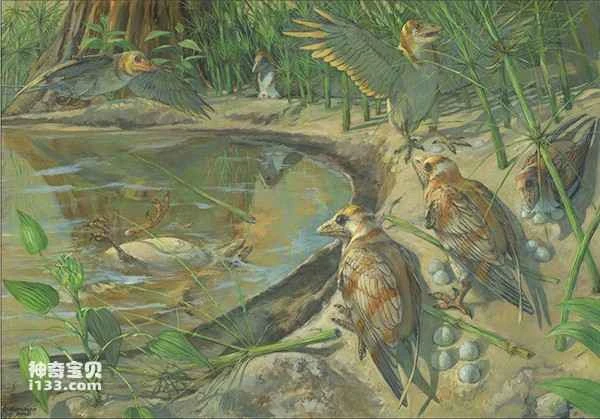
Figure 2. Reconstruction of Shirley's Motherbird (Image courtesy of Alida Bailleul)