The mystery of the dinosaur extinction 66 million years ago has been a hot topic of global interest, with scholars proposing various hypotheses, including the well-known asteroid impact hypothesis. On the 20th, reporters learned from the Institute of Vertebrate Paleontology and Paleoanthropology of the Chinese Academy of Sciences that a new study by Chinese scientists on dinosaur eggs, from the perspective of dinosaur diversity evolution, has revealed a new mechanism for dinosaur extinction. The relevant findings have recently been published as a cover article in the international journal *Proceedings of the National Academy of Sciences* (PNAS).
Dinosaur eggs, as the primary carriers of dinosaurs' reproduction and life on Earth, not only reflect their reproductive habits, but their enrichment and burial patterns in strata also reveal paleoenvironmental information during the dinosaurs' lifetime. A research team comprised of members from the Institute of Vertebrate Paleontology and Paleoanthropology of the Chinese Academy of Sciences, the Institute of Geology and Geophysics of the Chinese Academy of Sciences, and China University of Geosciences (Wuhan) conducted systematic paleontological and stratigraphic studies at a rich dinosaur egg deposit in the Shanyang Basin of Shaanxi Province, providing new evidence for solving the mystery of dinosaur extinction.
The team collected over 1,000 in-situ buried dinosaur eggs and eggshells from the basin, along with a small number of tyrannosaur and sauropod skeletons. Analysis of these eggs and skeletons indicates that dinosaur diversity in the Shanyang Basin remained low for approximately 2 million years before its extinction. Based on dinosaur fossils found in other parts of my country, this study suggests a significant decline in dinosaur diversity in my country around 72 million years ago, a trend similar to the distribution of dinosaur fossils in western North America.
This research provides new evidence and perspectives for understanding the extinction process and mechanisms of dinosaurs. Dinosaurs were oviparous, and the hatching success rate of dinosaur eggs directly determined the prosperity of dinosaur populations. The hatching of dinosaur eggs required suitable temperature, humidity, and even carbon dioxide concentration. Therefore, this study proposes that during the Late Cretaceous, with the co-evolution of the natural ecosystem and the dinosaurs themselves, dinosaur diversity experienced a continuous decline, reducing the environmental adaptability of this group and making them unable to survive and recover from drastic environmental changes caused by major catastrophic events such as volcanic eruptions or asteroid impacts, ultimately leading to their extinction.
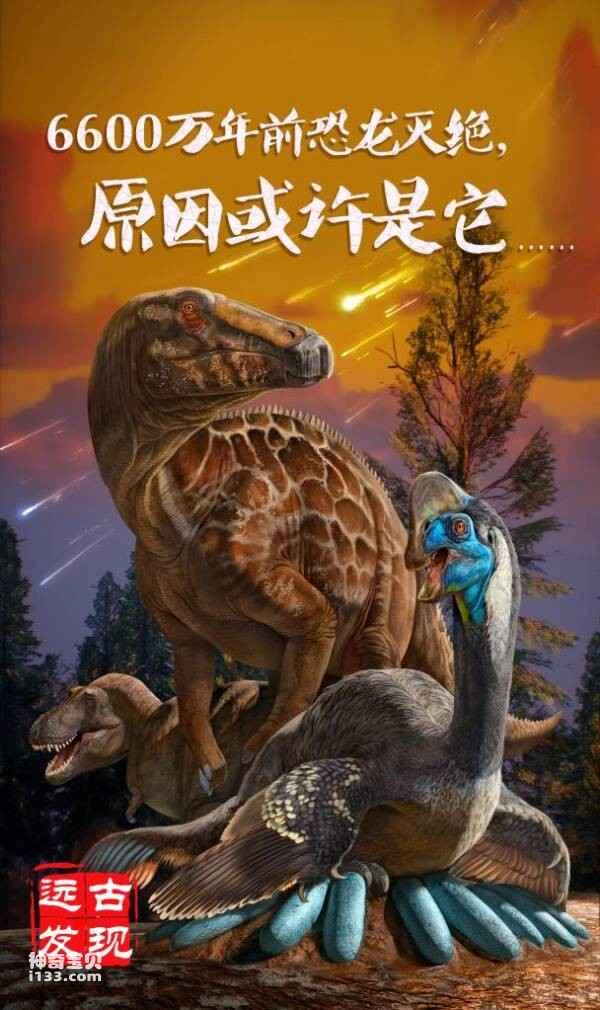
Reconstruction of three main types of dinosaurs that lived in the Shanyang Basin during the Late Cretaceous period. (Illustration by Zhao Chuang)