A recent British natural science study has discovered that modern snakes owe their survival and proliferation worldwide to a meteorite that struck Earth 66 million years ago, wiping out most species, including dinosaurs. Scientists say that at that time, a few snake species, facing extinction as most Earth's species did, were able to evolve into the more than 3,000 snake species found around the world today because they could burrow underground and endure long periods of hibernation and hunger.

Snakes are now found on every continent except Antarctica.
Geological and archaeological evidence suggests that around 66-65 million years ago, at the boundary between the Cretaceous and Paleogene periods, a meteorite struck the area near the Gulf of Mexico in what is now North America, triggering massive earthquakes, giant tsunamis, and wildfires that swept across almost the entire globe. What followed was a period of darkness that lasted for decades, with dust obscuring the sky.
Studies show that 76% of the Earth's plant and animal species perished at the time. However, a small number of mammals, birds, small amphibians, reptiles, and fish survived the mass extinction and began to reproduce and expand after the disaster.
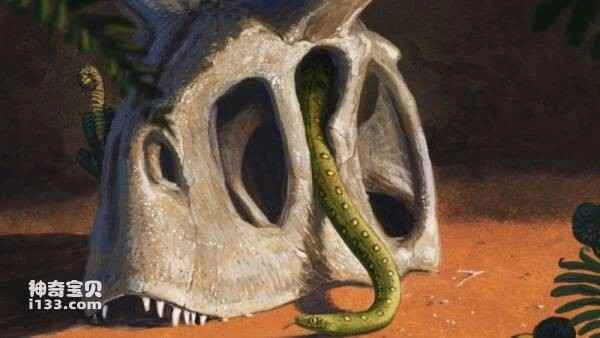
An artist's imagined illustration of how ancient snakes survived, based on scientific research findings.
From Misfortune to Fortune
Dr. Catherine Klein, who led the study at the University of Bath, explained: "In that environment of food chain collapse, some snakes not only survived but thrived and began to expand to other continents and adapt to their new environments."
"Without the help of a meteorite impact, the living space of snakes would not have expanded to its current state."
It is said that when the meteorite struck Mexico, the ancient snakes were not much different from modern snakes, relying on crawling and swallowing prey for survival. However, the snakes that survived possessed unique abilities not found in most other species, such as the ability to go without food or water for up to a year and the ability to hunt in the dark. Furthermore, the surviving snakes primarily lived underground or in dense rainforests, thus avoiding both wildfires and harsh external environments, and also securing scarce water resources.
With the elimination of most natural predators or other potential food competitors, surviving snakes were able to gradually migrate to most continents and evolve into more species. During the migration and evolution of snakes, giant snakes began to appear in some suitable habitats, such as the giant pythons in the rainforests of Southeast Asia, and giant sea snakes reaching up to ten meters in length in certain sea areas.
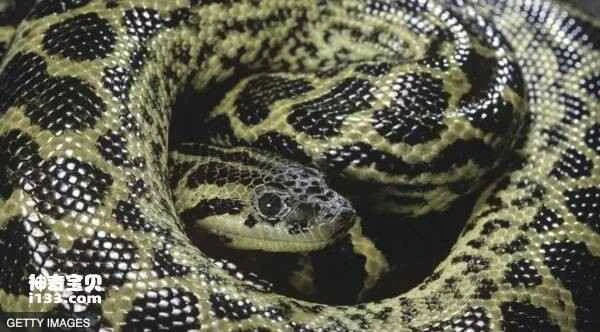
Researchers at the University of Bath have mapped out a framework for the evolutionary history of modern snakes by comparing fossils and snake genes.
Mass extinction and the new era
New findings by British scientists have been published in *Nature Communications*. The research shows that all modern snakes can be traced back to the cataclysmic event of a meteorite impact 66 million years ago. All existing snakes in the world—from grass snakes, tree snakes, sea snakes, rattlesnakes, cobras to rainforest pythons—divered and evolved after that cataclysmic event.
Scientists explain that any event in natural evolutionary history that causes the extinction of more than half of all species can be defined as a mass extinction. Research shows that Earth has experienced at least five mass extinction events to date:
Late Ordovician or the transition period between the Ordovician and Silurian periods (445 million to 443 million years ago);
Approaching the Devonian-Carboniferous transition period (375 million to 360 million years ago);
Permian-Triassic transition period (250 million years ago);
Triassic-Jurassic transition period (200 million years ago);
And the "mass extinction of dinosaurs" that many people are more familiar with from the Cretaceous-Paleogene period 66 million years ago.
Dr. Nick Longrich of the Milner Centre for Natural Evolution at the University of Bath points out that after each mass extinction, species on Earth usher in an era of revolutionary "comprehensive innovation."
Snakes are among the most successfully evolved species on Earth today, with their "footprints" covering every continent except Antarctica. They exist in almost all ecosystems, from deserts to oceans. The smallest snake species is only a few centimeters long, while the largest can reach several meters in length.
Snakes play an important role in the food chain, particularly in helping humans control pests such as rats. Nevertheless, some snake species are facing extinction due to overlap with human habitats.