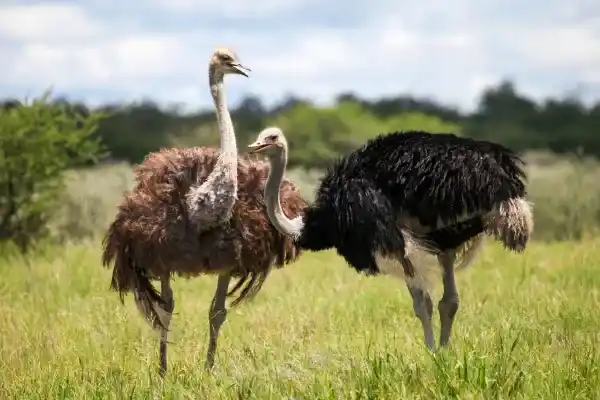
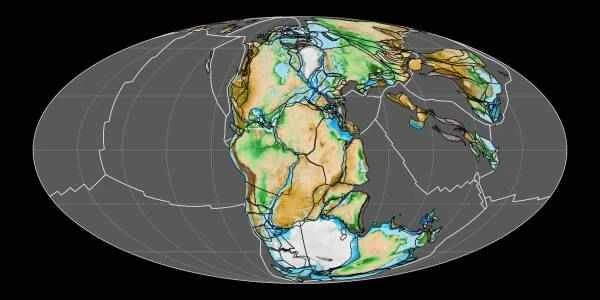
It was a catastrophe almost unimaginable to us. 66 million years ago, an asteroid 15 kilometers in diameter struck Earth with the force of 10 billion Hiroshima atomic bombs. The radioactive fireball reduced everything within a radius of hundreds of miles to ashes, and the impact also caused a tsunami that swept across half the globe. Even the atmosphere may have burned; no land animal weighing more than 25 kilograms survived. In fact, about 75% of species went extinct. The so-called "non-avian" dinosaurs had no hope; only small, feathered flying dinosaurs survived—the birds we know today.
But what if history had gone in a different direction? What if the asteroid had missed Earth, or arrived a few minutes earlier? Researchers raised this hypothetical scenario in a recent BBC documentary, *The Day the Dinosaurs Died*. Scientists, including Sean Gulick, a geologist at the University of Texas, believe that if the asteroid had arrived a little earlier or later, it wouldn't have landed in the shallow waters of Mexico's Yucatan Peninsula, but would have crashed into the depths of the Pacific or Atlantic Ocean. This would have absorbed some of its energy and restricted the diffusion of sulfur-containing particles. It is these sulfur-containing particles that created the suffocating atmosphere months or years later.
If that were the case, Earth would still face catastrophes and extinctions, but some larger dinosaurs might have survived. This different timeline has become an intriguing thought experiment. Dinosaurologists are incredibly excited about it. Would dinosaurs still exist today? Would new species emerge? Would dinosaurs evolve intelligence similar to humans? Would mammals continue to live in the shadow of dinosaurs? Could humans evolve—as depicted in the 2015 Disney animated film *The Good Dinosaur*—and find a way to coexist with dinosaurs?

Large pterosaurs with enormous wings may dominate the skies.
However, some researchers believe that even without the asteroid impact, the dinosaur family would have already begun its path to extinction. Mike Benton of the University of Bristol says, "My view is somewhat unconventional. Dinosaurs would still have gone extinct due to climate cooling. They survived until the end of the Cretaceous, but as far as we know, mammals were diversifying at that time… and for the preceding 40 million years, the dinosaurs' power had been declining." Benton argues that even without the asteroid impact, mammals would still have replaced the dinosaurs. A 2016 paper of his suggests that dinosaurs replaced extinct species more slowly than mammals.
Other experts hold differing opinions. Tom Holtz, a carnivorous dinosaur researcher at the University of Maryland, also believes that regardless, the volcanic eruptions and massive lava flows from the Deccan Traps in India 66 million years ago would have caused the extinction of some species on Earth—but he says, "Apart from that, after the Paleocene and Eocene epochs, nothing significantly impacted the overall survival of dinosaurs. It would have been a world where dinosaurs from the Cretaceous period could have lived comfortably."
Stephen Brusatte of the University of Edinburgh added that dinosaurs diversified and evolved over 160 million years, adapting to climate change. "Until the end of the Cretaceous period, dinosaurs remained remarkably adaptable, showing no signs of extinction; they were simply wiped out by an asteroid impact. This demonstrates that this species still possessed significant evolutionary potential."
If dinosaurs had survived, what factors would have influenced their evolution? Climate change would likely be the primary obstacle. During the Paleocene-Eocene Thermal Maximum 55 million years ago, the global average temperature was 8 degrees Celsius higher than it is now, and many parts of the Earth were covered by tropical rainforests.
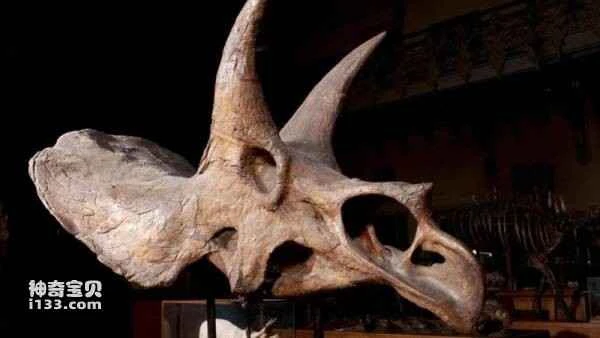
Triceratops could have evolved into a fast-moving herbivorous dinosaur, much like mammals that roamed the grasslands.
In such a greenhouse-like, lush world, long-necked sauropod dinosaurs might have grown faster, reproduced earlier, and thus shrunk in size. Scientists already know that some "short" sauropod dinosaurs once existed on islands in Europe during the Late Cretaceous. By the Middle Cretaceous, the largest tyrannosaurus in South America—40 meters long and weighing as much as two jet planes—was long extinct.
Another trend in the Late Cretaceous was the rise of flowering plants, or angiosperms. During the Jurassic, most plants were ferns and gymnosperms (including ginkgo, cycads, and conifers). These angiosperms tended to have lower nutrient levels, and driven by the intestinal space required for digestion time and efficiency, sauropod dinosaurs increased in size.
"If plants had continued to evolve in the direction of the modern world, herbivorous dinosaurs would have primarily relied on flowering plants for food," notes Matt Bonnan, a paleontologist at Stockton University in New Jersey. "Because flowering plants are easier to digest, dinosaurs would likely have been generally smaller...and large Mesozoic dinosaurs might have gone extinct."
Flowering plants are followed by fruit, which co-evolved with mammals and birds to help plants disperse seeds. Could monkey-like dinosaurs have used this resource to evolve, much like primates? "Many birds also eat fruit. So, non-avian dinosaurs could also have evolved a fruit-based diet," Bonan said.
Brussett shares this view: "Some small, feathered dinosaurs could have evolved in the same direction as primates," some of which were already hopping from branch to branch. Others might have started eating honey and, in the process, transferring pollen between flowers.
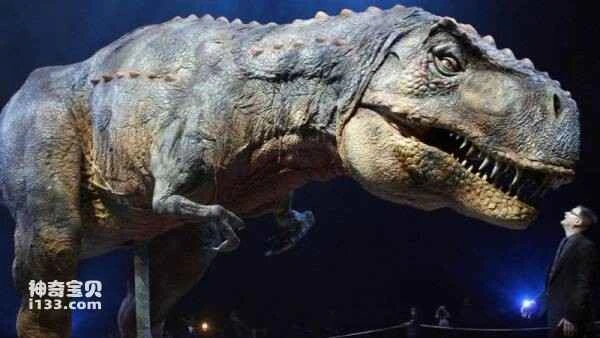
Tyrannosaurus rex could have survived to this day if the wildlife sanctuaries and national parks where it lived were large enough to meet its need for living space.
Another significant event occurred 34 million years ago, at the boundary between the Eocene and Oligocene epochs, when South America and Antarctica separated. This led to the formation of the Antarctic Circumpolar Current, which in turn resulted in the Antarctic ice sheet and a cooling and drier global climate. During the Oligocene and later the Miocene, vast grasslands appeared on Earth.
"Fast-moving, slender-legged herbivorous mammals began to become more common—in the past they could move slowly and jump into bushes to hide, but on the open grasslands, they had nowhere to hide," Holtz said. As history progressed to this point, hoofed herbivores and the carnivores that preyed on them suddenly became abundantly diverse.
Darren Naish, a vertebrate paleontologist in Southampton, England, suggests that on another timeline, fast-moving herbivorous dinosaurs could have become descendants of horned Triceratops or bipedal beaked herbivorous dinosaurs similar to Hypnotosaurus.
"Dinosaurs already possessed a huge evolutionary advantage, while mammals took a very long time to complete their evolution," he added. Mammals had an early advantage in adapting to grassland environments. Hadrosaurs had up to 1,000 teeth as weapons, while horses only had 40, allowing the former to easily chew grass.
Dinosaurs also had better eyesight than mammals; they were better at observing colors and detecting danger. Horses and cows have flat snouts, which helped them graze on harder vegetation close to the ground, so hadrosaurs and sauropods may have evolved flat snouts as well. Hadrosaurs may have also shortened their necks to help them graze on grass at their feet.
Even if dinosaurs had survived to the present day, they would have had to contend with multiple ice ages over the past 2.6 million years. But as far as we know, dinosaurs lived within the Arctic Circle during the Cretaceous period. "Perhaps in colder places we would have seen dinosaurs covered in thick fur from head to toe," Nash said.
"This wouldn't be difficult for hairy Tyrannosaurus Rex or Dromaeosaurus, which are related to Velociraptor," said Victoria Arbour, an ankylosaur expert at the Royal Ontario Museum. "Perhaps there would also be hairy ceratopsians, ankylosaurus, and hadrosaurs."
Some adaptations common today were very rare in dinosaurs. One example is burrowing. "It's strange that dinosaurs didn't burrow, because that's a common survival strategy for lizards and snakes," says Paul Barrett, a paleontologist at the Natural History Museum in London. If dinosaurs had lived longer, they might have become experts in underground environments—equivalent to moles among mammals, only with scales or feathers.
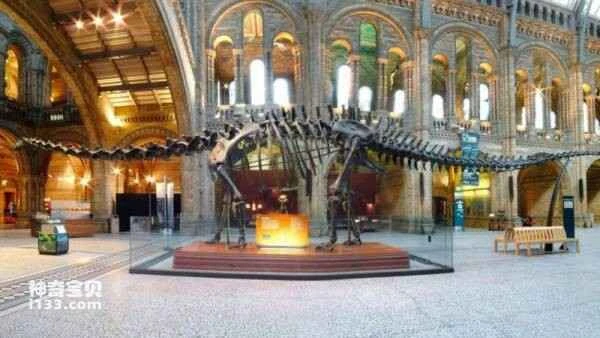
Early mammals had little chance against a large number of predators.
The ocean was yet another territory almost entirely unexplored by dinosaurs. Spinosaurus and others ventured into estuaries and riverine environments, while Ankylosaurus fossils are frequently found in marine sediments; they once lived along coastlines. Could Spinosaurus or Ankylosaurus have followed the path of mammalian whales, evolving the ability to survive in the ocean? Perhaps they returned to land to lay their eggs, or perhaps they, like ichthyosaurs and plesiosaurs, gave birth to their young in the ocean.
If dinosaurs still walked on land, pterosaurs flew in the sky, and ichthyosaurs and mosasaurs lived in the ocean, what would be the fate of birds and mammals?
By the Late Cretaceous, bird species were already abundant. "Pterosaur diversity had declined," Holtz said, suggesting this might be the reason. Surviving pterosaurs included the enormous, toothless *Syngonius*, some with wingspans reaching 12 meters, equivalent to a biplane. Whether *Syngonius* was capable of flight remains controversial—you can imagine a world where islands like Madagascar, Mauritius, and New Zealand were dominated by strange land creatures called pterosaurs, places that, in our timeline, were once the territory of flightless birds like elephant birds, dodos, and southern giant moa.
Nash argues that if dinosaurs had survived, their diversity might have rivaled that of modern birds. Mammals, however, are a different story. Although mammals had existed on Earth for 160 million years when the asteroid struck, they were always "marginal, shadowy creatures," Brussett says. They were diverse, but generally small and confined to specific areas. "They were only freed after the asteroid destroyed the dinosaurs that dominated the planet," he says.
Some object, arguing that while large animals might not have had the opportunity, bats, rodents, small carnivores, climbing primates, and possums could have been numerous. If marmosets, long-tailed macaques, and gibbons were climbing branches within the dinosaurs' sights, could animals related to humans have already begun to evolve?
"Some mammals had already begun to evolve before the mass extinction event," Nash said. "Given this, primates and human-like animals likely already existed. This is possible since we evolved in a world teeming with large mammals."
Holtz also agrees with this possibility: "There may have been some arboreal primates at that time that, as the grasslands expanded, migrated to other habitats and became human-like animals in a parallel universe. Just as our ancestors had to contend with saber-toothed tigers and antelopes, these animals would have had to contend with dromaeosaurids and abelisaurus."
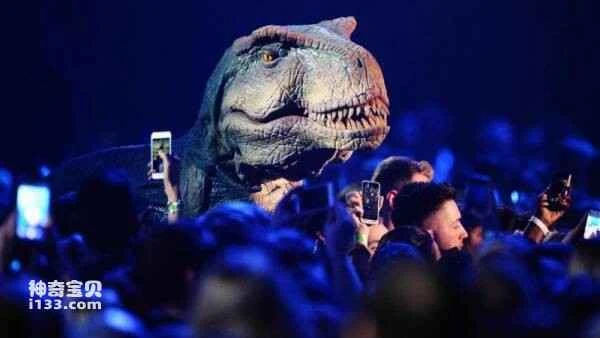
If it weren't for the asteroid impact, we might not need to go to a museum to see dinosaurs.
If the dinosaurs hadn't gone extinct, humans might have had to establish protected areas, Nash acknowledges, adding that humans might have had to live that way for the first million years of the Common Era. However, he points out that our ancestors coexisted with dangerous large animals and developed survival strategies. "People think the Mesozoic Era was a bloodbath where a person could be torn to shreds in seconds, but for a long period, large predators were sparsely distributed, and if you stayed away from them, you were relatively safe."
Given that some mammals have already developed intelligence, could it be possible that sentient dinosaurs could have evolved intelligence as well? In 1982, Dale Russell—then at the Canadian Museum of Nature in Ottawa—published a paper suggesting that dinosaurs might have evolved intelligence. He commissioned the creation of a life-size model that looked like an alien from an outdated science fiction film, with green skin and enormous eyes. His theory was that the carnivorous Seraphimonosaurus possessed an unusually large brain, and it was possible that intelligent dinosaurs evolved from it.
"Dinosaurs, like crows, parrots, and primates, had very complex brains and problem-solving abilities, and they may have evolved," Holtz agreed. However, he believes dinosaurs probably didn't look like humans. "The evolutionary path to humans is very strange, involving things like climbing trees... Dinosaurs would have learned to stand on two legs in a more logical way and acquired dexterous hands."
"I don't think dinosaurs could have acquired human-level intelligence," Nash said. "Dinosaurs may have evolved intelligence, but they would still be dinosaurs... To think that animals can evolve human-like intelligence is to impose human characteristics on animals."
If dinosaurs had lived hundreds of thousands of years ago and coexisted with humans, could they possibly still be alive today? The answer might be yes. However, just as human hunting activities led to the extinction of mammoths and other large animals, with population growth and advancements in hunting techniques, dinosaurs would inevitably suffer heavy losses as humans spread across the globe. "There could be a Pleistocene dinosaur extinction event, while simultaneously humans migrate outwards from one corner of the world," Holz said.
Today, in this hypothetical timeline, large herbivorous dinosaurs like hadrosaurs, and even carnivorous dinosaurs like Tyrannosaurus rex, could likely survive in protected wilderness and national parks, provided these areas provided sufficient space for their survival. These would likely be true wilderness, largely undeveloped by humans, such as the inland areas of Australia and Alaska. Some smaller, non-avian dinosaurs might have adapted to urban environments, coexisting with humans like pigeons, rats, and seagulls.
Although we have nearly wiped out large mammals in the past, some animals have survived, such as elephants and rhinos, so you can easily imagine embarking on a Jurassic Park-style trip in a parallel world, with your camera and binoculars ready to observe dinosaurs.