In the 1990s, a U.S. paleontological expedition discovered the world's longest dinosaur footprint fossils to date on a mudflat on the border between Turkmenistan and Uzbekistan. Five of these footprints are longer than the previous world's longest dinosaur footprint, which stretched 147 meters and was found in Portugal. Their lengths are 184 meters, 195 meters, 226 meters, 262 meters, and 311 meters, respectively.
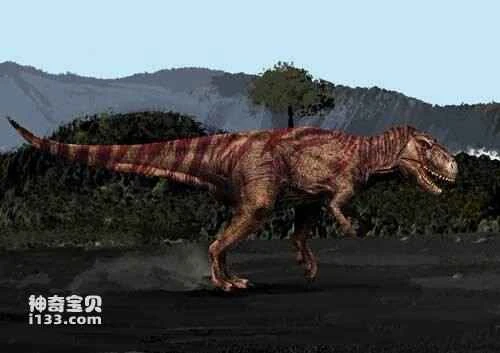
These footprints were left by more than 20 Megalosaurus. Megalosaurus was a carnivorous dinosaur similar to Tyrannosaurus Rex, but they lived in the Late Jurassic period, 155 million years ago, before Tyrannosaurus Rex existed.
The newly discovered footprints are very similar to those of Megalodon found in North America and Europe in the past, indicating that Megalodon had a wide distribution range during the Late Jurassic period.
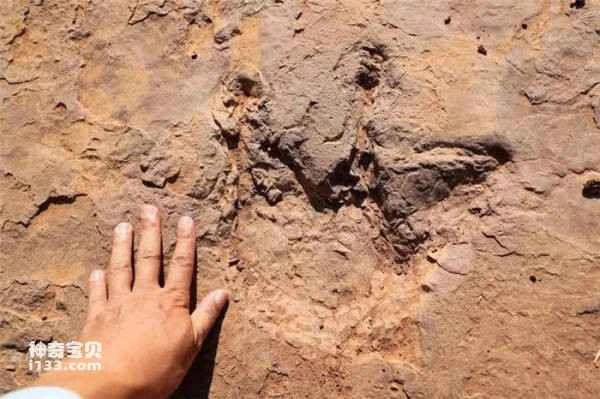
Each footprint is roughly the same size as a Tyrannosaurus Rex footprint, over 60 centimeters long. The footprints also show that its heels were relatively long. The stride length shown by the footprints indicates that these Megalosaurus were only slightly smaller than a typical Tyrannosaurus Rex, which was about 12.2 meters long. Like all carnivorous dinosaurs, the Megalosaurus footprints show that one foot's footprint did not fall in front of the other, but rather there was a gap of over 90 centimeters between the left and right footprints. Based on this, scientists speculate that Megalosaurus likely waddled like a duck.