Just when the claim that birds originated from dinosaurs was overwhelming, Hou Lianhai, a renowned paleontologist and researcher at the Institute of Vertebrate Paleontology and Paleoanthropology of the Chinese Academy of Sciences, consistently maintained that birds originated from archosaurs. Not long ago, Long Zi, the curator of this museum, paid a special visit to Mr. Hou Lianhai, wanting him to explain in detail why he insists that birds did not originate from dinosaurs.
Mr. Hou Lianhai took out a copy of Nature, one of the world's most authoritative scientific journals, published on June 17, 1999, and showed him his research paper entitled "A new species of primitive Confuciusornis and its double-arched skull." He then introduced his new discovery and evidence about the origin of birds from archosaurs to Longzi.
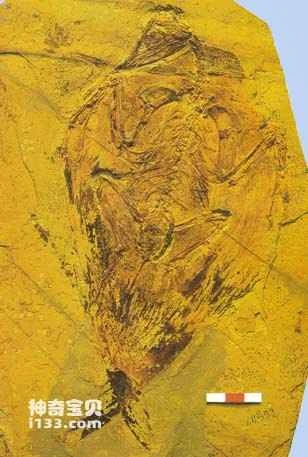
Du's Confucius Bird
Hou Lianhai's article describes a newly discovered group of Confuciusornis, named *Confuciusornis duvifolia*, which is the best-preserved Mesozoic bird fossil discovered to date. The discovery of *Confuciusornis duvifolia* resolves the long-standing debate regarding the skull structure of *Archaeopteryx*. As the most primitive birds known to date, both *Archaeopteryx* and *Confuciusornis* should possess the postorbital and squamous bones—primitive structures inherited from their reptilian ancestors—in their skulls. Such structures differ significantly from those of later birds, especially modern birds. Furthermore, the double-arched skull of *Confuciusornis duvifolia* proves that birds originated from the earliest type of reptile with a double-arched skull—the archosaurs—rather than dinosaurs. Dinosaurs, like birds, originated from primitive archosaurs. Of course, from archosaurs, groups such as crocodiles and lizards diverged.
Mr. Hou Lianhai commented on the recent heated debate both domestically and internationally regarding the origin of birds. He believes that while media reports suggest the question of bird origins has been resolved, this is actually a misunderstanding. The debate about bird origins, which began over 100 years ago, has not ceased. Recent major discoveries in western Liaoning, China, have provided unprecedented new information to the debate, particularly the discovery of several "feathered dinosaurs," making it easier to believe that birds originated from dinosaurs. Shortly before the discovery of Confuciusornis duvifolia, Associate Researcher Xu Xing, a young dinosaur expert at the Institute of Vertebrate Paleontology and Paleoanthropology of the Chinese Academy of Sciences, published his research results on the "Unexpected Beipiao Dragon," a therizinosaur, further supporting the hypothesis that birds originated from dinosaurs. Xu Xing also cited a mandible fossil of a sloth dragon discovered in Yunnan Province, indicating that birds diverged from dinosaur groups earlier than the earliest known bird fossils. However, closer examination reveals that the situation is not so simple.
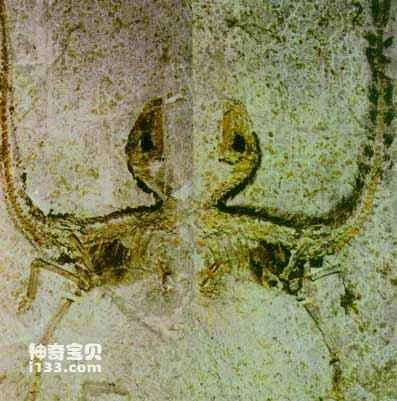
Sinosauropteryx
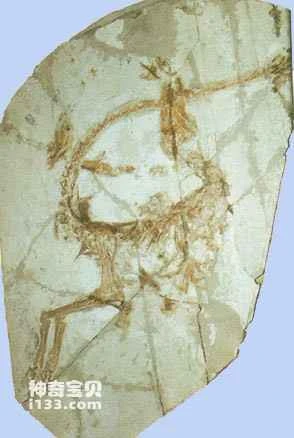
Archaeopteryx
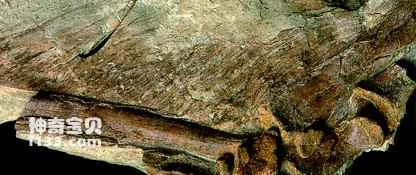
Unexpected Beipiao Dragon
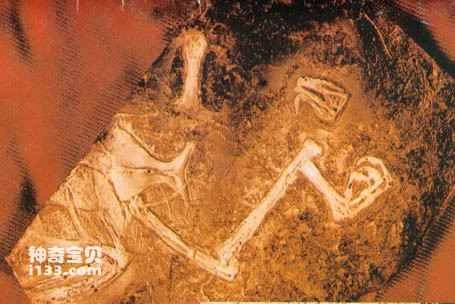
Liaoning bird
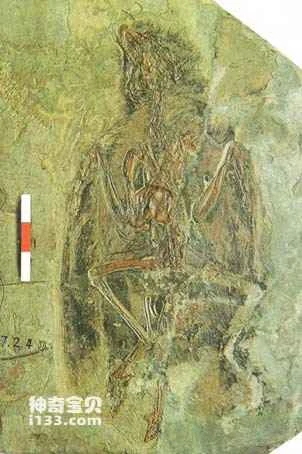
Archaeopteryx
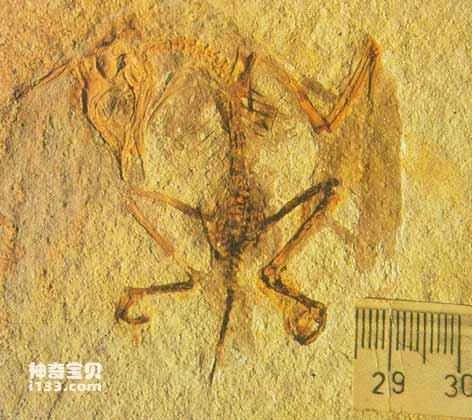
Small Liaoxi Bird
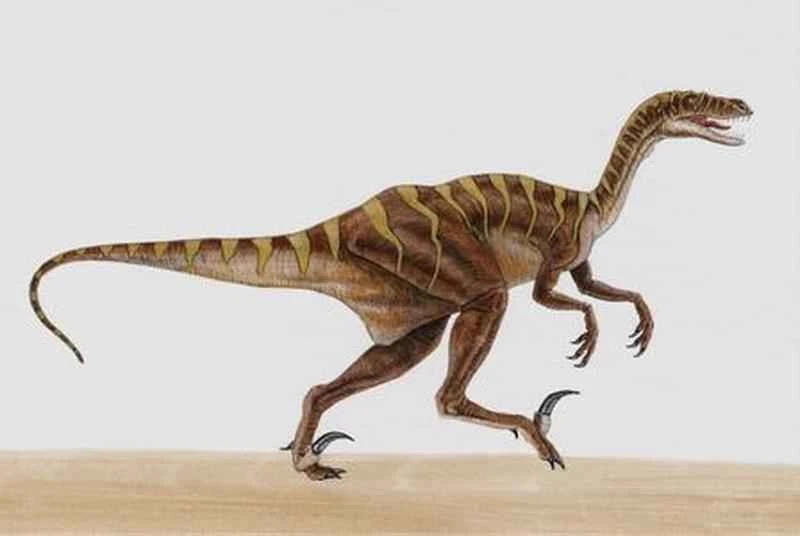
A closer look reveals that recently, some scientists have identified at least four "feathered dinosaurs" as related to birds: Sinosauropteryx, Archaeopteryx, Lazyosaurus, and the unexpected Beipiaosaurus. The assertion that Sinosauropteryx was the ancestor of birds was widely discussed recently. More recently, scientists like Xu Xing have suggested that therizinosaurs are the origin of birds. In reality, these four dinosaurs belong to four different families and have fundamentally different skeletal structures. Their only common feature is the presence of downy, feather-like skin derivatives. How can one conclude that birds originated from dinosaurs? Furthermore, the nature of these downy skin derivatives is not fully understood, as they lack the rachis structure of tailed birds' feathers and are more developed on the forelimbs and tail. Bird feathers are also a type of skin derivative, but their biochemical composition is completely different from that of reptile skin derivatives; their protein component is a special type of keratin.
On the other hand, the composition of the Confuciusornis biota also raises questions about the hypothesis that birds originated from dinosaurs. Besides Confuciusornis, this biota also includes Liaoningornis, Erioventrhizontus, and Lesser Liaoxiornis. Liaoningornis is widely recognized as an ancestral type of modern birds, and Lesser Liaoxiornis, measuring only 10 centimeters in length, is much smaller than other ancient birds. It is difficult to imagine that such diverse primitive birds all originated from dinosaurs.
Researcher Hou Lianhai's views have been endorsed by some scientists in the international academic community. Professor Fedusia, a renowned American ornithologist, wrote an article arguing that some characteristics of birds are similar to those of a Late Triassic archosaur called *Megalankoosaurus*, discovered in Italy, thus concluding that birds originated from archosaurs. Professor Walker, a British paleontologist, in a letter to Researcher Hou Lianhai, listed many characteristics of *Confuciusornis* that are very similar to those of a Late Triassic archosaur called *Sifenosaurus*, discovered in South Africa, thus also believing that birds originated from archosaurs.