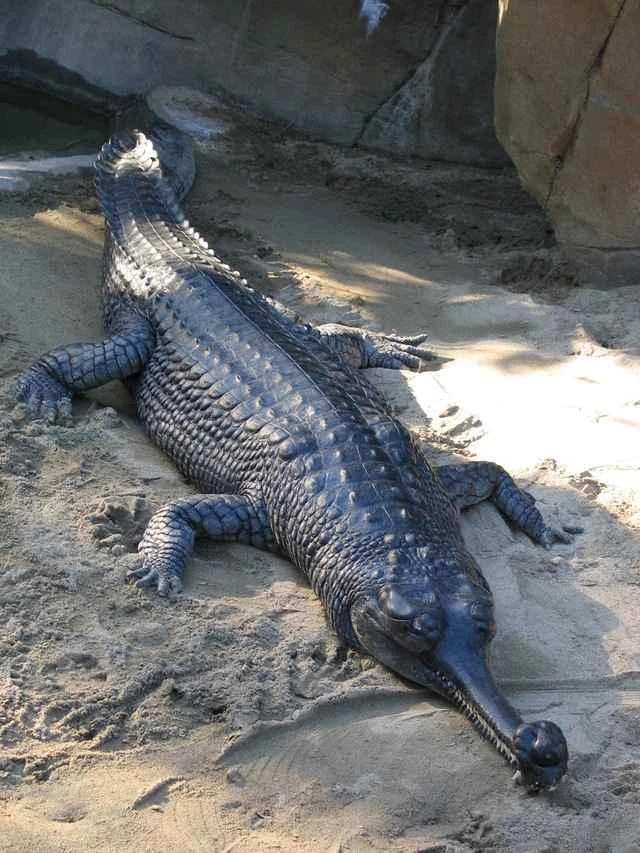
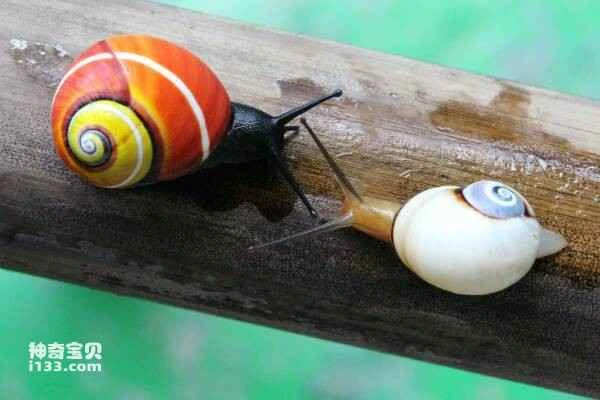
Before answering this question, we need to explain the meanings of these two terms. The bear referred to here is what people commonly call a "dog bear," such as a black bear; the cat referred to here is not the kind of cat you see in daily life, such as a domestic cat, but the red panda, which belongs to the raccoon family.
Having established the relationship between bears and cats, the next topic is the connection between pandas and bears, and between pandas and red pandas. In fact, this question has been debated for a century. Whenever a new testing method is acquired or new evidence is discovered, pandas are either grouped with bears or are associated with raccoons. While we haven't devoted much energy to this issue—because it's not our primary focus—we cannot ignore it. A comprehensive understanding of pandas inevitably involves their place within the broader system.
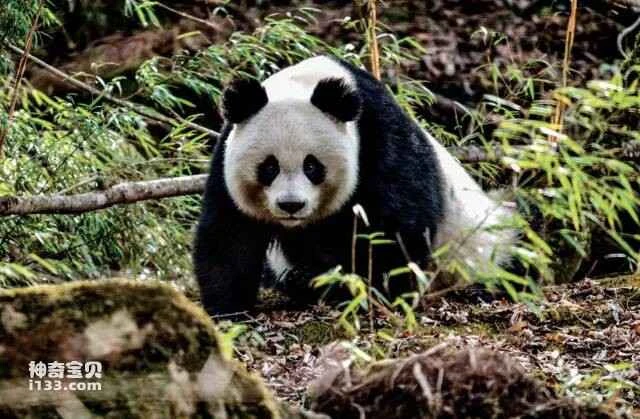
Research data shows that scholars advocating for the panda to belong to the Ursidae family, including Father David, the scientific discoverer of the panda; scholars advocating for the panda to belong to the Procyonidae family, including Michon Edwards; and molecular biologists, through research on panda DNA, have shown that the panda is a subspecies of the Ursidae family. Because each school of thought supports its own viewpoint with its own research findings, there is no unified standard of judgment, leading to a lack of consensus.
Differing opinions are normal in scientific research; they are a driving force for scientific progress. Adhering to the scientific spirit that "truth becomes clearer through debate," I would like to discuss the systematic relationships of pandas from a paleontological perspective and through comparisons between ancient and modern fossils, based on my years of research on panda fossils.
Skull: Overall, pandas have short facial skulls with high parietal and forehead prominences. In extant pandas (specimen V1304), the angle from the highest point of the skull to the nasal surface is approximately 70 degrees; in *Panda bashi* (specimen No. 1 from Wanxian), it is approximately 60-65 degrees; and in black bears (specimen V1099), due to its long face and low parietal and forehead prominences, the angle from the parietal and forehead surface to the nasal surface exceeds 77 degrees. Pandas have particularly well-developed zygomatic arches, with thick and wide bone plates. In extant pandas (specimen V1304), the zygomatic arch width is 200-216 mm; in *Panda bashi* (specimen No. 1 from Wanxian), it is 245-256 mm; and in black bears, it is 140-150 mm. Observations of the midsagittal section and X-rays of the skull reveal that the panda has a well-developed frontal sinus with irregular transverse septa that divide it into chambers of varying sizes. These septa prevent damage to the cranium during vigorous chewing and reduce the weight of the skull. The base of the skull is short, the occipital region is flat and isosceles triangular, and the nuchal ridge is well-developed, with its lower end fused to the posterior joint process. This broad, rough occipital surface and well-developed mastoid processes increase the contact area between the head and the posterior skull bones. These anatomical features are not found in bears, although there are some similarities.
Mandible: During the evolution of pandas, changes in diet, from omnivorous to selective and particular diets, are particularly evident in the changes in the length of the mandibular symphysis. For example, the lesser panda from 2 million years ago had a short mandibular symphysis, its posterior border directly opposite the fourth premolar; the *Panda basilica* from 100,000 to 10,000 years ago had a long mandibular symphysis, its posterior border located behind the first molar; and in modern species, it is even more elongated, its posterior border located in front of the first molar. X-ray observations show that the trabeculae of the lower fourth premolar to the first molar in the anterior part of the panda's mandible are relatively dense; the mandibular condyle is strong and forms a transverse spiral. These morphological features of the panda's mandible also distinguish it from those of bears.
Teeth: Panda teeth are quite unique among carnivorous animals. This is evident in the premolars: the 2nd to 4th premolars all have two roots and three cusps, with their labial surfaces convex outwards and their lingual surfaces flattened. The lower premolars are the opposite, with rounded lingual surfaces and flat labial surfaces, and varying degrees of enamel elevation on the lingual surfaces; the upper 4th premolar lacks a "lobed leaf"; the upper molars are wider than long, with many nodules or ridges on the chewing surface.
As for the skull, mandible, and teeth morphology of the red panda, they differ greatly from those of the panda in size. Microscopically, for example, in terms of teeth, the red panda's molars are wider than long, a characteristic consistent with the panda, but the length of its labial side is much greater than that of its lingual side; in the panda, the labial and lingual surfaces are almost equal in length. Furthermore, unlike the panda, the red panda's teeth do not have numerous vertical enamel wrinkles or ridges on their chewing surfaces, but only four robust cusps.
By comparing the morphology of the skull, mandible, and teeth, it is evident that pandas differ significantly from bears and raccoons, despite some similarities. So, what factors caused the evolutionary trends of the panda's skull, mandible, and teeth to diverge from those of bears and red pandas? If we trace back to western China more than 8 million years ago, we might find low mountains, valleys, and forests everywhere. However, in the millions of years that followed, with the continuous uplift of the Qinghai-Tibet Plateau, the natural environment there underwent tremendous changes, and the original mountains gradually transformed into a humid environment interspersed with swamps and hills.
Due to the biological effects of environmental forces, the ancestral bear population that inhabited that area lost the forest conditions they had relied on for millions of years, or even longer. Under the combined influence of chance and natural selection, the species, forced by natural selection, broke away from the ancestral bear population and fortunately acquired a new adaptation, thriving in the jungles or bamboo forests interspersed with swamps and hills. This naturally selected species is the intermediary between the ancestral bear and the panda—the Ailuropoda melanogaster. We call the emergence of this new species the "Western Story" of China.
This story tells us that the panda's birth is related to bears, but it is not a bear, so it cannot be placed in the bear family; it is related to the red panda, but it is not a cat, so it cannot be placed in the raccoon family. Instead, it is an independent system that differentiated from the order Carnivora, which is called the panda family (Ailuropodidae).
To put it simply, a panda is a panda.