China has discovered six remarkably complete mammal fossils dating back 160 million years; and named three new species within two new genera, *Shenshoului*, *Xianshoulinglong*, and *Xianshousongae*. These genera and species belong to the extinct order *Xianshousongae*, a unique and little-known group of Mesozoic mammals. Research indicates that mammals originated at least 208 million years ago in the Late Triassic period. This article is a featured paper in the current issue of *Nature*.
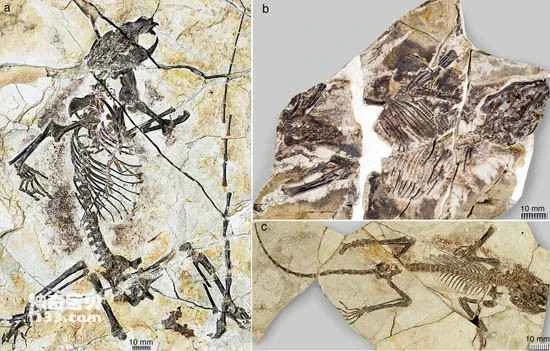
Fossil of a 160-million-year-old raptor
The origin of mammals is a crucial scientific question in evolutionary biology and a long-standing point of contention in the academic community. In August 2013, *Nature* published two studies from the Jurassic period in China, reporting on *Kingstreetrapter* and *Mammalian Megalodon*, both related to *Kingstreetrapter*. However, these two independent studies reached significantly different conclusions regarding the phylogeny and origin time of mammals, focusing on the phylogenetic position of the *Kingstreetrapter* group. One study argued that *Kingstreetrapter* belonged outside the mammalian crown group, classifying them as mammals, while true mammals evolved explosively in the Early Middle Jurassic (approximately 160 million years ago). The other study, however, suggested that *Kingstreetrapter* and *Multituberculate* formed a sister group, both belonging to the mammalian class; and that mammals themselves appeared explosively in the Late Triassic (280 million years ago). These two studies further intensified the discussion on the origin and evolution of mammals.

Reconstruction of the real Thief Beast (from the mythical beasts Shen and Xian from the Jurassic period in China)
The earliest fossils of *Zephyrus* appeared in the Late Triassic period, with reports dating back to Darwin's time. *Zephyrus*'s teeth are similar to those of the most abundant Mesozoic mammals, *Polytuberculates*, with a unique structure. Its teeth have multiple cusps arranged in two longitudinal rows, a structure distinct from the teeth of other early and extant mammals. However, for the past 170 years, our understanding of *Zephyrus* has been almost entirely limited to individual teeth, lacking complete specimens. Due to the scattered and scarce materials, researchers have struggled to determine the exact appearance of *Zephyrus*, whether it truly belonged to the mammal family, and even the origin of individual teeth from the left or right dentition. The discovery of *Shen* and *Xian* finally allows us to clearly understand this ancient and mysterious mammalian group. Research on these specimens is based on six specimens held by the Institute of Vertebrate Paleontology and Paleoanthropology of the Chinese Academy of Sciences, the Tangshan Natural History Museum in Hebei Province, the Beijing Museum of Natural History, the Jizantang Fossil Museum in Liaoning Province, and the Wuyishan Museum. These specimens, with varying degrees of preservation of the skull and skeleton, provide the first comprehensive morphological overview of *Zephyrus* from the perspectives of the skull, mandible, teeth, and postcranial skeleton. The fossils of mythical beasts and celestial beasts both originated from the Linglongta area of Jianchang, Liaoning Province, and the strata in which the fossils were found date back approximately 160 million years. Naming three new mammal species based on six specimens in the same *Nature* article is probably unprecedented in *Nature*'s history.

Sketch of the skeleton and partial features of a True Thief Beast (God, Celestial Beast)
The newly named divine and celestial beasts are all small mammals, ranging in size from a small squirrel to a house mouse, weighing approximately 40 to 300 grams. While retaining some primitive features, they exhibit more typical mammalian characteristics, such as the typical mammalian middle ear structure and jaw joint (dentary-temporal joint), clearly differentiated thoracic and lumbar vertebrae, sternum, and ribs, indicating that they possessed the diaphragm characteristic of mammals, enabling them to breathe during rapid movement. Their slender skeletons reflect the basic structure of agile animals. Most distinctive are their hands and feet, with short metacarpals and long phalanges (toes) for grasping branches, typical adaptations of arboreal animals. Their long, coiling tails are also characteristic of arboreal mammals. These features suggest that the divine and celestial beasts were agile climbers and arboreal beings, spending more time in trees than modern squirrels. Furthermore, like many Mesozoic mammals, they possessed venomous barbs on their feet similar to those of the platypus. Their skulls, jaws, teeth, and chewing methods indicate that their diet consisted primarily of insects, nuts, and fruits.
Based on the study of these specimens, researchers clarified many controversial issues regarding the homology, location, and occlusal relationships of Euharamiyidae teeth, and established a new mammalian lineage—Euharamiyidae—which forms a sister group with Euharamiyidae. Using compelling arguments and concise phylogenetic relationships, researchers demonstrated that the morphological similarities between Euharamiyidae, Euharamiyidae, and other mammals stem from homologous evolution rather than parallel evolution, providing a novel perspective and research window into the early evolution of mammals. Furthermore, based on the phylogenetic relationships, chronology, and paleogeographic distribution of the earliest mammals and their close relatives, researchers suggest that mammals may have originated from a landmass belonging to Laurasia, highly diversified during the Early to Middle Jurassic, and exhibited a global distribution during the Mesozoic Era.