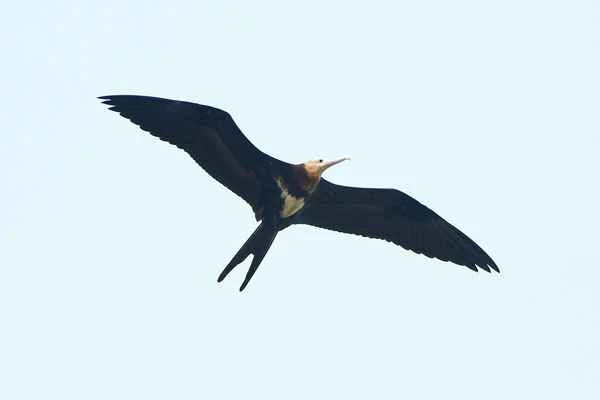
Animals with high running speeds often possess the following characteristics: a slender and agile body, strong muscles, a lightweight skeletal structure, large lungs and heart, excellent eyesight and reaction speed, etc. These characteristics give them a significant advantage in hunting prey, escaping predators, or undertaking long migrations. Different animal species also vary in their running speed and characteristics, allowing them to better adapt to their environment and lifestyle. Do you know which animals are the fastest? This article compiles a ranking of the world's ten fastest animals, including cheetahs, pronghorn, springbok, African ostrich, wildebeest, lions, Indian blackbuck, hares, greyhounds, and African wild dogs. Let's take a look!
1. Cheetah (scientific name: Acinonyx jubatus)
The cheetah is a medium-sized feline that lives in Africa and South Asia, and is also the fastest land animal in the world. They have short, gray or tan fur with black spots and tear stains, and can reach a length of 1.4 meters and weigh about 45-60 kilograms.
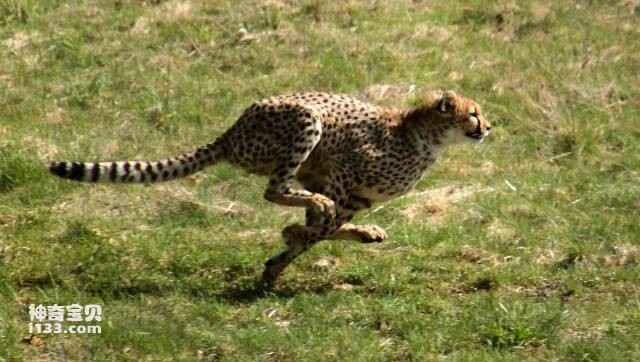
Cheetahs primarily prey on gazelles, using their incredible running speed to hunt. When chasing prey, cheetahs can reach speeds of 110-120 kilometers per hour and can accelerate to nearly 100 kilometers per hour for short periods, making them extremely threatening carnivores. Cheetahs are solitary animals; unlike other felines, they typically do not form social groups with other cheetahs. Cheetah populations are declining, and they are currently listed as an endangered species.
2. Pronghorn (scientific name: *Antilocapra americana*)
The pronghorn is a medium-sized ruminant native to Africa and one of the most common antelopes in sub-Saharan Africa. Pronghorns are incredibly agile and fast runners, capable of reaching speeds of around 80 kilometers per hour. This makes them prime prey for many predators, such as lions, leopards, and hyenas. In the wild, pronghorns typically escape predators by running. They are about 1.5 meters long, with a shoulder height of 0.9-1.2 meters and a weight between 40-65 kilograms. Their name comes from their upright, forked horns, which can reach up to 1 meter in length. Both males and females have long horns, but the males' horns are thicker and more complex in shape.
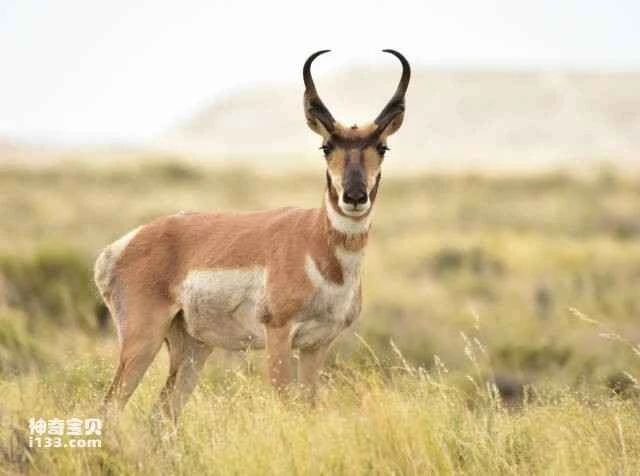
Pronghorn antelopes are primarily herbivorous, feeding mainly on grasses, branches, and leaves. They can survive for several days without water, obtaining sufficient hydration from plants. While their numbers are relatively high and they are listed as "Least Concern," their populations have declined due to habitat destruction and overhunting.
3. Springbok (scientific name: Antidorcas marsupialis)
The springbok is a small, even-toed ungulate that lives in the African savanna and desert regions, and is one of the smallest antelopes in the world. They typically inhabit open plains or semi-desert areas, primarily feeding on grass. Springboks are about 1-1.3 meters long, 0.7-0.9 meters tall at the shoulder, and weigh between 20-50 kilograms, making them relatively small. Due to their long, strong hind legs, springboks can run for extended periods, reaching speeds exceeding 80 kilometers per hour. They are exceptionally adept jumpers, arching their backs and extending their limbs downwards and close together when leaping, achieving a height of 3-3.5 meters in a single bound, hence their name.
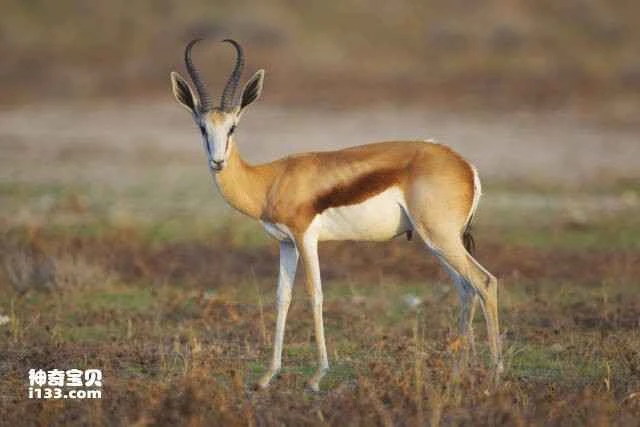
Springbok are remarkably beautiful animals, with pale brown or tan fur, black and white stripes on their backs, and white bellies and rumps. Male springbok are distinguished by their long, slender, curved horns, which can reach up to 30 centimeters in length, sloping backwards almost parallel to their heads. Springbok are highly social and organized animals, typically living in groups of around 10 individuals. Despite their large numbers, habitat destruction and overhunting continue to threaten their survival.
4. African ostrich (scientific name: Struthio camelus)
The African ostrich is a large bird that lives in sub-Saharan Africa and is one of the tallest, heaviest, and fastest land birds in the world. They have long, strong legs, small, flat wings, and a long neck, and can reach a height of 2.5 meters. The ostrich's plumage is grey or brown. African ostriches are herbivores, primarily eating grass, seeds, fruits, and insects. They can survive for days without water, as they obtain the necessary moisture from their food. African ostriches are also known for their high-speed running ability, reaching speeds of up to 70 kilometers per hour, which helps them escape predators in the wild.
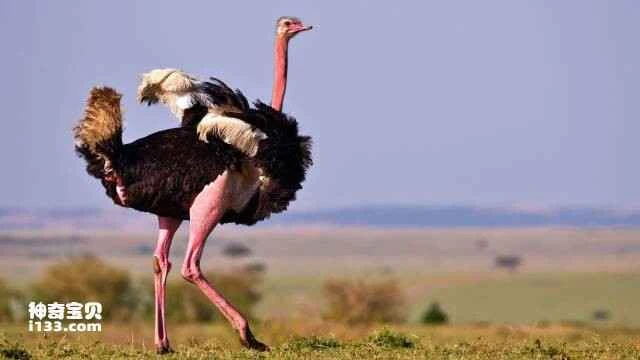
African ostriches are social and gregarious animals, typically forming groups of 10-20 individuals. Males are often larger than females, have more vibrant plumage, and employ distinctive dances and calls during courtship to attract females. Despite their large numbers, African ostriches continue to face threats to their survival from human activities such as hunting, habitat destruction, and illegal trade.
5. Wildebeest (scientific name: Connochaetes)
Wildebeests are medium-sized mammals that live on the African continent. They have the head of a cow, the face of a horse, and the beard of a goat. They have a heavy body and long, slender legs, measuring about 2-3 meters in length, 1.5-1.7 meters in shoulder height, and weighing up to 350 kilograms. Wildebeests are generally divided into two types: plains wildebeest and mountain wildebeest. Plains wildebeests are brownish-yellow with white on their belly and the inside of their limbs; mountain wildebeests are dark reddish-brown with white on their belly and the inside of their limbs as well. Both have black stripes, one of their distinctive features. Wildebeests have long snouts, which help them reach branches and bushes, and dig into the ground to obtain water during droughts.
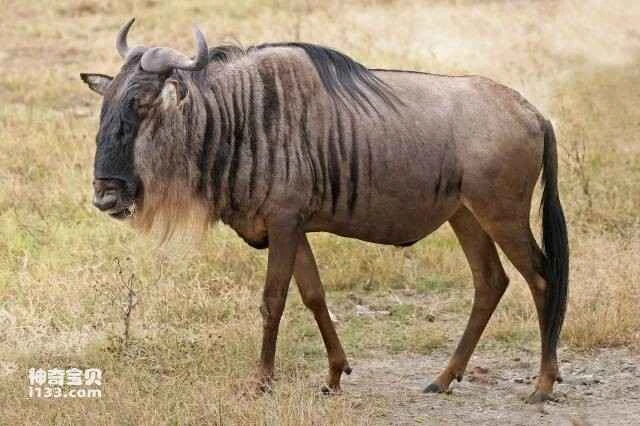
Wildebeest are herbivores, primarily feeding on grass and leaves. They can go for long periods without water due to their highly adapted ability to arid environments, obtaining the necessary moisture from their food. Wildebeest are also renowned for their agility, reaching speeds of up to 60 kilometers per hour, enabling them to evade predators in the wild. Despite their large numbers, their survival remains threatened by human activities such as hunting, habitat destruction, and illegal trade. Wildebeest are listed as an endangered species and require our protection and attention.
6. Lion (scientific name: Panthera leo)
Lions are large cats that live in Africa and Asia, and are among the most famous mammals on Earth. They are enormous; male lions can stand up to 1.2 meters tall at the shoulder and weigh over 200 kilograms, while females are typically smaller. Lions have yellow or brown fur and thick manes, with the males' manes being particularly long and beautiful. Their sharp teeth can easily tear the flesh of their prey, hence the lion's title of "King of the Savannah." Lions are very agile and strong animals with astonishing running speeds. They can reach speeds of up to 80 kilometers per hour for short periods, although this speed can only be maintained for a few hundred meters, but it is enough to give them an advantage in the hunt.
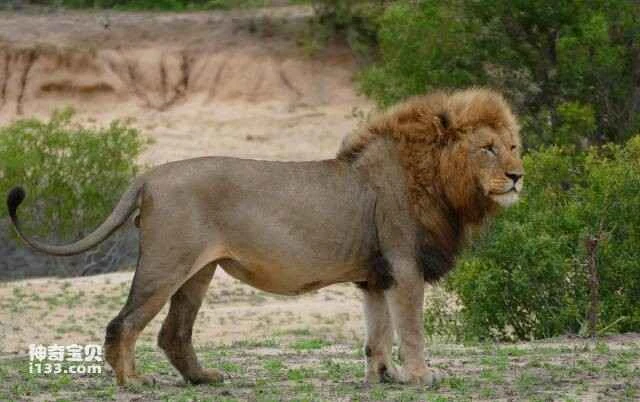
Lions are social animals and typically live in prides. Generally, each pride consists of a male lion, several female lions, and their cubs. Lions are predators, feeding on animals such as gazelles, zebras, buffalo, and elephants. They usually hunt at night, employing a cooperative group strategy, and for large prey, they will surround and corner them. Although lions are often portrayed as powerful and ferocious animals, they also have a tender side. Lions can show affection for their companions, especially cubs and females, often sleeping together, grooming themselves, and expressing their bond and affection through roars.
However, lions are currently under serious threat due to human development activities, habitat destruction, and illegal trade. Listed as an endangered species, lions require our intervention to protect their habitat and ecosystem.
7. Indian blackbuck (scientific name: Antilope cervicapra)
The Indian blackbuck is a medium-sized ungulate that inhabits the Indian subcontinent and Nepal, and is one of the species endemic to India. They are slender and elegant in appearance. Male blackbucks have beautiful black and white horns, which are usually larger than those of females. Their body color ranges from light brown to dark brown, while females are grayish-brown.
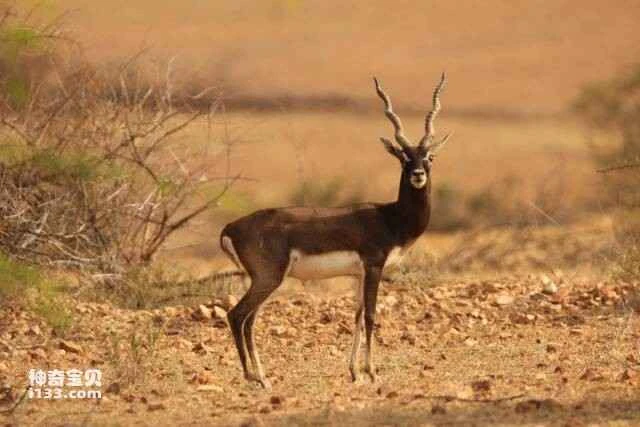
Indian blackbuck typically inhabit grasslands and savannas, feeding primarily on herbaceous plants. They are incredibly fast, reaching speeds of up to 80 kilometers per hour, making them one of the fastest ungulates in the world. Male blackbucks also put on spectacular leaping performances, often competing during the mating season, leaping and flipping through the air to attract females.
However, due to overhunting and habitat destruction, the Indian blackbuck is currently threatened. Listed as near-threatened, measures are needed to protect its habitat and ecosystem. The Indian government has launched an initiative to protect this species and has established several wildlife reserves across India to safeguard the habitats of the blackbuck and other rare animals.
8. Hare (scientific name: Lepus sinensis)
The hare is a small mammal that inhabits various environments, including grasslands, forests, and deserts. They have grayish-brown fur, a short tail, forelimbs shorter than hind limbs, a slender body, and long ears. Hares are very agile and nimble animals, possessing considerable running speed. They can reach speeds of up to 70 kilometers per hour for short periods, a speed sufficient to escape most predators. Hares are herbivores, primarily feeding on herbs, leaves, and fruits. Due to their relatively large populations, hares are also frequently prey for other animals, such as eagles, foxes, and owls.
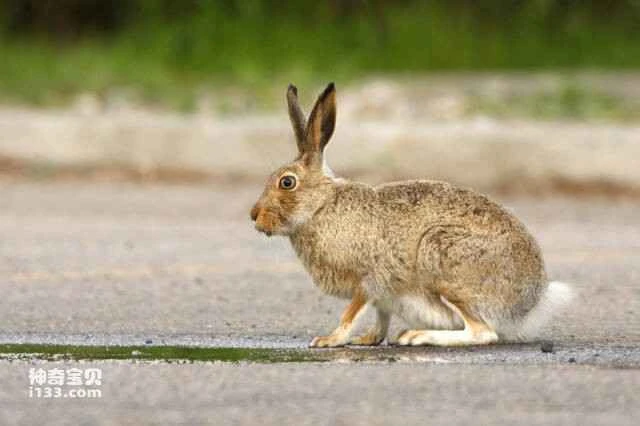
Hare are widely distributed throughout the world, especially in the Northern Hemisphere. They are typically nocturnal and use their agility to escape predators. Hare can leap quickly from the ground and even make lightning-fast 90-degree turns, making them unattainable for their pursuers. Hare are also important laboratory animals because they are easy to breed and have a genetic structure similar to humans, making them useful for many medical and biological research fields.
In summary, hares are fascinating animals that play an important role in nature. Despite their large numbers, they still require our protection and attention to ensure the stability and health of their habitat and the ecosystem.
9. Greyhound
The Greyhound is an ancient breed of hound originating in Europe. They possess a long, well-proportioned body, long, fine coat, and agile movement, making them widely used for racing, hunting, and as family pets. Greyhounds typically have a graceful, flowing gait and extremely high running speeds, reaching over 65 kilometers per hour, making them one of the fastest land mammals after the cheetah. They also possess excellent eyesight and a keen sense of smell, allowing them to identify prey at long distances and pursue them with precision.

Besides being used as racing and hunting dogs, Greyhounds are also gentle and intelligent family pets. They are friendly, affectionate, and loyal to their owners, making them well-suited to living with family. It's important to note that Greyhounds are a highly active breed and require ample exercise to maintain their health and well-being. Furthermore, since most dogs in this breed are bred through selective breeding, it's crucial to choose a reputable and professional kennel or owner to ensure their health and quality.
Overall, the Greyhound is a beautiful, excellent, loyal, and friendly breed of dog, not only an outstanding hunting and racing dog, but also a popular family pet.
10. African wild dog (scientific name: Lycaon pictus)
African wild dogs, also known as hunting dogs, are medium-sized canids living in sub-Saharan Africa. They have spotted and tangled coats and possess excellent endurance and long-distance running ability. They can reach speeds of 60 to 70 kilometers per hour or more, making them one of the fastest mammals in the world. African wild dogs typically hunt in packs, utilizing collective intelligence and movement to track prey and kill them with high-speed runs and precise strikes. They usually live in packs, with close bonds and mutual assistance among members. The eldest female in the pack acts as the leader, guiding the other members in hunting, breeding, and protecting the pups from predators.
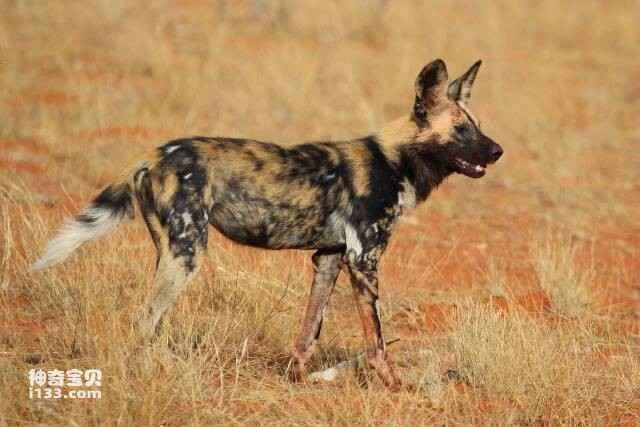
African wild dogs are highly adapted animals, primarily feeding on small mammals and birds, but also hunting larger prey such as antelope, zebras, and wildebeest. When hunting, African wild dogs typically work in packs to track and kill their prey, exhausting them through prolonged chases and coordinating their individual tasks to complete the kill. Due to their declining numbers, African wild dogs are now listed as an endangered species. Habitat destruction and illegal hunting are among the factors contributing to their decline. Measures are needed to protect and restore their habitats to ensure their continued survival and reproduction in the wild.
It's important to note that these speed rankings represent only the theoretical maximum speed of each animal, and not their actual running speed in their natural environment. This list is for reference only. If you have any better suggestions regarding this ranking, please leave a comment.