Many people confuse amphibians and reptiles, or lump them together. However, despite some similarities, as expert guides explain, they also have far more significant differences. Individuals within each group may look very similar—for example, salamanders and lizards—but in reality, the differences are far greater than people realize. Most people think the difference lies in their aquatic lifestyle, but the differences between amphibians and reptiles go far beyond that.
Fun fact: Did you know?
Australia boasts the most diverse reptile population in the world, with 1,078 different species. The United States ranks eighth with 530 species, my country ranks tenth with 490 species, while the United Kingdom is near the bottom with only six native reptile species.
1. Do amphibians and reptiles have similarities?
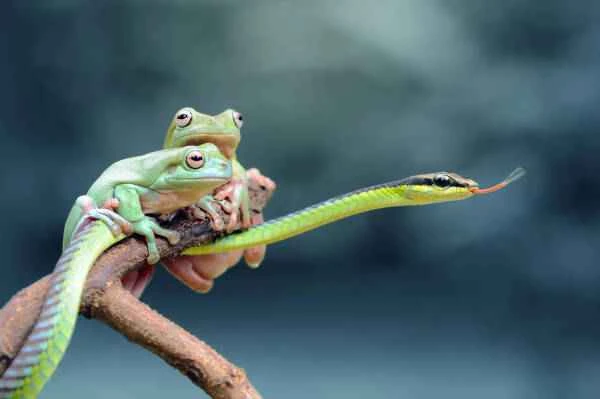
The main common characteristics of amphibians and reptiles are that they are both vertebrates (animals with an endoskeleton) and both are "cold-blooded" or poikilothermic animals. Many people think that amphibians and reptiles look very similar because they both lack the fur that most mammals have, or the feathers that birds have.
They exhibit similar behavior in the wild, as they need to bask in the sun to warm their bodies, and in many areas, both groups hibernate during the winter. This distinguishes them from other vertebrates. Both groups also have similar habitats in the UK—they are often found basking in the sun under or on top of rocks, logs, or other sheltered environments.
All these factors lead to them being grouped under the single term "reptiles," and the study of amphibians and reptiles is known as herpetology. Although there are some clear differences between amphibians and reptiles, they are often used interchangeably in the media, which can increase confusion about these two groups.
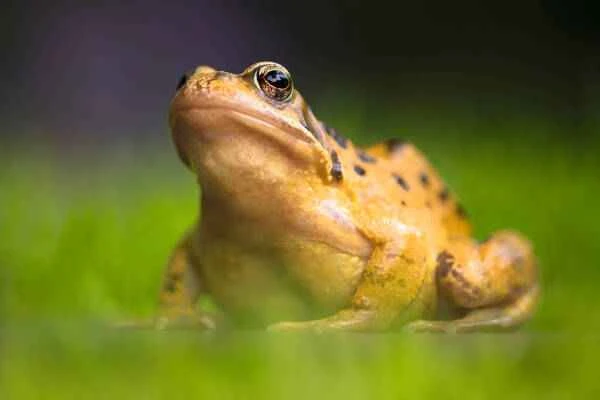
2. Why are frogs and toads not considered reptiles?
Frogs and toads are amphibians, or more specifically, a branch of the amphibian evolutionary tree called "yu". They are about a million years removed from the modern reptile branch of the evolutionary tree—"squamates".
There are some significant differences between amphibians and reptiles, from their anatomy to their behavior and developmental cycles.
Fun fact: Did you know?
The world's smallest reptile is only the size of a sunflower seed.
The world's largest reptiles include the reticulated python (Python reticulatus) and the saltwater crocodile.
The largest amphibian is the giant salamander of the Far East—but which one is the king?
The smallest amphibian—and also the smallest frog—is the larva of the horse pupae (Paedophryne amauensis).
3. What are the differences between reptiles and amphibians?
One of the most obvious differences between amphibians and reptiles is their skin. Reptiles are covered in hard, keratinous scales for protection, while amphibians have soft, absorbent skin that needs to be kept moist.
When amphibians (especially salamanders) are on land, their skin appears soft, which can lead to confusion with reptiles. Amphibian skin is a fascinating adaptation because it is highly porous and allows for gas exchange—they can "breathe" through it. Both amphibians and reptiles shed or "shed" their skin.
Another factor that truly reveals the differences between reptiles and amphibians is their development. Reptiles have several methods of producing offspring.
While some reptiles lay eggs, others, like vipers, incubate the eggs inside their bodies and then "give birth" to their young.
Amphibians lay their eggs in water, which hatch into aquatic larvae or tadpoles, then metamorphose into terrestrial larvae, and finally grow into mature adults.
Although adult amphibians can breathe air and live on land, they still must return to water to reproduce and must keep their skin moist. Reptiles do not metamorphose and spend most of their lives on land.
4. Do they exhibit different behaviors?
Because amphibians live both on land and underwater, their behavior differs significantly from that of their scaly relatives. Therefore, amphibians (especially frogs and toads) are more likely to be found basking in the sun in ponds or other freshwater habitats during the spring and summer, while reptiles are most commonly found basking on dry surfaces such as rocks, logs, or bare earth.
In addition, amphibians generally move slower than reptiles—if you disturb a sunbathing snake or lizard, they will usually crawl or jump much faster than a salamander or toad.
These behaviors are certainly affected by temperature, and weather has a significant impact on the behavior of amphibians and reptiles. However, generally speaking, amphibians are more resistant to cold temperatures than reptiles, and in the UK, the amphibian "spawning season" often precedes the reptile breeding season. This means that amphibian activity begins to increase throughout the year (usually in late winter or early spring), while reptiles begin to appear in mid- or late spring.
5. How do their habitats differ?
Globally, amphibian and reptile habitats vary considerably, and there is also significant variation within each group. Generally, in the UK, our native amphibians and reptiles inhabit similar areas. All of our native reptile species can be found in lowland heather, a habitat that is becoming increasingly rarer than tropical rainforests.
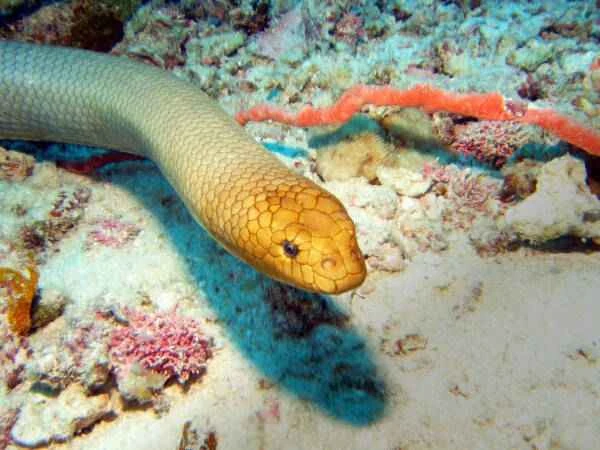
Amphibians need to keep their skin moist and must be able to access freshwater, while many reptiles are not so closely connected to water, although there are exceptions, such as the grass snake, which hunts aquatic prey in ponds and other freshwater habitats, and pythons, which love water. South American swamps—and of course, sea snakes.
Fun fact: Did you know?
Brazil boasts the most amphibian species, with 1,022. my country ranks 5th with 461 species, the United States 12th with 313, and the United Kingdom only has 7. Greenland, however, has none!
6. Are they dangerous?
Many amphibians and reptiles are at risk. Their habitats are degrading or disappearing entirely, putting these species at risk. Many of these threats will increase in the coming years. This is why it is crucial to protect healthy amphibian and reptile populations and the habitats they depend on, and to inspire greater public participation in conservation efforts.