Suidae is an important family within the order Artiodactyla, including familiar species such as pigs, wild boars, and warthogs, as well as some more distinctive relatives. Their most prominent common features are four-toed hooves , a robust body structure, and a long, flexible snout with a cartilaginous disc at the end, which is well-suited for burrowing and digging.
The suidae family has a close relationship with humans: wild boars were domesticated and evolved into domestic pigs, forming a huge food industry. At the same time, wild suidae have also been highly successful in evolution, adapting to diverse environments ranging from forests to grasslands, and from temperate to tropical islands.
What are pigs?
The Suidae family refers to all species taxonomically classified as belonging to the Suidae family . Many people confuse them with peccaries , but peccaries belong to a different family— Tayassuidae . From an evolutionary and distribution perspective, Suidae animals primarily originated and were distributed in the Old World (Eurasia and Africa) , while modern peccaries are mainly found in the Americas .
Main characteristics of pigs
1) Even hooves, four toes, but the middle two toes bear weight.
Suidae belong to the order Artiodactyla and usually have four toes , but when walking, they mainly bear weight on the middle two toes , while the outer two toes often play an auxiliary stabilizing role.
2) With a well-developed "nose disc," it excels at arching and digging.
Sues have a tough, cartilaginous nasal disc at the tip of their snout, with nostrils located in the center and opening forward. The nasal disc is flexible and durable, helping them to dig through the soil to find food such as roots, tubers, insects, and fruits.
3) Mostly medium to large in size
Different species vary greatly in size, but overall they are mostly medium or large, especially some species that live in forests, which can be very large.
4) Rich in voice communication
Pigs commonly communicate through grunting, squealing, and snorting , and may also convey information through teeth striking or jaw movements.
5) Thick skin and large variation in hair quantity
Pigs generally have thick skin. Their hair ranges from sparse to dense, with some having coarse, stiff bristles and others having less hair.
6) The tail is relatively short, and often has a tuft of hair at the end.
Most pigs have short, thin tails with a small tuft of hair at the tip, which serves as both a signal and a parasite control mechanism.
7) The digestive system is relatively simple.
Compared to ruminants such as deer, cattle, and sheep, pigs do not ruminate , and their digestive structure is generally simpler, which is more in line with their common omnivorous feeding strategy.
Major taxa (genus) of the Suidae family
The swine family can generally be understood by several representative genera:
Phacochoerus : Warthog
Babyrousa : Baburosa (Baboon)
Sus : Pig and Wild Boar
Porcula : dwarf pig
Potamochoerus : River pig/Forest pig (commonly known as "Red River pig", etc.)
Hylochoerus : Giant Forest Pig
Examples of typical suidae animals
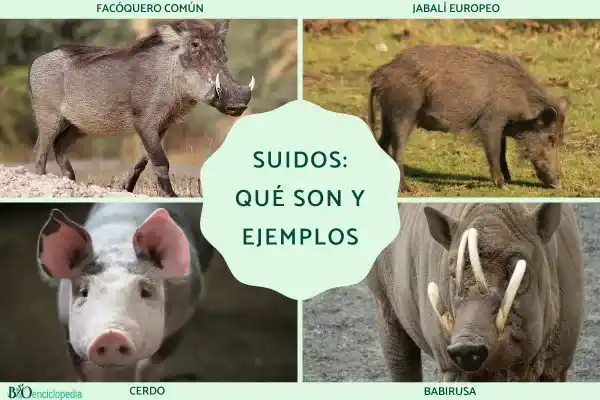
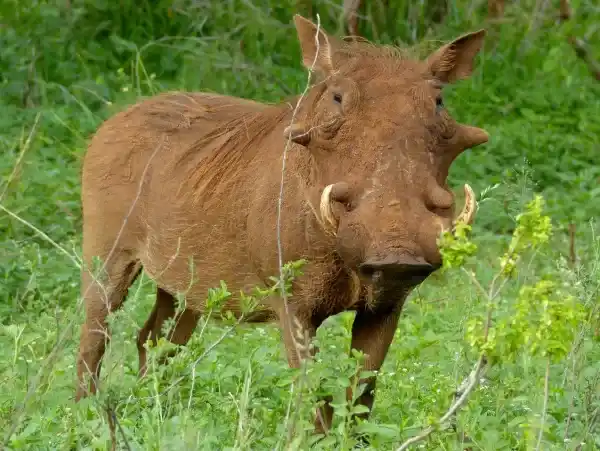
1) Common warthog (Phacochoerus africanus)
Common warthogs live in the grasslands and savannas of sub-Saharan Africa . The "wart-like protrusions" on their faces are not decorative, but rather protective structures for the head during male fights. Warthogs possess prominent, curved tusks, and their broad snouts are adapted for foraging for herbs and rooting in the ground. Their eyes are set high, allowing them to observe their surroundings even when they are feeding.
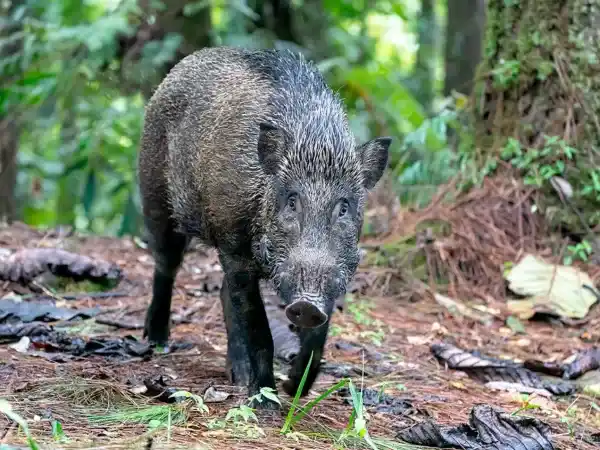
2) European wild boar (Sus scrofa scrofa)
European wild boar is a subspecies of wild boar found in Europe . They typically have dense, dark brown fur. During hot weather, they may be less active during the day and more so in the evening or at night.
European wild boars are omnivorous , feeding mainly on fruits, leaves, buds, and roots, but also occasionally consuming small vertebrates, carrion, and bird eggs. They generally do not attack humans unless approached, startled, or when with young.
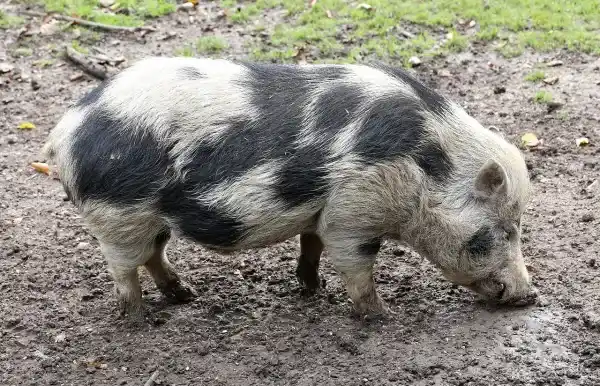
3) Domestic pig (Sus scrofa domesticus)
Domestic pigs originated from the domestication of wild boars in the Near East and China , and subsequently developed into various breeds in different regions, primarily used for meat production. Domestic pigs have short, stiff hair, often referred to as bristles or bristles .
Under good feeding conditions, domestic pigs typically exhibit high learning abilities and strong socialization. Different breeds are selected and bred based on production goals and environmental adaptations, resulting in differences in characteristics such as body size, muscle ratio, and heat and cold tolerance.
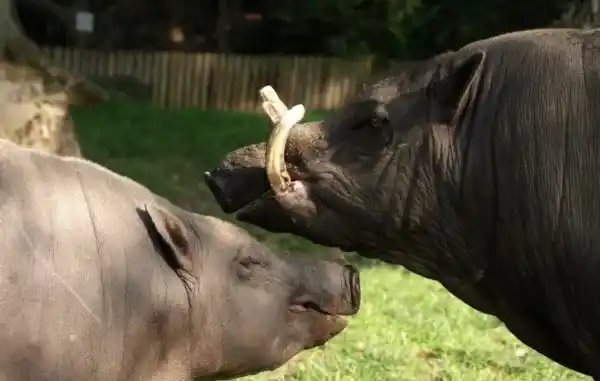
4) Babyrousa babyrussa (Babyrousa babyrussa)
Babursa are found in parts of the Indonesian islands and have a highly distinctive appearance: the males' upper tusks curve upwards, sometimes forming exaggerated arcs, making them appear as if they are "growing" upwards from their faces. They often live near water and may soak or wade in the water for extended periods to cool down. Compared to many pigs, babursa have less fur and their skin is mostly gray.
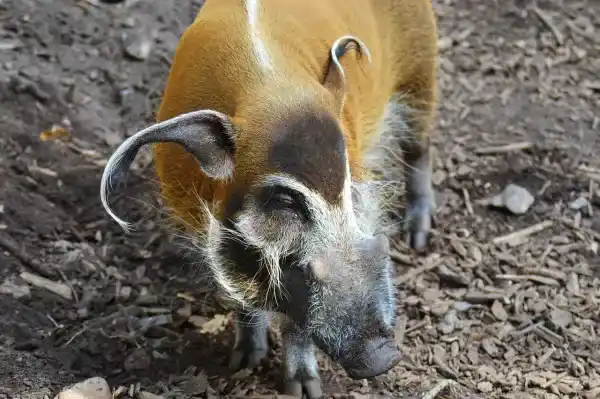
5) Red River Pig (Potamochoerus porcus)
Red River hogs are among the most visually appealing pigs in Africa, with reddish-brown fur featuring distinct contrasting patterns: long white tufts of hair are commonly found on the tips of their ears, their faces have alternating light and dark lines, and a light-colored dorsal stripe is visible on their backs. They typically live in close proximity to water sources such as rivers, lakes, swamps, or waterholes .
6) Giant Forest Pig (Hylochoerus meinertzhageni)
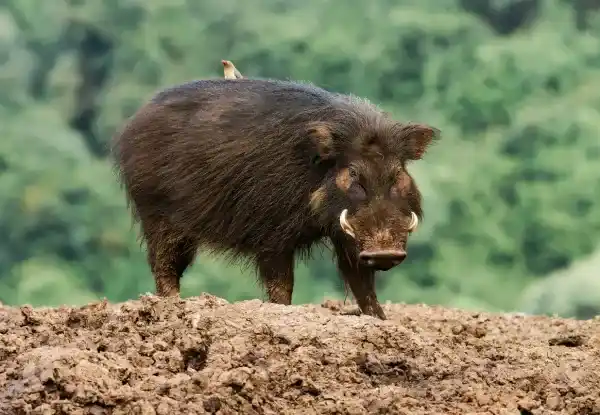
The Giant Forest Pig is one of the largest living members of the Suidae family and the only species in its genus. Adults can reach about 2 meters in length and nearly 1 meter in shoulder height, making them very robust. They have coarse, long coats, typically dark in color with variations in brownish-orange undertones, and prominent tusks.
They live on the edges of African forests and in areas where grasslands and woodlands intersect, as long as there is enough vegetation to provide shade from the sun. Their diet consists mainly of herbs and plants, supplemented by other food sources when the opportunity arises.
The role of suidae in the ecosystem
The impact of suidae on the environment is often very direct: they change soil structure and vegetation distribution by burrowing in the soil to forage, affecting seed germination and nutrient cycling; at the same time, as omnivores, they connect multiple levels of the food web, such as plants, invertebrates and small vertebrates, and are of great significance to the local ecological balance.