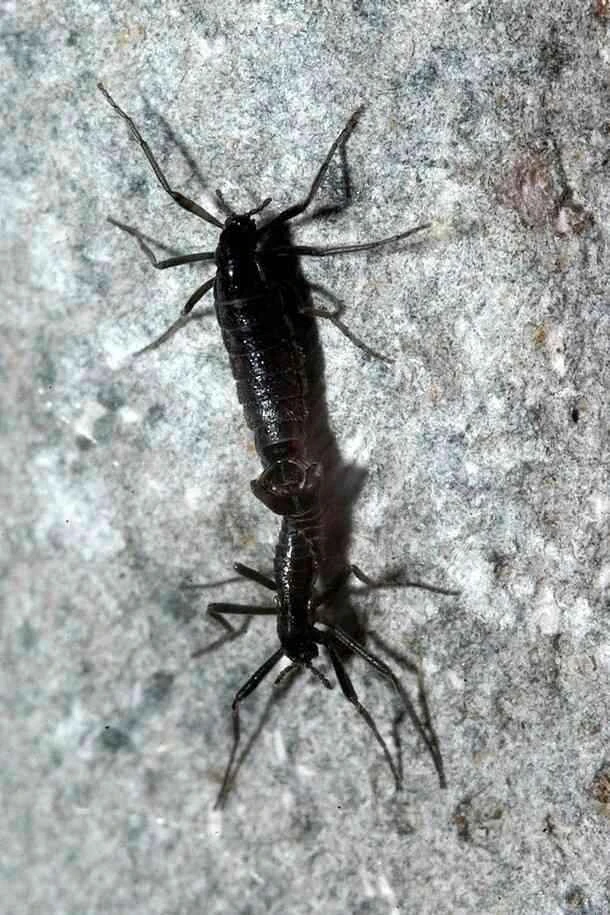
To date, the insect fauna of Antarctica appears to consist of only one species—the Antarctic midge (Belgica antarctica). This tiny (2-6 mm) fly has no wings (an adaptation to prevent it from being blown away by the wind), and the maggot spends two years surviving by drawing meager nutrients from tiny algae and mosses on land.
Midges survive the winter by excessively accumulating sugar in their bodies as a natural antifreeze and by dehydrating themselves to prevent the formation of ice crystals that cause cell rupture.
Then, it enters a hibernation-like state under the warm snow layer to maintain its survival above the -15°C threshold. Because flies remain on the continent year-round (unlike birds that visit in the summer), it is also the largest permanent land animal in Antarctica.