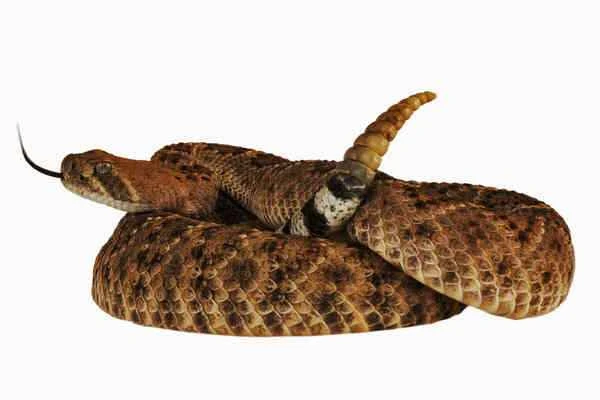
Rattlesnakes (Crotalus or Sistrurus) are named for the rattling sound at the end of their tails, which they make to warn other animals. There are more than thirty species of rattlesnakes native to the Americas. While most rattlesnakes have healthy populations, some are considered threatened or endangered due to factors such as poaching and habitat destruction.
Overview: Rattlesnake
Scientific name: Crotalus or Sistrurus
Common name: Rattlesnake
Elementary Animal Group: Reptiles
Size: 1.5–8.5 feet
Weight: 2-15 lbs
Lifespan: 10-25 years
Diet: Carnivorous
Habitat: Diverse habitats; most commonly found in open rocky areas, but also native to deserts, grasslands, and forests.
Conservation status: Most species are classified as least endangered, but a few are classified as endangered.
describe
Rattlesnakes get their name from the distinctive rattling sound they make when they vibrate their tails. Most rattlesnakes are light brown or gray, but some species can be brightly colored, such as pink or red. Adults typically stand 1.5 to 8.5 feet tall, with most being less than 7 feet. They weigh between 2 and 15 pounds.

A close-up of a rattlesnake's tail.
Rattlesnakes' fangs are connected to venom ducts and are curved in shape. Their fangs are constantly being generated, meaning that new fangs will always grow behind their existing ones so that they can be used immediately after the old ones fall out.
Rattlesnakes have a heat-sensitive pit between each of their eyes and nostrils. This pit helps them hunt prey. They possess a kind of "thermal vision," which helps them locate prey in dark conditions. Rattlesnakes are named for their heat-sensitive pitted organs.
Habitat and Distribution
Rattlesnakes can be found throughout the Americas, from Canada to Argentina. In the United States, they are common in the southwest. Their habitats are diverse, ranging from plains and deserts to mountains. However, rattlesnakes typically live in rocky environments, as rocks help them find cover and food. As reptiles and cold-blooded animals, these areas also help them regulate their temperature; depending on the temperature, they bask in the sun atop rocks or cool off in the shade beneath them. Some species enter a state similar to hibernation during the winter.
Diet and behavior
Rattlesnakes are carnivorous. They eat a variety of small prey, such as mice and other small rodents, as well as smaller birds. Rattlesnakes are stealthy hunters. They lie in wait for their prey and then attack with their fangs, rendering it immobile. Once the prey is dead, the rattlesnake swallows it headfirst. Due to the snake's digestive process, rattlesnakes sometimes seek out resting places while digesting their food.
Reproduction and offspring
In the United States, most rattlesnakes breed between June and August. Males have a sexual organ called a hemipenis at the base of their tail. When not in use, the hemipenis retracts. Females are capable of storing sperm for extended periods, allowing them to reproduce long after the mating season. Gestation time varies by species, with some lasting nearly six months. Rattlesnakes are ovoviviparous, meaning the eggs are carried inside the mother's body, but the young are born alive.
The number of offspring varies by species, but typically ranges from 5 to 20. Females usually reproduce only once every two to three years. Newborns are born with fully functional poison glands and fangs. Young animals do not stay with their mothers for long and soon learn to care for themselves.
Protection status
Most rattlesnake species are listed as “least concern” by the International Union for Conservation of Nature (IUCN). However, the populations of most rattlesnake species are declining, and a few, such as the Santa Catalina Island rattlesnake (Crotalus catalinensis), are listed as “critically endangered.” Predation and human encroachment on habitats are the two most common threats to rattlesnake populations.
Species
There are more than 30 species of rattlesnakes. Common species include the Eastern Rattlesnake, the Wood Rattlesnake, and the Western Rattlesnake. The Wood Rattlesnake may be more passive than other species. The Eastern Diamondback Rattlesnake has a distinctive diamond-shaped pattern that helps it blend into its environment. The Western Diamondback Rattlesnake is typically the longest of all rattlesnake species.
Rattlesnake bites and humans
In the United States, thousands of people are bitten by snakes each year. While rattlesnakes are usually passive, they will bite if provoked or startled. Snakebites are rarely fatal if proper medical care is sought. Common symptoms of a snakebite include swelling, pain, and weakness at the bite site, and sometimes nausea or excessive sweating. Seek immediate medical attention after being bitten.