Seals (Phocidae) are important members of the marine mammal family, belonging to the same group as whales, dolphins, walruses, and manatees.
According to the International Union for Conservation of Nature (IUCN), about a quarter of the world's marine mammals are threatened with extinction .
For example, the Mediterranean monk seal ( Monachus monachus ) , which lives in the Mediterranean Sea, has long been listed as one of the world's most endangered marine mammals.
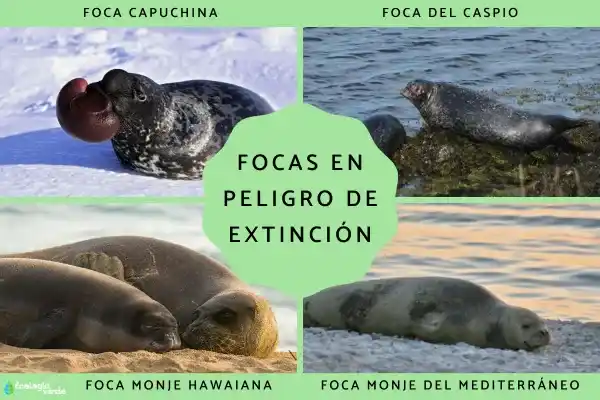
It should be noted that not all seals are endangered; for example, populations of grey seals and Greenland seals are recovering. However, the global trend of seal habitat destruction poses a long-term threat to their survival.
This article will introduce the major endangered seal species, the threats they face, and their current conservation status.
Major endangered seal species
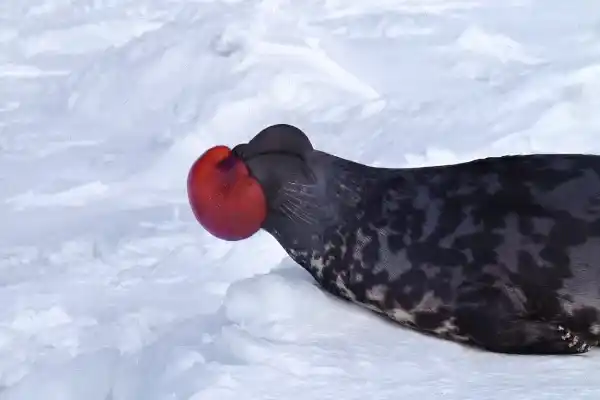
1. Hatted Seal
Scientific name: Cystophora cristata
Hatted seals are known for their robust build and relatively fierce temperament.
In 2006, the global population was approximately 592,000 . Although the number seems large, it continues to decline due to hunting, climate change, and other factors.
According to the latest assessment by the IUCN, this species is now listed as Vulnerable .
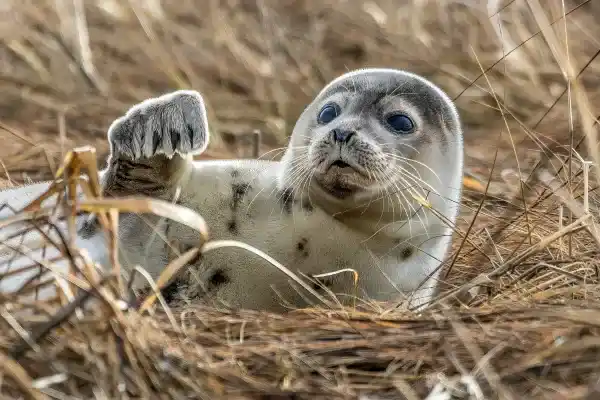
2. Caspian Sea seals
Scientific name: Pusa caspica
Caspian seals are a species endemic to the Caspian Sea basin and have long been affected by habitat destruction and pollution.
It has been listed as an endangered species by the IUCN since 2008.
Over the past century, the population has decreased by 90% , with fewer than 70,000 remaining by 2017.
3. Hawaiian monk seal
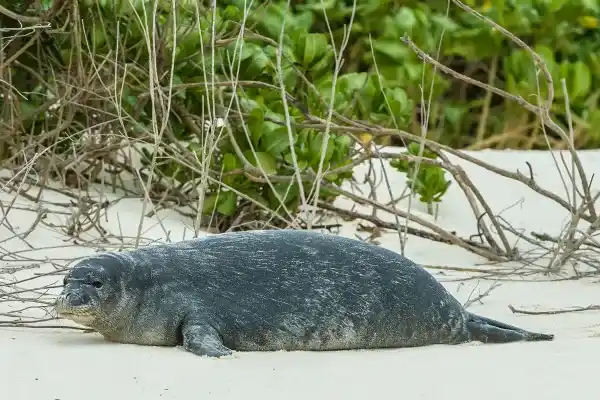
Scientific name: Neomonachus schauinslandi
Hawaiian monk seals are found only in the Hawaiian Islands and are a species endemic to the region.
The current wild population is only about 1,100 individuals , and it is listed as Critically Endangered by the IUCN.
They face multiple threats, including habitat loss, food resource depletion, and marine pollution.
4. Mediterranean monk seal
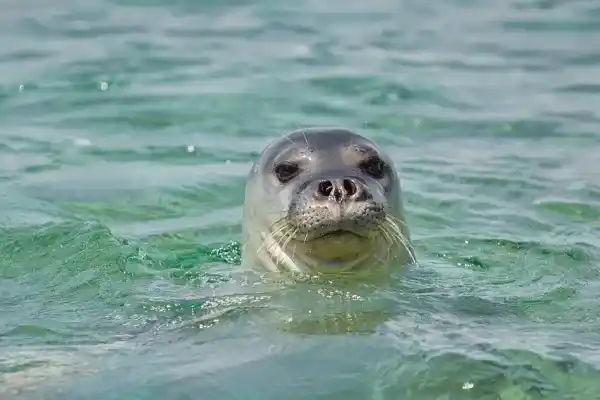
Scientific name: Monachus monachus
The Mediterranean monk seal was once on the verge of extinction, and its current wild population is estimated at 350–450 .
After years of conservation efforts, its status has improved from "critically endangered" to "endangered," and it is mainly distributed in the eastern Mediterranean and along the coast of North Africa, but the recovery is slow.
Seals that are not endangered
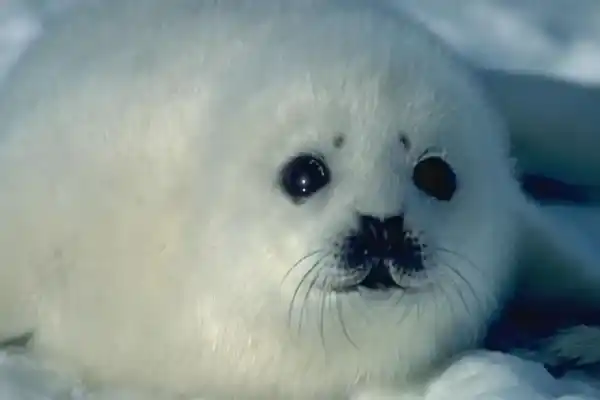
Fortunately, some seal populations remain relatively stable and are not listed as endangered species:
Greenland seal ( Pagophilus groenlandicus )
Grey seal ( Halichoerus grypus )
Ringed seal ( Pusa hispida )
However, these populations still face long-term threats from climate change and human activities, requiring continuous monitoring and protection.
The main reasons why seals are endangered
The reasons for the decline in seal numbers are complex and varied, but mainly include the following aspects:
1. Oil spill
Marine oil pollution is a major threat to seals.
Crude oil adheres to the seal's fur, impairing its insulating properties and leading to hypothermia and an increased risk of death.
Even if rescued and cleaned up, polluted habitats are unlikely to recover suitable ecological conditions in the short term.
2. Trawling and Illegal Hunting
Seals often die from getting entangled in fishing nets.
Historically, hunting for fur, grease, and meat has drastically reduced population numbers.
Seals consume large amounts of food daily (equivalent to 5–10% of their body weight), and their survival is indirectly threatened when overexploitation of fisheries leads to a decline in fish populations.
3. Marine and noise pollution
Military sonar, seismic exploration equipment, and ship noise can interfere with seals' echolocation, communication, and migration routes, forcing them to leave their original habitats.
Marine debris and microplastic pollution can have long-term health effects.
4. Climate Change and Glacier Melting
Global warming is causing sea ice in the Arctic and subarctic regions to melt rapidly, reducing important breeding and resting grounds for seals.
Scientific data shows that the Earth has lost approximately 2.8 trillion tons of glaciers and ice sheets in the past 30 years.
5. Ship collision
The expansion of the shipping lanes has led to frequent collisions between seals and ships, resulting in serious injuries and deaths.
The impact is particularly greater on small populations living along the coast and around islands.
Challenges and Progress in Seal Conservation
Seals have limited recovery abilities:
Female seals typically give birth to only one pup per year, and about 15% of the pups do not survive to adulthood .
Therefore, once the population declines, it is difficult to recover in the short term.
The key to protecting seals lies in preventative measures , especially protecting their habitat and reducing human disturbance.
For example, in 1997, a viral outbreak led to a two-thirds reduction in the Mediterranean monk seal population, demonstrating its extreme vulnerability.
In recent decades, through the establishment of marine protected areas, restrictions on hunting, improvements in fisheries management, and public education, the populations of some species have seen a slow increase.
Many international organizations and research institutions are actively promoting this:
Strengthen the protection of endangered seal habitats
Promote environmental education and raise public awareness of marine ecosystems.
Conducting scientific research and monitoring work will provide a basis for formulating scientific conservation strategies.
Conclusion: Protecting seals is protecting marine ecology.
Seals play a crucial role in marine ecosystems, serving as indicator species for maintaining food chain balance and marine biodiversity .
Their decline not only affects marine ecosystems but also reflects the intensification of global climate change and environmental degradation.
Protecting seals requires the joint efforts of governments, research institutions, environmental organizations, and the public:
Reduce marine pollution and carbon emissions
Strictly regulate fisheries and shipping activities
Establish and expand marine protected areas
Promoting public participation and education
Only in this way can we preserve hope for the survival of seals and countless other species that depend on a healthy marine environment, and also safeguard a sustainable blue planet for humanity itself.
References
The International Union for Conservation of Nature (IUCN) Red List of Threatened Species. Website: https://www.iucnredlist.org/