Sharks have played the role of apex predators in marine ecosystems since ancient times, with a history dating back 500 million years. Today, scientists have identified nearly 500 species of sharks, but many have been lost to evolution. Are you curious about those extinct shark species that once ruled the oceans? Now we'll reveal the terrifying rulers of the ancient seas, including but not limited to Megalodon, Cretaceous scutellarin, Helicoprion, Chubutecaik, Alternaria acutissima, Slanteardon, and Angus d'Angus. Let's delve into the lives of these ancient sharks that have vanished into the dustbin of time.
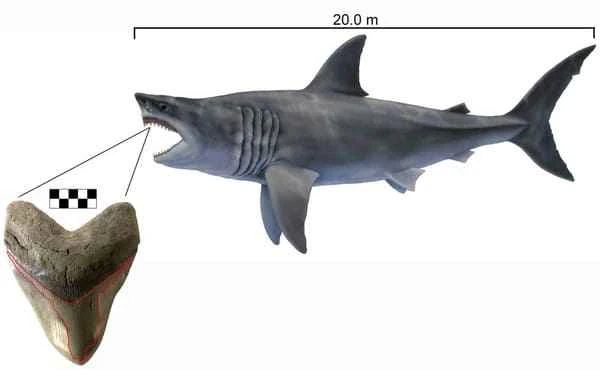
1. Megalodon (the animal with the largest bite force ever discovered in Earth's history)
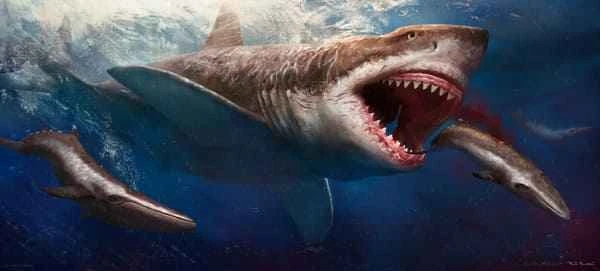
In prehistoric times, the most formidable shark was undoubtedly the gigantic Megalodon, which thrived during the Miocene epoch, approximately 18 to 2 million years ago—a golden age in the history of shark evolution. Megalodons could reach lengths of about 19 meters and weigh approximately 70 tons, roughly three times the size of modern great white sharks. These powerful adults roamed the vast oceans, preying on virtually any marine life, placing them undisputed at the top of the food chain. Megalodons possessed the strongest known bite force to date, reaching 28 tons, making them one of the most terrifying predators in Earth's history. It is widely believed that this fearsome creature went extinct approximately 2 million years ago.
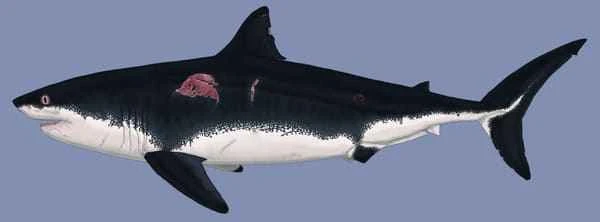
2. Cretaceous spiny shark (the largest shark of the Late Cretaceous period)
Among ancient giant sharks, the Cretaceous spiny shark is frequently mentioned, ranking among the top ten most ancient sharks. Because its teeth resembled the shape of a traditional Chinese cleaver, this prehistoric giant was affectionately nicknamed the "Golden Chef Shark," though this name is not its official scientific name. Known as the "Cretaceous's harbinger," the Cretaceous spiny shark first appeared in the Late Cretaceous period, about 100 million years ago. They averaged about 5.5 meters in length, with some exceeding 7.6 meters, and weighed approximately 3.5 tons. These ancient marine behemoths were renowned for their speed and endurance; if they existed in modern times, they would undoubtedly be among the top predators in the ocean. However, contemporaneous with the powerful mosasaurus, the Cretaceous spiny shark was relegated to the position of a secondary predator.
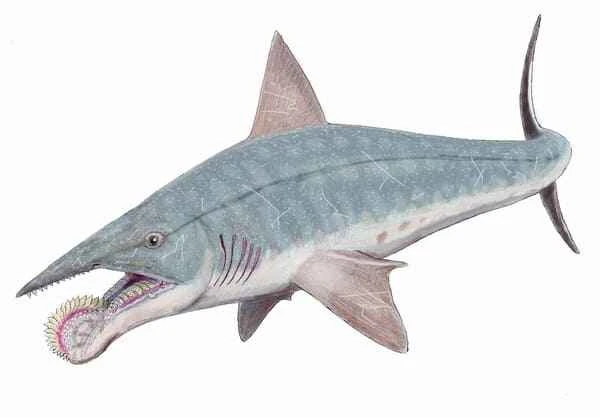
3. Helicoprion (an ancient cartilaginous fish that has long been extinct)
Helicoprion, one of the ten largest ancient sharks, is a mysterious marine creature whose unique characteristics continue to attract scientists' attention. The study of Helicoprion dates back over a century. They existed in prehistoric times, approximately 300 to 200 million years ago, with the largest individuals exceeding 15 meters in length. Undoubtedly, they were super predators in the ocean, characterized by a pair of enormous spiral teeth adorning their lower jaw. Since their discovery, the scientific community has extensively discussed and studied the specific function and location of their spiral teeth, as no other extant sharks or vertebrates have been found to possess such teeth. These unique spiral teeth make Helicoprion a continuing enigma in the study of prehistoric marine ecology.
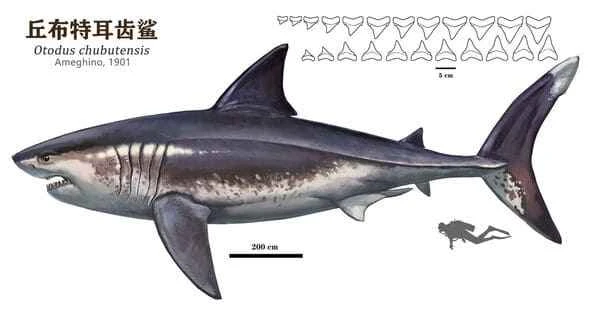
4. Chubut auricularia auricularia
* Jubutornis*, one of the ten most famous sharks of prehistoric times, lived approximately 28 to 5 million years ago. Scientific estimates of its size vary: some place it between 14 and 15 meters in length, while more conservative estimates place it at around 13 meters. This shark possessed teeth up to 129 millimeters long and was renowned for its powerful bite, second only to Megalodon. It preyed on large marine creatures such as turtles, seals , and even whales, making it a apex predator of its time. However, *Jubutornis* faced formidable threats from other marine giants, including Megalodon and Leviathan mesmeris. Later in its history, facing increasingly fierce competition for survival, coupled with its solitary nature, * Jubutornis* gradually lost its edge in this prehistoric struggle for survival, ultimately leading to the extinction of its species.
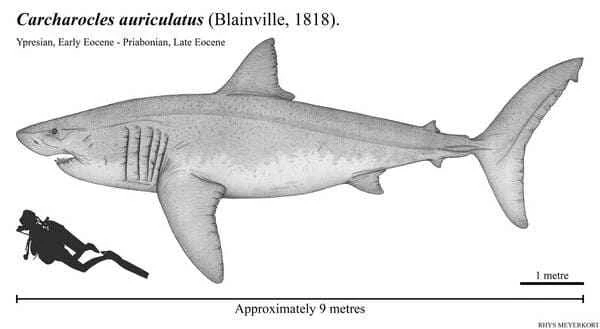
5. Ear-based man-eating shark
The auricularia auricularia, a formidable predator among extinct sharks, ruled the oceans from 39 to 25 million years ago, spanning the Late Eocene to the Early Oligocene. This shark typically measured around 8 meters in length, with rare individuals reaching a staggering 11 meters. In the marine environment of that era, the auricularia auricularia was undoubtedly a giant, its ferocity comparable to that of the Basilosaurus, another massive predator of the time. They were evenly matched, frequently engaging in fierce battles for the top of the food chain.
However, the arrival of the Megalodon disrupted this balanced competition. With its immense size and formidable attack power, the Megalodon gradually eroded the ecological niche of the Amur eel. Simultaneously, the emergence of even more powerful marine creatures like the sperm whale further squeezed the Amur eel's habitat, ultimately leading to its extinction. This illustrates that even the most powerful creatures can fade into obscurity due to changes in environment and ecological competition.
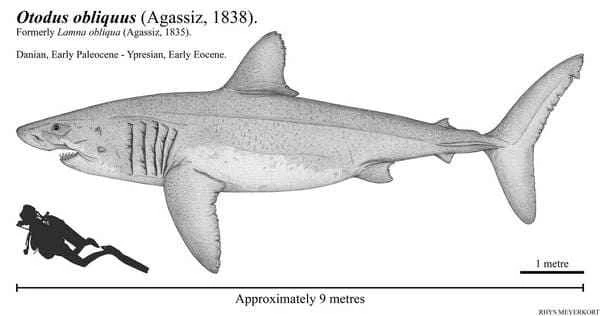
6. Slanted-eared shark
The oblique-eared shark is renowned among ancient sharks, especially during the Late Cretaceous period, when it began to emerge as a formidable competitor in the oceans. Although mosasaurs still dominated the seas at that time, the rise of the oblique-eared shark was not to be underestimated, as it reached a length of approximately 10 meters. At its peak, the largest individuals of the oblique-eared shark could even reach a length of 12.2 meters and weigh between 18 and 19 tons.
What is remarkable is the unique structure of the teeth of the Osprey—the ratio of tooth root thickness to tooth height is exceptionally astonishing, varying from one-third to almost half depending on the specific location. Combined with its thick and powerful jaw structure, the Osprey could exert tremendous bite force. Its sharp tooth cusps could easily penetrate the flesh of its prey, while the robust crowns, supplemented by auxiliary teeth on both sides, enhanced its ability to capture prey; once it bit down, its prey had little chance of escape. This optimized structure demonstrates the Osprey's dominance in the ancient food chain.
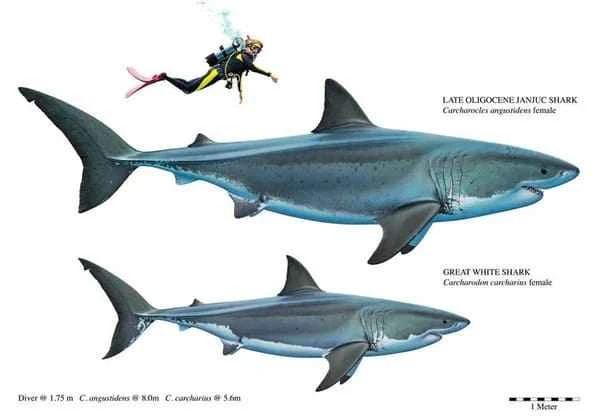
7. Angus Diesel
The Angus d'Angus, also known as the narrow-toothed man-eating shark, left behind fossilized teeth that resemble those of modern great white sharks. However, its size is more than twice that of the great white shark's 7-centimeter-long teeth. Based on this characteristic, scientists speculate that the narrow-toothed man-eating shark may have been twice the size of the great white shark, reaching a length of approximately 12 meters.
This ancient giant shark, with its savage nature and primarily feeding on whales, dominated the Oligocene oceans. After the Basilosaurus disappeared from the scene around 36 million years ago, the scaly-toothed shark became the undisputed apex predator of the ocean, with no other creature able to challenge it on the food chain. Although ancestral forms of baleen whales and toothed whales appeared during the Oligocene, their smaller size meant they remained under the dominance of the Angus scuttler shark, often becoming prey for this ferocious predator.
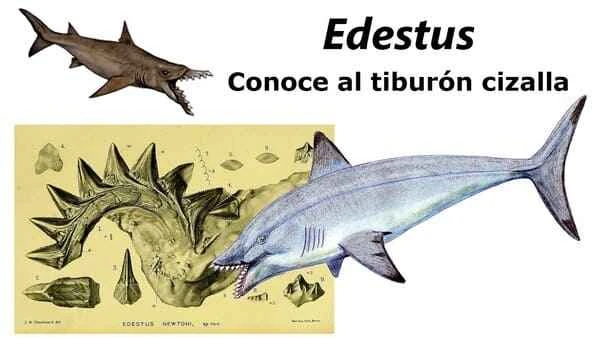
8. Greedy Scissor Shark
The vorax shark (Edestus vorax) is one of the extinct shark species that has greatly intrigued me. As a powerful carnivorous marine ruler during the Paleozoic Era, the vorax shark was remarkably long, typically exceeding 10 meters. Even smaller subspecies of the genus Edestus, such as the pygmy vorax (E. minor), reaching around 5 meters in length, were at the top of the food chain in most areas of the ocean at that time.
These ancient sharks possessed a unique mouth structure, resembling a pair of enormous scissor-like teeth. Combined with their massive bodies, reaching up to 10 meters in length, this undoubtedly made them super predators in the Carboniferous oceans. The Greedy Scissor-toothed Shark not only preyed on a diverse array of marine life but also fed on other sharks, demonstrating its dominance in ancient aquatic ecosystems.
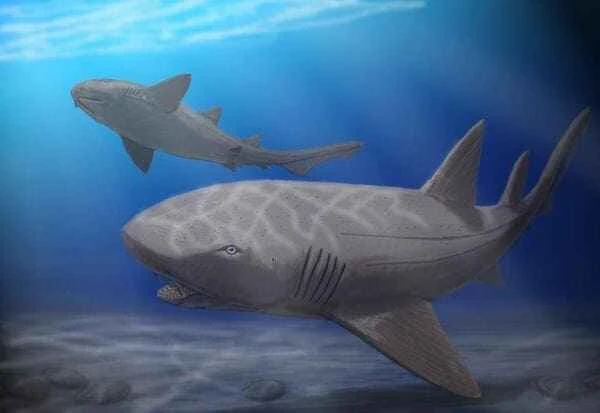
9. Morton's Pterodactyl Shark
The Morton's pilaster shark was an unusually large shark from prehistoric waters, known as the "shell crusher," primarily for the unique structure of its teeth. This extinct shark exhibited distinctly different characteristics compared to its ancient counterparts. Its teeth were blunt and thick, covered with numerous folds, and within its wide mouth were over a thousand teeth arranged in a row like bricks. This combination of teeth, and the powerful bite force they could exert, allowed the pilaster shark to easily hunt a variety of sea creatures, such as mollusks, snails, ammonites, and crustaceans, and even crush the hard shells of sea turtles.
The pedimentous shark's back was not only covered with heavy scales, but also possessed sharp spines capable of piercing flesh. This armor enabled it to protect itself in battles with predators in the ocean and deter pursuers when necessary. Although its appearance and abilities might suggest an aggressive creature, analysis of the fossil record indicates that the pedimentous shark was relatively docile and a rather unique ancient marine behemoth.
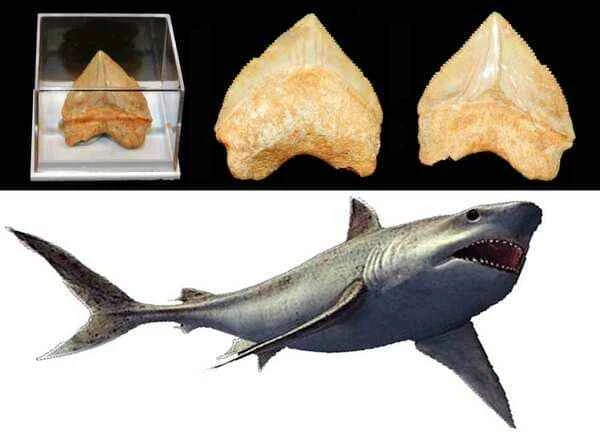
10. Serrated Horned Shark
Great white sharks are ancient sharks from the Cretaceous period, nicknamed "crow sharks" due to their diet consisting largely of carrion. Within this genus, the serrated great white shark (Squalicorax pristodontus) is a well-known large species, having inhabited the world-class waters of Maastricht. Its lower jaw was possibly twice the length of a modern great white shark. It was renowned for its moderate size, ferocious nature, sharp teeth, and agile movements; its powerful bite was capable of easily severing the limbs of small land animals.
This list of the ten most terrifying extinct sharks is primarily based on their fame and predatory abilities, with additional reference to relevant internet rankings and lists. This list is for entertainment purposes only, and the data is current as of December 1, 2023. If you have any questions, please feel free to comment or offer corrections at the end.