Owls are a group of birds belonging to the Strigiformes family. They are widely recognized for their nocturnal activity and distinctive facial features. Below is detailed information about owls and their habits:
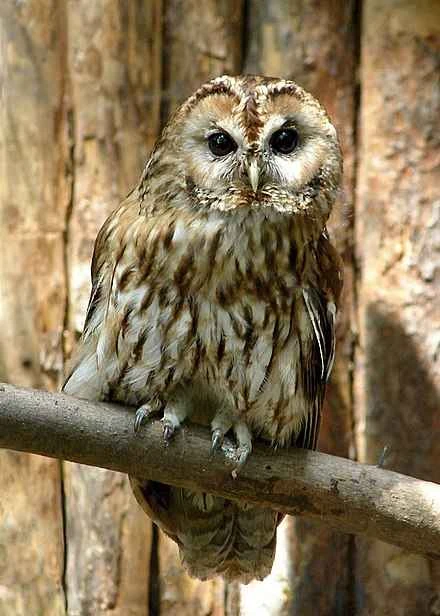
Physical characteristics:
Face shape: Owls typically have round faces, and due to the arrangement of the feathers on their faces, they appear to have a pair of prominent eyes and a "cat head"-like appearance.
Size: Owls vary in size, with the smallest species being about 15 centimeters tall and the largest species, such as the eagle owl, reaching 70 centimeters in height.
Feathers: Owl feathers are typically soft and dense, which helps reduce wind resistance, maintain body temperature, and provide camouflage when flying at night.
Distribution and Habitat:
Geographical distribution: Owls are a wide variety of species, found all over the world, from tropical regions to polar regions.
Habitat: Owls can be found in a variety of environments, including forests, grasslands, deserts, mountains, and cities. They typically inhabit trees or caves.
Lifestyle habits:
Diet: Owls feed on small mammals, birds, reptiles, and insects. They hunt at night, using their excellent hearing and vision to catch their prey.
Nocturnal: Most owls are nocturnal birds; they are active and hunt at night, while usually resting during the day.
Reproduction: Owls typically live monogamous lives, nesting in tree cavities, rock caves, or artificial nests, where they incubate their eggs and care for their chicks.
Sounds: Owls have distinctive calls. Some species make a "cooing" sound, while others make a sharp, piercing call.
Diversity of species:
There are many different species of owls, including many different subspecies, each of which may have different physical characteristics and living habits.
Its significance in culture:
Owls have special symbolic meanings in different cultures and traditions, and are sometimes regarded as omens or symbols of wisdom.
Owls are highly regarded for their nocturnal activity, distinctive appearance, and unique ecological habits. Studying owls allows us to better understand their role in the ecosystem and strengthen the protection of them and their habitats.