Have you ever encountered wriggling earthworms while digging in the soil after rain? Don't let their unassuming appearance fool you; their method of reproduction in the underground world is more efficient and unique than that of many "higher animals"! Today, we'll uncover the secrets of how earthworms reproduce.
I. The secret of earthworms' sex: Hermaphroditic, and able to "pair" on their own?
One of the most unique things about earthworms is that they are hermaphroditic . What does that mean? It means that every earthworm possesses both male and female reproductive organs! This is a remarkable adaptation to their environment.
Deep underground, encountering other earthworms is not easy. Therefore, earthworms adopt a "tit-for-tat" approach, where they can fertilize each other and lay eggs together , greatly improving their reproductive efficiency.
II. How do earthworms mate? A S-shaped embrace, a "kiss of the soil."
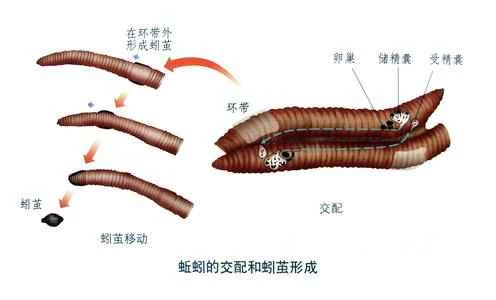
During mating, two earthworms intertwine tightly along the front of their abdomens, their bodies crisscrossing in an "S" shape. This posture is both an expression of affection (if they have feelings) and a key posture for sperm exchange .
After exchanging sperm, they each preserve the other's sperm and reproduce over the following days.
III. The Amazing "Ceruleus": The Earthworm's Secret Weapon for Laying Eggs
The slightly enlarged tissue in the front and middle section of an earthworm's body is called the clitellum , which is a key structure for reproduction.
After mating, the earthworm secretes mucus, forming a gelatinous cocoon at the clitellum. This cocoon slides across the earthworm's body as it "retraces," encountering egg cells and previously stored sperm along the way, thus fertilizing the egg within the cocoon .
Ultimately, the tiny cocoon was left in the soil, becoming the cradle of baby earthworms.
IV. New Life Born from the Cocoon: The Earthworm's "Direct Birth Method"
Each earthworm cocoon can hatch 1 to 5 baby earthworms . They do not have a larval stage, nor do they "emerge from the cocoon like butterflies." Instead, they are born directly as miniature earthworms and then slowly grow up.
A few weeks later, they will be able to participate in a new reproductive cycle and complete the relay of life.
V. Why should we care about earthworm reproduction?
Earthworms are of great ecological significance : they are known as the "intestines of the earth," and their reproductive capacity directly affects soil fertility, plant growth, and ecosystem health.
A "hero" in agriculture : A healthy population of earthworms can significantly improve the quality of arable land, acting as a natural soil conditioner and fertilizer generator.
Natural science enlightenment : Learning about the reproductive methods of earthworms is a wonderful "first lesson in natural science" for children.