The world is full of mysteries. As human technology advances, the more we learn, the more unknowns appear. Countless animals exist in nature, but do you know which is the most mysterious? Below is a list of the world's ten most mysterious animals, including the Tasmanian tiger, Gigantopithecus, giant squid, Bigfoot, coelacanth, Homo floridus, king cheetah, ivory-beaked woodpecker, Loch Ness Monster, and okapi, among other enigmatic creatures. Let's take a look.
1. Tasmanian tiger
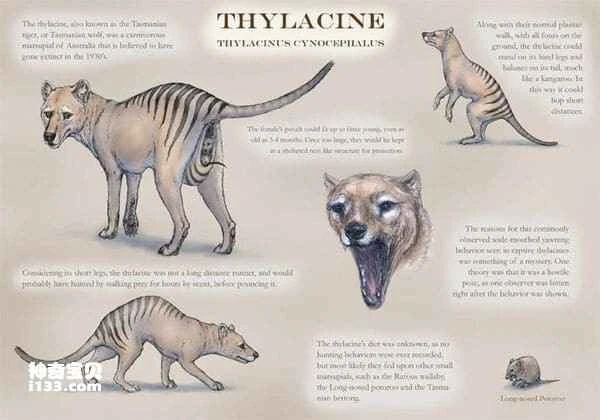
The Tasmanian tiger, also known as the thylacine, is a marsupial. Adult Tasmanian tigers stand approximately 45-60 centimeters tall at the shoulder, and their body length, including the tail, is about 1.6-1.9 meters, weighing around 25-35 kilograms. They have tiger stripes and a somewhat wild dog-like appearance, and were once distributed across mainland Australia, Tasmania, and New Guinea in Oceania. Tasmanian tigers are typically nocturnal, enjoy climbing trees, and are adept at ambushing their prey from the trees, suddenly leaping down and using their powerful bite to subdue their prey instantly.
2. Giant ape
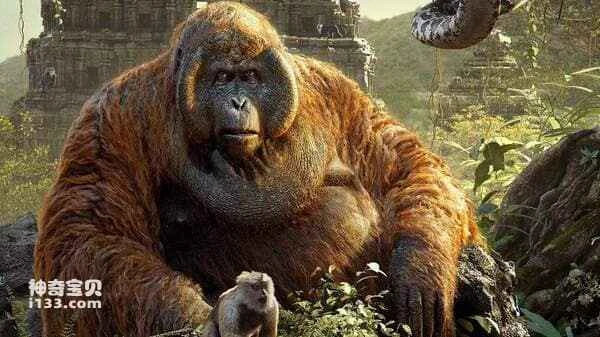
Gigantopithecus was an extinct large ape that lived in China, India, and Vietnam approximately 1 million to 300,000 years ago, contemporaneous with several hominids. The fossil record indicates that Gigantopithecus blacki was the largest ape, standing approximately 3 meters tall and weighing up to 600 kilograms. This giant ape lived on the ground, similar to an orangutan, and was likely the largest ape in the world. Its weight is estimated to exceed 200 kilograms, and it possessed enormous molars with thick enamel, towering crowns, and short, flat cusps. Sometimes, Gigantopithecus is mistakenly translated as "giant ape-man," but it was not actually a human, so calling it a "giant ape-man" is inappropriate (although it was indeed listed as an ape-man in some past works).
3. Giant Squid
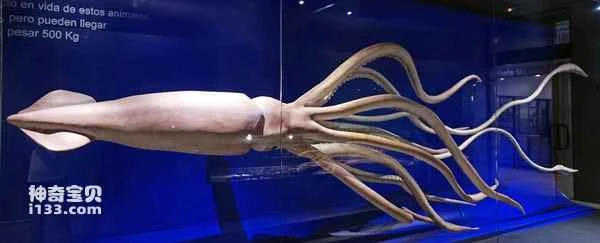
The giant squid, belonging to the family Colossidae and the genus Colossi, is a cephalopod mollusc. It is the largest invertebrate in the animal kingdom and the second largest squid in the world, after the colossal squid (also known as the giant slug). The giant squid can reach a mantle length of up to 6 meters, with a total length typically between 6 and 12 meters, and a maximum length of up to 20 meters. Its maximum weight can reach 1000 kilograms. Giant squid are widely distributed throughout the world, their distribution area being related to continental shelves and islands. They mainly inhabit waters at depths of 200 to 400 meters, feeding on other cephalopods (such as sail squid and calamari) and small fish.
4. Bigfoot

Bigfoot usually refers to the Wild Man (an unproven primate). The Wild Man is described as an upright-walking primate, taller than apes, and possessing a degree of intelligence. Its formal scientific name is *Homo erectus*, or "Upright Higher Primates." Currently, while some people support the existence of the Wild Man, mainstream academia considers its existence to lack scientific evidence.
5. Flores people

A new human species with limited height lives on Flores Island in Indonesia, often referred to as the Flores people or pygmy people. Around 13,000 years ago, this group of short humans, standing only about 3 feet tall, inhabited the island. In 2003, scientists discovered the remains of these pygmy people in the Leon Bua Cave on Flores Island, Indonesia, leading anthropologists to name this newly discovered species "Homo floresiensis" (scientific name: Homo floresiensis).
6. Wang Liebao
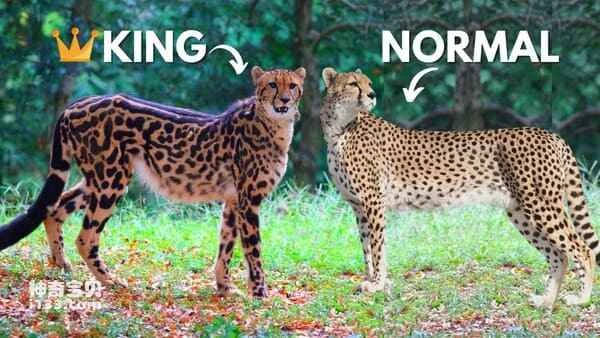
Since 1926, residents of Zimbabwe have been sighting a cheetah with an unusual appearance. These cheetahs do not have small spots, but rather relatively large patches, somewhat resembling those of a jaguar. They also have black stripes on their backs and long manes around their necks. These unique features have led people to call this animal the "King Cheetah." Some believe it is a hybrid of a jaguar and a cheetah, while others think it may represent a new subspecies of cheetah.
7. Ivory-beaked woodpecker
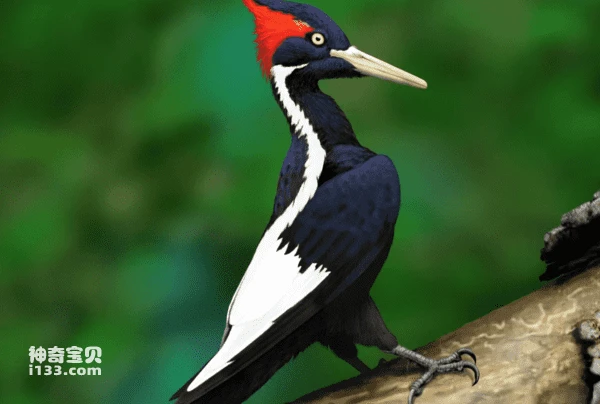
The Ivory-billed Woodpecker (scientific name: *Campephilus principalis*) is about 48-53 cm long with a wingspan of about 84 cm. It has a large head and a relatively long neck. Its beak is hard, straight, and chisel-shaped, allowing it to penetrate deep into trees. This woodpecker has a long, flexible, retractable tongue with dense, hooked projections at the tip. Its legs are relatively short, usually with three or four toes. Its tail is flat or wedge-shaped, with dry, stiff, and elastic feathers that support its body while pecking. The Ivory-billed Woodpecker feeds on wood, creating holes and catching insects. Its long, sharp beak can easily penetrate hard wood, while its slender tongue, covered with barbs and coated with sticky substance, allows it to accurately capture pests.
8. Loch Ness Monster

The Loch Ness Monster is one of the world's most mysterious and captivating creatures. Stories of a giant monster in Loch Ness that frequently attacked humans and livestock have existed for over 1500 years. Since ancient times, countless people have claimed to have witnessed this monster, with descriptions ranging from the most bizarre to the most outlandish: some say it has a long, elephant-like trunk and smooth, soft skin; others claim it has a long neck and a round head; still others say it appears amidst splashing foam; and yet others say it breathes smoke, often shrouding the lake in mist. The legends surrounding the Loch Ness Monster are diverse and contradictory, growing ever more widespread and mysterious with each passing day. While frightening, they remain largely hearsay. The rumors intensify, and the mysterious tales spread ever further.
9. Okapi
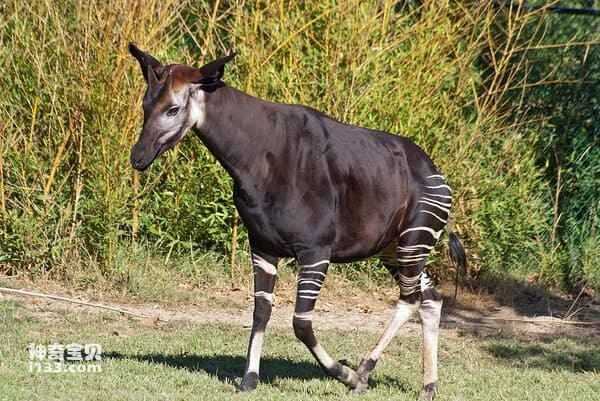
The okapi (scientific name: *Okapia johnstoni*) weighs between 180 and 317 kilograms, measures 1.9 to 2.5 meters in length, has a tail length of approximately 30 to 42 centimeters, and a shoulder height of about 1.5 to 1.65 meters. Female okapis are typically slightly larger than males. This mammal was not discovered until 1901 and lives in the forests of Zaire, Africa. The okapi initially resembled a horse due to its black and white stripes, giving it a zebra-like appearance. Some have mistakenly believed the okapi to be a hybrid of a giraffe and a zebra, but it is actually not closely related to zebras. Before the giraffe's neck elongates, its appearance shares similarities with the okapi.
10. Pompeii beetle
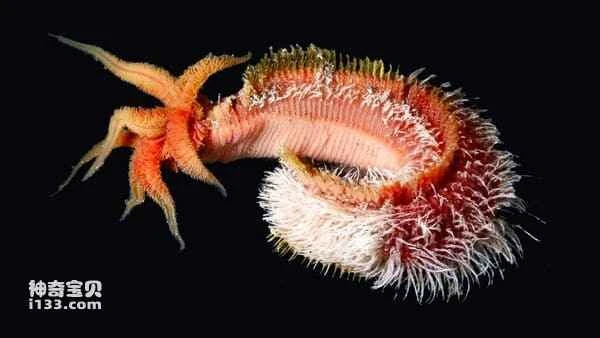
Pompeii, also known as the bristle worm, is about 10 to 15 centimeters long and is the second most heat-resistant organism in the world, preferring temperatures of 70 degrees Celsius. Pompeii possesses a cooling ability, allowing it to survive at varying temperatures even when exposed to bacteria. It can withstand temperatures as high as 81 degrees Celsius and can even leave the scorching environment to swim to seawater where the temperature is as low as 10 degrees Celsius to forage. The ability of Pompeii to tolerate such extreme temperature differences is truly remarkable.
In the past, it was believed that the limit of heat tolerance in animals was set by a type of ant in the Sahara Desert, which could find food at temperatures as high as 55°C. What is unique about the Pompeii worm is that its tail can be immersed in water at temperatures as high as 81°C, while its head can live normally in this extreme heat environment without being affected.