Regardless of whether the value of the Bitcoin cryptocurrency rises or falls, its legacy will now exist forever in the form of a fly called Chrysosoma Bitcoin, a new description from Papua New Guinea.
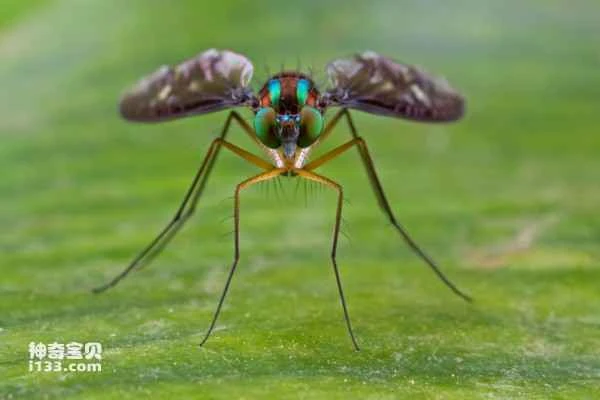
This previously unknown fly, from the rainforest-covered mountains of Papua New Guinea, is a member of the family Chrysoosma (long-legged flies), which comprises 13 species, all possessing beautiful brown wing patterns and long bristles (setae) on their forelegs. Dr. Dan Bickel, an entomologist at AM, classified Chrysoosma and related species from extensive collections at Australian museums and other institutions.
The first named species in this group was collected in 1857 by the famous naturalist Alfred Russell Wallace in the Aru Islands near Papua, Indonesia.
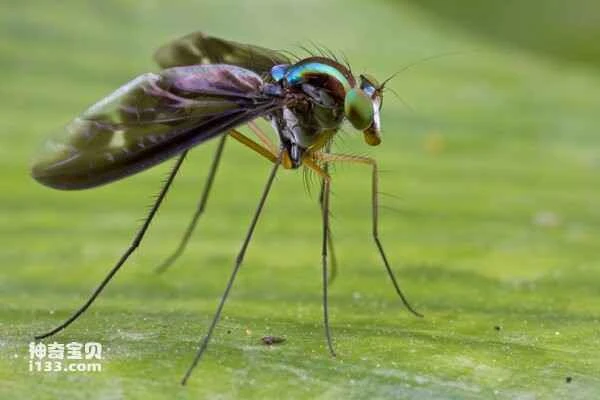
So how did such a fly come to be named Bitcoin? The fly was named by venture capitalist Mark Carnegie and cryptocurrency entrepreneur Sergey Sergienko. They won the naming rights as the highest bidders at a 2021 Australian Museum Foundation dinner auction. The name is fitting—Carnegie and Sergienko were the first in AM history to use Bitcoin for payment.
Dr. Bickel stated that there is no doubt that historical natural science collections are an important resource for researchers.
“Australia has over 25,000 species of flies, and AM has over 150,000 specimens representing 14 countries in Oceania, including Australia and Papua New Guinea. The golden-bodied fly, primarily found in the high-altitude provinces of Papua New Guinea at elevations of 1500m to 2400m, with its striking coloration, is undoubtedly a fascinating species,” said Dr. Bickel.

Flies are one of the most common and diverse groups of animals on Earth. Although we often find them annoying, they play many important roles—they are the second most important pollinator group after native honeybees and many crop honeybees.
Dr. Dan Bickel
“Overall, flies are one of the most common and diverse groups of animals on Earth. While we often find them annoying, they play many important roles—they are the second most important pollinator group after native honeybees and many crop honeybees,” he said.
“However, insects face enormous threats due to deforestation, climate change, and the use of pesticides. There are still millions of species there, especially in the tropics where we have not yet discovered and described them,” Dr. Bickel added.
Carnegie and Sergienko believe that advancements in digital technology offer cultural institutions an excellent opportunity to strengthen the preservation of their collections, democratize knowledge, and explore new fundraising initiatives.
Carnegie stated, "We have the ability to reposition cultural institutions at the forefront of the digital revolution and are committed to ensuring that Australia does not fall behind in the ongoing disruption."
“I acknowledge that Bitcoin mining has a negative environmental impact and want to ensure that those involved with me in crypto projects are not explicitly purchasing multiple compensations. That’s why we’ve purchased more than three times the amount of carbon credits through Australia, Melanesia, and on-chain projects to offset our Bitcoin donations,” Carnegie added. “I respect Australian Museums as a world-leading cultural institution, know the immense trust they place in us, and hope that what we do will elicit commentary rather than criticism.”
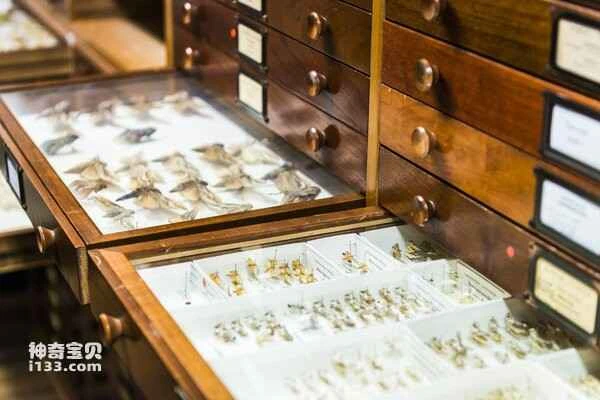
Professor Christopher Helgen, chief scientist at the Australian Museum, said that there are conservative estimates of more than 8 million species of life on Earth, but only about 25% have been named.
“We share this planet with millions of species, even though we rarely think about them. Yet they are vital to our own survival, each a part of the ecosystem that enables us to breathe clean air, drink clean water, and get the food we need,” Helgen said.
“Insects don’t usually attract the attention of the financial world, but they are very valuable to us in themselves. Every species has value—we might think of species as nature’s currency,” he added.