Animal perception refers to an animal's ability to receive and process information from its external environment through its senses, thereby generating behavioral responses. Research shows that animal perception relies not only on common senses such as sight, hearing, smell, touch, and taste, but also on many more complex forms of perception. Understanding animal perceptual systems allows us to better understand how they adapt to their environment and make behavioral choices, which is of great significance for animal conservation and ecological research.
Definition and Importance of Animal Perception
Perception is the process by which the senses receive external stimuli and transform them into information that the brain can understand. For animals, the perceptual system helps them detect food, avoid predators, find mates, and establish territory—all essential for survival. The perceptual systems of animals vary from species to species; different animals have evolved unique sensory abilities based on their living environment.
The main types of perception
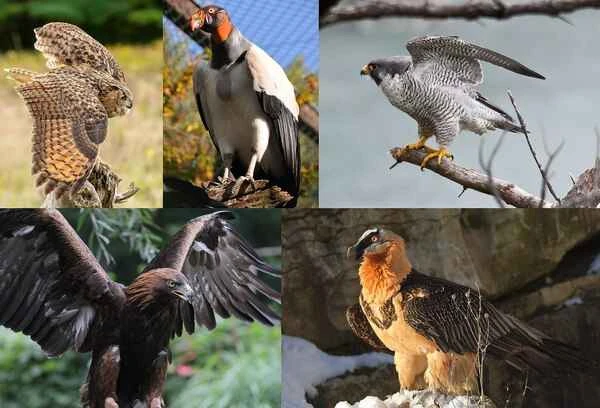
Vision : Many animals rely on vision to perceive their surroundings. For example, birds of prey (such as eagles) have extremely keen vision and can spot prey from thousands of meters away. Insects (such as bees) use their compound eyes to capture ultraviolet light, helping them to identify flowers and find nectar.
Hearing : Sound perception is crucial for many animals. Bats navigate using echolocation, relying on sound waves to detect prey and obstacles. Whales and dolphins also use ultrasound to communicate and detect objects.
Smell : The sense of smell plays a vital role in the survival of many animals. For example, dogs have an extremely keen sense of smell, using it to distinguish food, companions, and strangers. Ants , on the other hand, rely on chemical scents (pheromones) to communicate and coordinate collective actions.
Taste : Animals have varying sensitivities to taste. Felines have a weaker ability to perceive sweetness, while insects possess a diverse range of taste receptors, helping them select suitable food in complex environments.
Touch : Touch is not limited to skin contact; animals can also perceive changes in their environment through touch. For example, spiders rely on the vibration of their webs to judge the size and distance of their prey, while elephants sense ground vibrations through their feet and can detect the movement of their companions from a distance.
Other special senses : Some animals possess special sensory systems. Electric eels can detect prey using electric fields, sea turtles can sense the Earth's magnetic field to migrate long distances, and snakes can detect temperature changes by sensing infrared radiation, helping them hunt at night.
Animal perception and cognitive abilities
Beyond basic sensory perception, a growing body of research has revealed that animals also possess cognitive abilities . Cognition encompasses an animal's capacity for information processing, memory, learning, and reasoning. Many higher animals not only rely on sensory perception to react but also adjust their behavior through experience and learning.
Cognitive performance of animals
Learning ability : Many animals are able to learn through experience and trial and error. For example, crows are among the most intelligent birds known; they can use tools to obtain food and remember complex procedures.
Problem-solving abilities : Primates and marine mammals such as orangutans and dolphins demonstrate strong problem-solving abilities. They can use tools, mimic the behavior of others, and even infer the intentions of others.
Memory : Animals such as elephants and whales have strong memory abilities, which helps them migrate and forage in vast environments.
Self-awareness : Some animals, especially primates, dolphins, and elephants, demonstrate a certain degree of self-awareness through mirror tests, being able to recognize themselves in a mirror.
Animal perception and evolutionary adaptation
Animals' sensory systems are the result of evolutionary adaptation, and the sensory systems of different species are closely related to their living environment. Animals living on the ground, such as horses and deer, have evolved a wide field of vision, helping them stay alert while grazing. Animals living underground, such as moles, have degenerated vision and rely on smell and touch to perceive their environment.
Examples of adaptive evolution
The visual evolution of nocturnal animals : The retinas of nocturnal animals (such as owls and cats) have a large number of rod cells , which enables them to see clearly in low light conditions.
The evolution of hearing in aquatic animals : Many marine mammals (such as whales and dolphins) perceive their underwater environment through ultrasound because sound travels faster in water, helping them navigate and communicate in the vast ocean.
Research and protection of animal perception
Research on animal perception not only reveals their behavioral patterns but also provides a scientific basis for animal conservation. By understanding animal perception and cognition, we can take more effective protective measures, such as avoiding the impact of light pollution on nocturnal animals or reducing noise pollution disturbance to marine life.
Examples of protective measures
Reducing light pollution : Light pollution has a significant impact on migratory birds and nocturnal animals. Controlling lighting in urban and coastal areas can reduce disturbance to their habitats.
Preventing noise pollution : Noise pollution in the ocean, such as ship noise and sound waves from marine exploration activities, affects the echolocation abilities of marine mammals such as whales and dolphins. Noise control measures can reduce this impact.
Animal perception is a crucial foundation for their adaptation to the environment, survival, and reproduction. By deeply studying animals' sensory systems and cognitive abilities, we can not only better understand animal behavior but also provide a scientific basis for species conservation and ecosystem management. Whether in basic research in the laboratory or in ecological conservation in the wild, understanding animal perception is vital for the protection of global biodiversity.