According to biological research, mammals began to appear during the age of dinosaurs (2 million years ago). Initially, mammals were very small, but after the extinction of the dinosaurs (late Mesozoic Era – 660,000 years ago), they began to evolve into larger forms.
As we all know, mammals are warm-blooded, meaning they have a body temperature, and it is homeothermic. The world's warm-blooded animals include birds and mammals; their body temperature does not change with the ambient temperature. Other animals are cold-blooded, and their body temperature is consistent with the temperature of their environment.
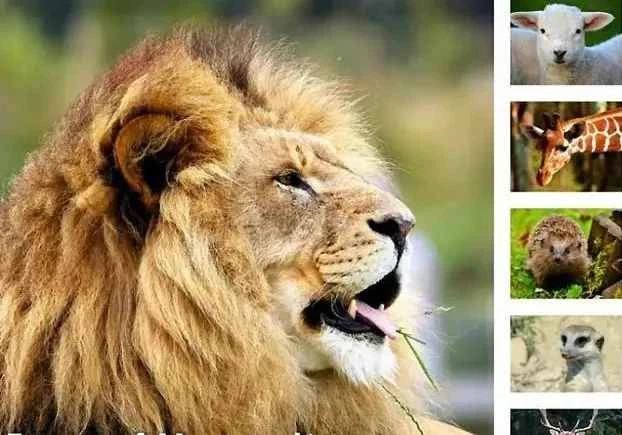
Mammals are covered in thick fur, the main function of which is to regulate their body temperature. In cold environments where their body temperature is lower than their own, the fur acts as insulation, while in environments where their body temperature is higher than their own, it helps them dissipate heat, thus maintaining a constant body temperature. This allows mammals to live almost anywhere in the world, from frigid polar regions to tropical forests.
Biologists debate the types of mammals, that is, their biological classification. According to the classification system, mammals belong to the Kingdom Animalia, Phylum Chordata, and Class Mammalia.
The common understanding of mammals is that they have warmth, are born from their mother's womb, and nurse as infants. Therefore, given the vast number of mammal species, we can categorize them into three main groups based on this generally accepted understanding of how mammals reproduce:
Three major types of mammals
1. Monotremes
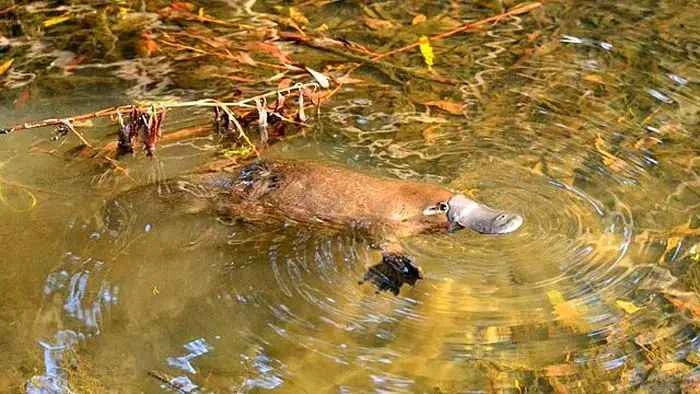
This type of mammal might counterintuitively suggest that it lays eggs, with offspring hatching from the eggs. Despite this, it is still classified as a mammal. This behavior is an ancient form of mammalian behavior, and such mammals do exist today, such as the platypus. For a detailed description of this type of animal, see the article " Faced with Animals Possessing Super Sensory Abilities, Humans Admire Their Inferiority, Yet This Has Spurred the Development of Many High Technologies ," which provides a more detailed introduction to this animal. Monotremes are mammals belonging to the subclass Prototheria; the term Monotremes refers to monotremes.
Monotremes are a special group of mammals that, unlike other mammals, reproduce by laying eggs to hatch their young, rather than by giving birth to live young. For example, the platypus from Australia.
2. Marsupial mammals
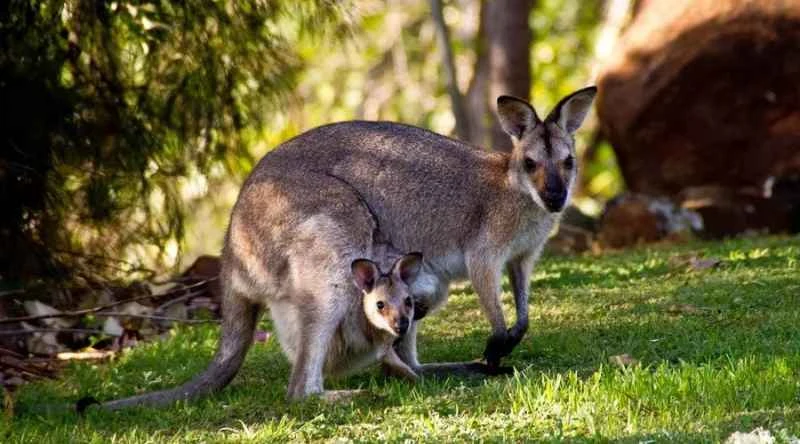
The offspring of this type of mammal are born almost undeveloped; the infant remains in the pouch on the mother's abdomen to continue developing. The mother's nipples are located in this pouch, and the infant drinks the mother's milk for all its nutrients, eventually becoming a fully mature infant. Marsupials belong to the subclass Metatheria. These mammals are found only on the Australian continent.
Having read this far, you might want to consider this question: Why are monotremes and marsupials only found on the Australian continent?
3. Placental mammals
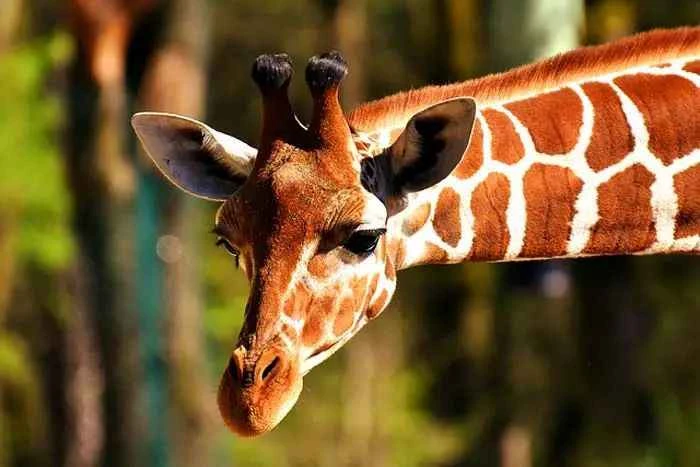
This type of mammal constitutes a significant portion of the mammalian species in the animal kingdom, boasting the greatest diversity, number, and widest distribution. Offspring develop into a well-formed fetus within the mother's womb over a period of time, after which the mother prepares to give birth. The infant in the uterus receives nutrition from the mother's diet through the umbilical cord (attached to the mother) within the placenta (the organ from which the infant grows). Placental mammals belong to the subclass Eutheria, including humans, giraffes, monkeys, and apes.
The above are three types of mammals classified from an evolutionary perspective, in order to better understand the characteristics of the following mammals.
mammalian characteristics
Although mammals can be monotremes, marsupials, or placental animals, they all share some key characteristics, which are manifested in:
1. Warm-blooded animals
Mammals maintain a constant body temperature (through homeostasis) slightly higher than the ambient temperature of their environment. They are generally referred to as homeothermic species (birds are also homeothermic species), as mentioned earlier.
2. Vertebrates
All mammals have a spine, which is connected by vertebrae. All mammals are constructed along the same chordate body plan. However, it extends to the designed length of the animal. Additionally, all mammals have three middle ear bones, a unique characteristic.
3. Nourish infants with breast milk
Mammal mothers provide nutrition to their offspring by secreting milk through mammary glands until their digestive systems improve to ingest solid food (plant material for herbivores or meat for carnivores).
4. Covered in hair
Fat: It serves as insulation, and this type of skin is common to marine mammals. For example, dolphins.
Fur: Some animals have two layers of fur: an outer protective coat (outer coat/fur) and an inner woolly undercoat. The outer fur helps to wick away moisture and keep the undercoat dry. Example: tiger.
Thorns: Some animals have modified their outer fur into harder, sharper, and thicker thorns to protect themselves from predators, such as porcupines.
Scales: The skin of some mammals can also be modified into overlapping scales, so that the skin is similar to a thick shell, which can provide excellent protection from predators, such as pangolins.
5. Childbirth via uterus
Except for monotremes, all mammals reproduce. The offspring grow in the female's uterus until they are fully developed and give birth.
Finally, let's answer the question posed at the beginning of this article: Why are monotremes and marsupials only found on the Australian continent?
The reason why monotremes and kangaroos are only found on the Australian continent is mainly due to geographical isolation.
Australia separated from other continents early on, allowing its animal communities to evolve independently. Without competition or exclusion from other higher mammals, monotremes and kangaroos survived and thrived on the Australian continent. Furthermore, Australia is home to many primitive mammals, a rarity on other continents.
Furthermore, the climate and ecological environment of the Australian continent are also suitable for the survival and reproduction of monotremes and kangaroos. These factors combined have resulted in these animals being found only on the Australian continent.
The above is a simple description of the general classification and main characteristics of mammals. I hope it will be helpful to you.