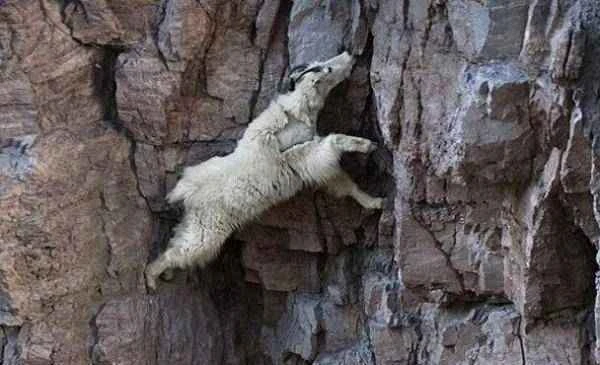
Male snow sheep live alone or in small groups, while females and their young travel in groups. They are active during the day and feed on various high-altitude plants, such as grasses, shrubs, and mosses. They move slowly but steadily and are very adept at climbing and leaping between cliffs. They can easily ascend and descend any cliff, no matter how steep, as long as there is foothold. They generally live above the treeline in summer, but must descend to lower ground when the snow is deep in spring.
During periods of extreme cold, they often seek refuge in caves. Their crouching posture, similar to that of a dog, is a unique feature that allows them to observe potential predators. While cougars, wolves, bears, and golden eagles sometimes prey on young snow sheep, their habitats themselves ensure they face few natural threats. Sometimes they can use their horns to fight and even kill predators. Their greatest threat is not other animals, but avalanches.
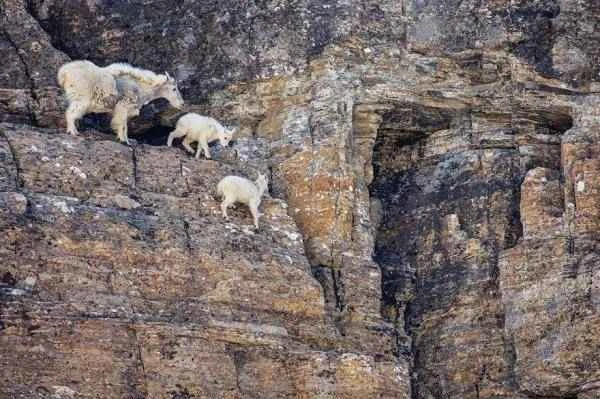
Snow sheep prefer to live on steep cliffs or rocky areas in high and subalpine regions. They particularly favor terrain with ample escape routes (steep rocky areas), gentle slopes, and mid-altitude southern regions. They migrate to low-lying areas in spring and rise to higher altitudes in summer. Their habitat is in the temperate terrestrial biome, ranging in altitude from 1000 to 5000 meters, with an average altitude of 2300 meters.
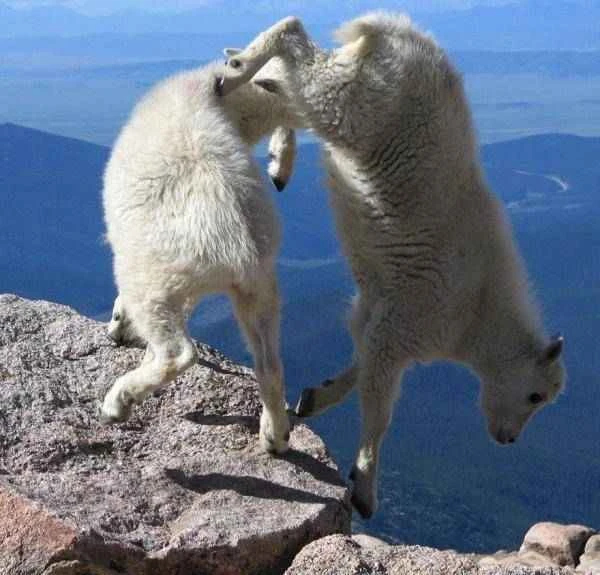
Most mountain goats live in high-altitude habitats due to vegetation limitations. While they sometimes descend to coastal areas and sea level, snow goats are primarily alpine and subalpine species. They typically remain above forest level throughout the year but seasonally migrate to higher or lower elevations within that range. In summer, they migrate to lower elevations, often traversing forests or several kilometers to lick minerals.