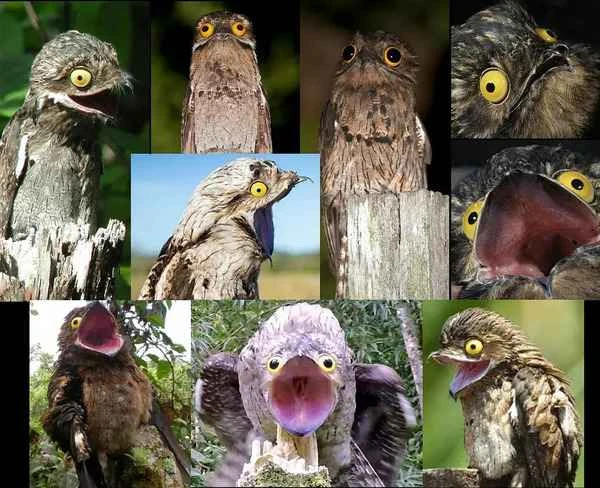
Birds of prey are one of the six major groups of birds (the other five being songbirds, wading birds, waterfowl, landfowl, and climbing birds), encompassing all extant birds in the orders Accipiformes, Falconiformes, and Strigiformes. Birds of prey are all fierce carnivores, reigning supreme in the skies. Among the many birds of prey, the golden eagle is perhaps the most well-known. However, some say that the golden eagle doesn't even make the top five of the ten extant birds of prey. Is this true? Which birds of prey make the top ten? And who will claim the crown? Let's find out.
Since we're ranking the top ten birds of prey, we naturally need to consider multiple factors, not just size. For example, the Andean condor, the largest living bird, while large, has blunt talons and a scavenging habit that renders it uncompetitive. Therefore, these ten birds of prey must be large in size, fierce in temperament, and possess strong hunting abilities. Based on this premise, let's rank them.

10th Place: Fishing Eagle
The fishing eagle is a large bird of prey belonging to the genus *Eriocheir* in the family Accipitridae of the order Accipiformes. They are mainly distributed in the east, south, and Southeast Asia. In terms of size, the fishing eagle has an average body length of about 65 cm and a wingspan of about 80 cm. They usually inhabit forests near water, and their main diet consists of fish (accounting for more than 98%).
Unlike other birds that dive into the water to catch fish, eagles rarely get wet while fishing because their keen eyesight allows them to lock onto the fish underwater. They then fly parallel to the water's surface and use their talons to snatch the fish from the water.
Although the fishing eagle is quite large and has a sharp beak and claws, it mainly feeds on fish, which puts it at the bottom of the raptor rankings.
Ninth place: Serpent Eagle
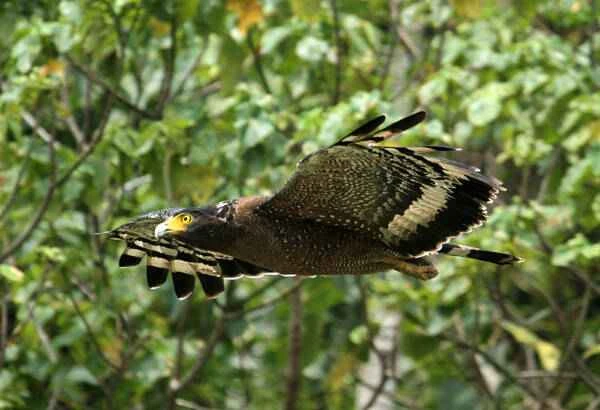
The crested serpent eagle is a bird of prey belonging to the genus *Cercis serpent* in the family Accipitridae of the order Accipiformes. It is a common bird in Asia, with an average body length of about 65 centimeters, a wingspan of about 1 meter, and a weight of about 1.4 kilograms.
As its name suggests, this is a bird of prey that has a grudge against snakes, and indeed it is, as snakes and lizards are the main food of the serpent eagle.
Many of you have seen the picture of an eagle with a snake coiled around its neck. That eagle is actually a serpent eagle. But don't worry, the serpent eagle's sharp talons will quickly pull the snake off, and then it will use its powerful jaws to smash the snake's head in two. (The image below, with the snake coiled around the serpent eagle's neck, has been edited to avoid disturbing some viewers. Please praise me!)
Eighth place: Bald Eagle
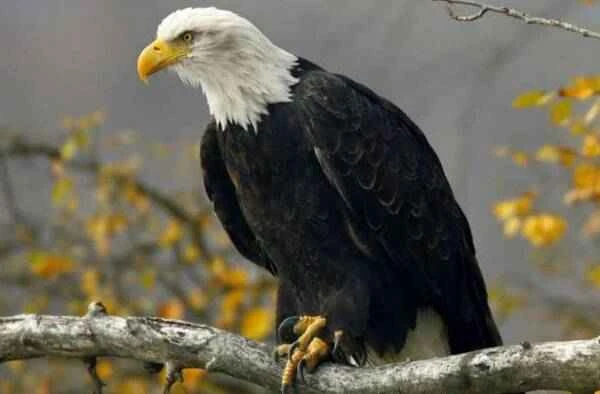
The bald eagle is a large bird of prey native to North America and is the national bird of the United States. In terms of size, it has an average body length of 85 centimeters, a wingspan of about 2 meters, and a weight of about 5 kilograms. Actually, based on this size, it should rank quite high among birds of prey, but because they live near the sea and primarily feed on fish, their ranking is lowered.
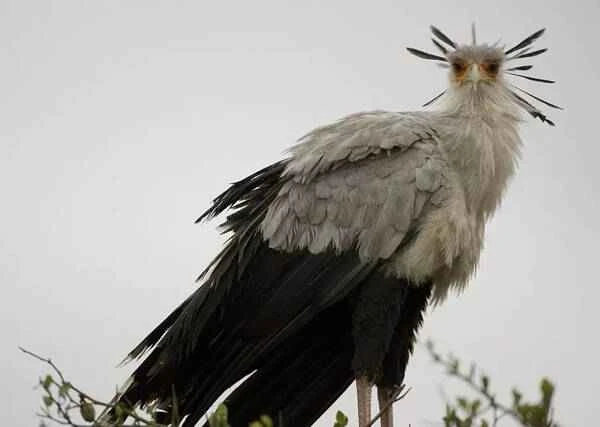
Seventh place: Secretary Vulture
The secretary bird is a large bird of prey found on the African continent. It belongs to the family Acrididae in the order Accipitriformes and is the tallest living bird of prey. Adult secretary birds have an average body length of 1.3 meters, a height of about 1.4 meters, and a weight of about 3.5 kilograms.
Although the secretary bird is a bird of prey, unlike other birds of prey, it rarely swoops down to hunt. Instead, it prefers to leisurely search for prey on the ground. Its main prey consists of venomous snakes, among which the secretary bird is the natural enemy of the famous "death god" black mamba.
Secretary birds have long legs and sharp claws, which they can use to kick and scratch their prey, and their beaks are also very sharp. Although secretary birds mainly feed on snakes, mammals such as hares and mongooses are also common prey for them.
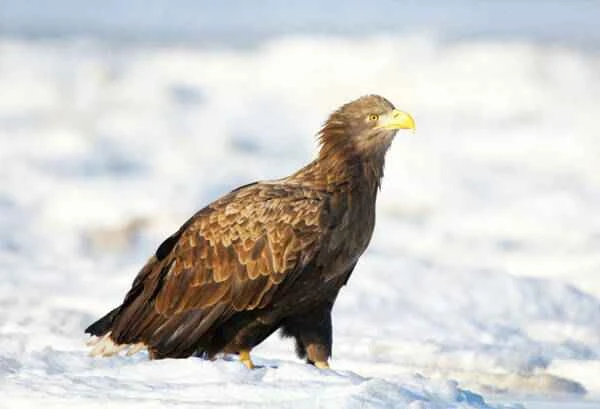
Sixth place: White-tailed Eagle
The white-tailed eagle is a type of eagle, but unlike the bald eagle, it is a bird of prey found in Eurasia. It is larger than the bald eagle, averaging 90 centimeters in length, 2.3 meters in wingspan, and about 5.5 kilograms in weight. While its primary prey is fish, the white-tailed eagle is not picky; it will also hunt other birds and small land mammals. In times of food scarcity, it will even compete with golden eagles for prey (though with a low success rate, this is unavoidable for the nursing eagle).
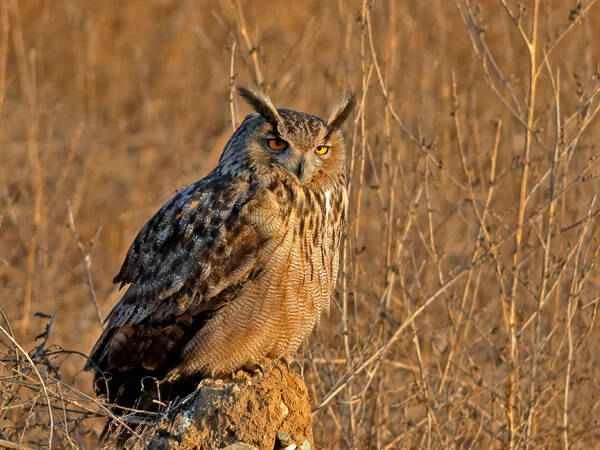
Fifth place: Eagle Owl
The eagle owl is the largest living member of the order Strigiformes, and they are widely distributed across Europe, Asia, and Africa. Although they are only about 65 centimeters long, weigh less than 3 kilograms on average, and have a wingspan of just over one meter, they are notorious for their ferocity.
First, the eagle owl is the only owl observed to dare to ambush and kill peregrine falcons at night. Second, although the eagle owl's main prey consists of rodents, its diet also includes hares, weasels, and even porcupines and foxes.
Therefore, although the eagle owl is not as large as the bald eagle, its hunting ability and ferocity are superior.
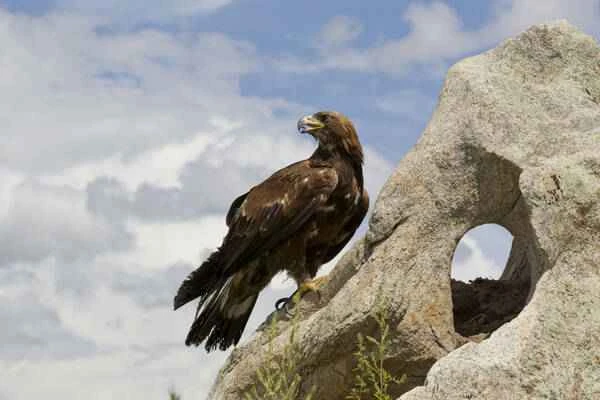
Fourth place: Golden Eagle
The golden eagle is one of the most well-known large birds of prey in the Northern Hemisphere. They have a body length of about 1 meter and a wingspan of more than 2 meters. Most importantly, the birds of prey above mainly feed on mice, fish, or snakes and rarely attack medium to large prey. The golden eagle is different.
The golden eagle's diet mainly consists of medium to large birds and mammals, such as goats, wild deer, roe deer, and even carnivorous foxes.
Therefore, the golden eagle is definitely not ranked below the top five. On the contrary, if it were larger, it could even be considered the king of birds of prey.
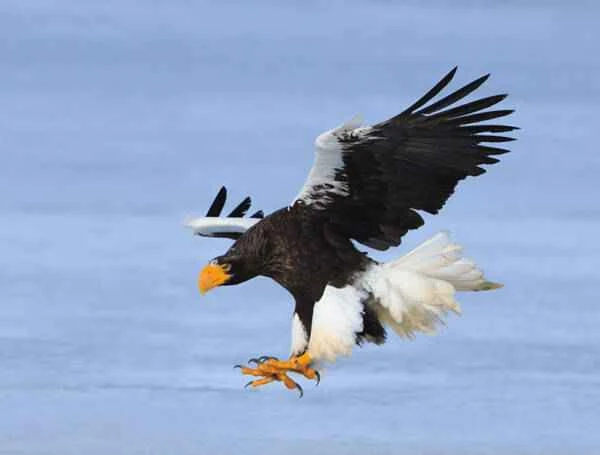
Third place: Steller's Sea Eagle
The Steller's eagle is the largest living eagle and the heaviest known eagle in the world. In terms of size, the Steller's eagle has a body length of up to 1.1 meters and a wingspan of 2.4 meters, and its maximum weight reaches 12.7 kilograms.
Although Steller's eagles primarily feed on fish, they also prey on medium to large birds and medium-sized mammals. Most importantly, there are records of Steller's eagles hunting seals, and seals are clearly far superior to foxes in terms of size and fighting ability.
Therefore, the Steller's sea eagle, with its size and diet, successfully surpassed the golden eagle to become the third-ranked bird of prey among the top ten birds of prey.
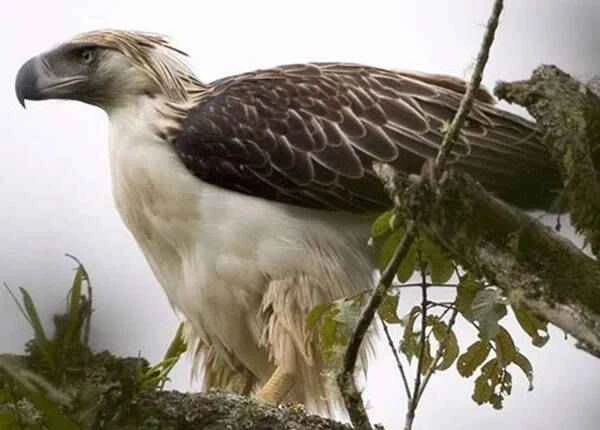
Second place: Monkey-eating eagle
The Philippine eagle is a ferocious bird of prey belonging to the genus *Euphorbia* in the subfamily Euphorbiae of the family Accipitridae in the order Accipiformes. Because the Philippine eagle is currently only found in the Philippines, it is also known as the Philippine eagle and is the national bird of the Philippines.
As a large bird of prey, the Philippine eagle has an average body length of about 90 centimeters, a wingspan of about 2.3 meters, and a weight of 6.5 kilograms. Philippine eagles usually inhabit tropical rainforests, so primates in the rainforest become their main prey, which is also the origin of their name.
It is called a ferocious bird of prey because when hunting, they habitually peck out the eyes of their prey first, and then tear the prey to pieces.
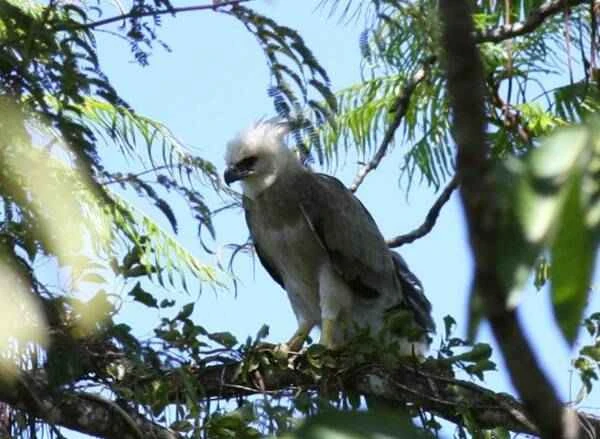
First Place: Harpy Eagle
Harpy eagles and eagles share some similarities, such as their similar size and habits. In terms of size, harpy eagles have an average body length of 100-110 centimeters, which is longer than eagles, but their wingspan is about 2 meters, which is slightly smaller than eagles. Their average weight is about 7 kilograms, which is also lighter than eagles.
In terms of habits, harpy eagles also prefer to inhabit tropical rainforests, and primates make up a large part of their diet. However, what makes them better than the pygmy eagle is that the harpy eagle's diet also includes medium-sized mammals such as sloths, porcupines, anteaters, and capybaras.
Therefore, the harpy eagle, with its wider diet, larger prey, and longer body length, successfully secured its place as the top of the ten birds of prey.
Summarize
Birds of prey cannot be judged solely by their size, as some large birds of prey are actually scavengers, and their aggression is obviously not as strong as that of birds of prey that live by hunting. Therefore, taking all factors into consideration, the golden eagle ranks fourth among the top ten birds of prey, not because it cannot even make the top five as rumored. Moreover, given the ferocious nature of the golden eagle, if it had the size of a pygmy eagle, it would definitely have taken first place.