Lemmings are mammals that inhabit the Arctic year-round. They have oval bodies, short limbs, and are smaller than ordinary mice, growing up to 15 centimeters in length. They have short, thick tails, small ears, and eyes that gleam with fear. However, when cornered, they can become enraged and fight back fiercely. Eskimos call them animals from the sky, while Scandinavians call them "sky rats." This is because in certain years, their numbers surge dramatically, as if they suddenly descend from the heavens.
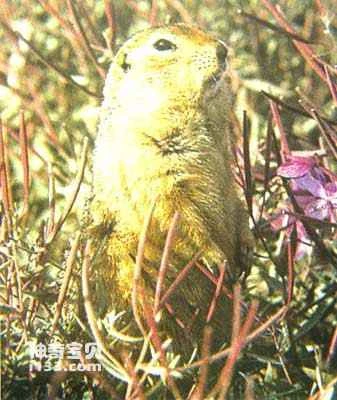
wary lemmings
Lemmings have a high reproductive rate. A female lemming can produce 6 to 7 litters a year. Newborn lemmings can mate 30 days after birth (the highest record is 14 days after birth). After a gestation period of 20 days, they can give birth to a litter of 11 lemmings. At this rate, a female lemming can produce tens of thousands of offspring a year.
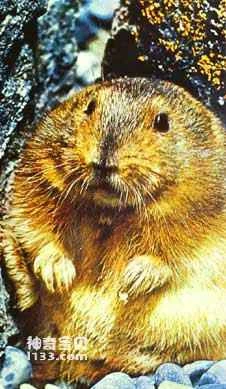
To facilitate burrowing in winter, lemmings develop a layer of keratin on their front paws in autumn, making them resemble two shovels.
To compensate for its high reproductive rate, lemmings have an astonishing appetite, capable of consuming twice their own weight in a single meal. They also have a wide diet, including almost all Arctic plants such as grass roots, stems, and moss. A lemming can eat up to 45 kilograms of food a year, hence the nickname "fat, busy harvester."
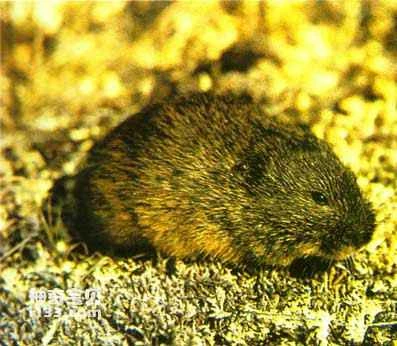
Lemmings foraging for food
Lemmings have many natural predators, including owls, skuas, snowy ospreys, Arctic foxes, and polar bears. A pair of snowy ospreys and their offspring can eat up to 100 lemmings a day. Even herbivorous reindeer will hunt lemmings, trampling them to death with their hooves before eating them, thus improving their diet.
The mystery of the lemming "great migration"
In normal years, lemmings reproduce only in small numbers, resulting in a slight increase or even no change in their population. Only in bountiful years, when the climate is suitable and food is plentiful, do they collectively reproduce in large numbers, causing a dramatic increase in their population. Once a certain density is reached, such as several hundred lemmings per hectare, a strange phenomenon occurs: almost all lemmings suddenly become restless. They run around frantically, making a racket incessantly, and stop eating, as if facing imminent doom and the end of the world. At this point, they behave completely differently. No longer timid and cowardly, they become fearless and undaunted by any predator, sometimes even launching attacks. Even more incredibly, their fur color changes noticeably, transforming from a camouflage-friendly gray-black to a more conspicuous orange-red to attract the attention of predators and increase their prey consumption. At the same time, they also exhibit a strong sense of migration, gathering together and gradually forming large herds. Initially, they scatter about aimlessly, as if in a flurry of activity before departure. Then, at someone's command, they set off in a certain direction, traveling day and night, rushing towards their final destination: the sea. Interestingly, during this great death migration, a few of their kind are always left behind to guard the homeland and undertake the sacred task of reproduction, preventing extinction. All of this seems to have been carefully considered and meticulously planned.
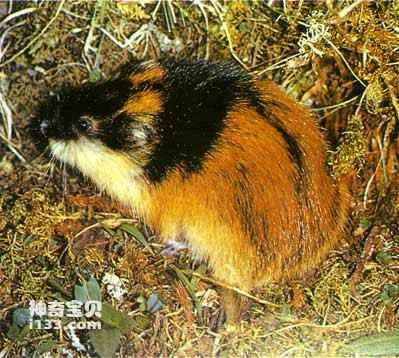
Lemmings turn orange-red to attract predators.
In the spring of 1985, hordes of lemmings marched into the Norwegian mountains, ravaging vegetation, devouring crops, and injuring livestock in their wake. The lemming infestation caused immense damage, deeply worrying the local population. However, in April, this lemming army suddenly accelerated, traveling at a speed of 50 kilometers per day towards the northwest coast of Norway. When encountering rivers, those in front would bravely leap into the water, creating a "lemon bridge" for those behind. At cliffs, many lemmings would automatically huddle together, forming large balls of flesh, and bravely roll down the slopes. Some were injured, some died, but the survivors continued on, leaving countless lemming carcasses in their wake. Thus, they traversed mountains and rivers, relentlessly forging ahead along a straight route, until they reached the sea. Even then, fearless, they would leap in and swim with all their might until the entire army perished.
As for why lemmings commit mass suicide, scientists have conducted extensive observations and research, but there are still many conflicting opinions and no convincing explanation.