Tyrannosaurus Rex is one of the most fascinating and awe-inspiring large carnivorous dinosaurs that lived during the Late Cretaceous period. It is also one of the most well-known and hotly debated dinosaurs by scientists. This is mainly because, in addition to being the largest terrestrial carnivore that ever existed on Earth, 11 nearly complete fossil skeletons of it have been discovered, allowing scientists to obtain important and relatively comprehensive scientific information and evidence from these specimens.
Recently, scientists at the Royal Saskatchewan Museum in Canada discovered the world's 12th nearly complete Tyrannosaurus Rex skeleton in a river valley in southwestern Saskatchewan. This newly discovered skeleton includes most of the skull, mandible, teeth, a vertebra running from the front of the body to the tail, a pelvic girdle, and a hind leg bone. While not the most complete Tyrannosaurus Rex skeleton, nor the earliest discovered, it contains skeletal parts missing from previously discovered skeletons, thus providing scientists with reliable evidence for a more comprehensive understanding of Tyrannosaurus Rex.
The Tyrannosaurus Rex discovered in Saskatchewan measures 15 meters from head to tail and is a slender and agile species. Its enormous body has led some scientists to believe it is a male Tyrannosaurus Rex, but even among male Tyrannosaurus Rex, this newly discovered one is considered relatively large.
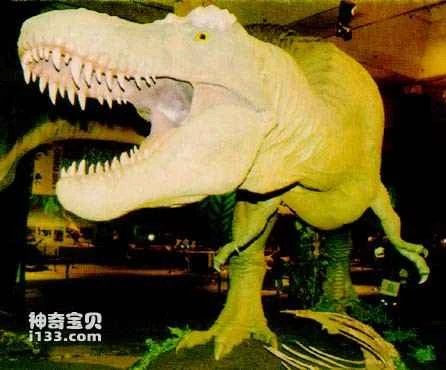
Tyrannosaurus Rex