The Cretaceous period is a geological period that began 145 million years ago and ended 66 million years ago. It was the last period of the Mesozoic Era. It occurred after the Jurassic and before the Paleogene—the first period of the Cenozoic Era, which is our present era.
It lasted for a very long time, nearly 80 million years, making it the longest geological period of the Phanerozoic Eon, which began about 539 million years ago.
The Cretaceous period is divided into two smaller time periods, called eras. The Early Cretaceous lasted from 145 million years ago to 100.5 million years ago, and the Late Cretaceous lasted from 100.5 million years ago to 66 million years ago.
I. Cretaceous Climate and Continents
The continents of our planet were once united into a single supercontinent called Pangaea. It formed approximately 335 million years ago, but by the end of the Jurassic period, this single landmass began to break apart. This continued throughout the Cretaceous period, and by the end of the Cretaceous, the continents had moved to almost their present positions.
The Earth was much warmer then than it is today, and there was almost no ice at the North or South Poles. Sea levels fluctuated but were mostly high. In fact, sea levels were sometimes 170 meters higher than they are today.
Shallow seas formed, separating some continents. For example, during the Late Cretaceous, the western inland sea route divided North America into two continents. This sea was at its longest over 3,000 kilometers long, nearly 1,000 kilometers wide, and 760 meters deep.
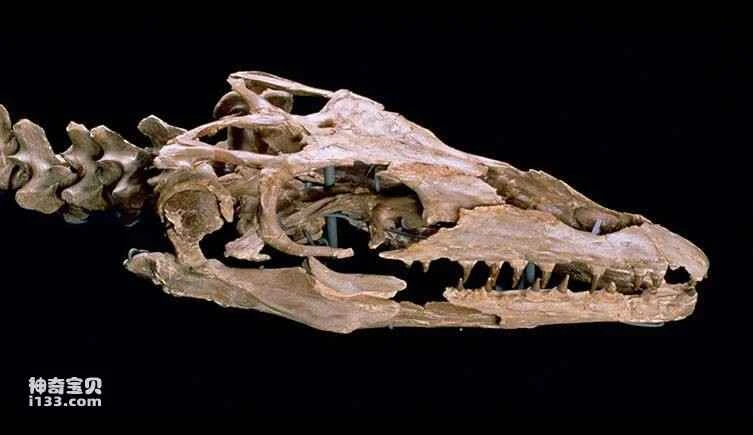
Skull of an extinct marine reptile called Platycarpus
Platycarpus was a common mosasaur that lived in the western inland waterways. It lived 84–81 million years ago and is believed to have preyed on fish, squid, and explosives.
II. Cretaceous Plants
Plant life in the Cretaceous period was very different from today. For example, temperate rainforests grew near the poles, where there was no ice at that time.
Prehistoric plant expert Dr. Paul Kenrick explained: "The evidence we have obtained from West Antarctica shows that polar forests are mainly composed of conifers, podocarpus, araucaria, and possibly ginkgo trees, with ferns and cycads in the understory."
Unlike the temperate rainforests of the Pacific Northwest in North America today (including Oregon and Washington), the Cretaceous polar forests had to endure four months of complete darkness each winter during the polar night. The plants survived for such long periods without sunlight!
Today, approximately 90% of plants are flowering plants, also known as angiosperms. Although the origins of flowering plants can be traced back to the Triassic period, we don't see much evidence of them in the fossil record of the early Cretaceous. However, by the end of the Cretaceous, angiosperms occupied a much larger part of plant life on Earth.
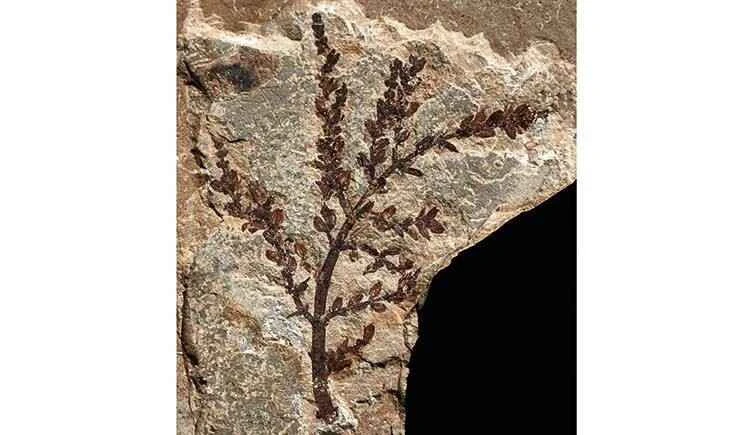
Plant fossils embedded in rocks
Monteschia vidalii may be an ancient flowering plant; however, it appears to lack proper flowers. One theory suggests that this Early Cretaceous species lived underwater, hence the absence of petals and very few floral organs. This specimen, discovered in Spain, is one of several Monteschia fossils in our paleobotanical collection.
“Of today’s flowering plants, about 70 percent are pollinated by insects,” Paul explained.
"In the Early Jurassic, insect pollination occurred on gymnosperms [a group of seed-producing plants], but it became larger as flowering plants grew."
"Therefore, a major evolutionary story unfolded between plants and animals."
III. Cretaceous Animals
“During the Cretaceous period, all creatures that lived on land and were over a meter tall were dinosaurs,” said paleontologist Dr. Susie Maidment.
“There were some small, furry mammals running around at the feet of dinosaurs, but they were a relatively small part of the ecosystem.”
“Birds have evolved and are in the sky, as well as pterosaurs. In the ocean, there are mosasaurs, which are large marine reptiles, as well as herds of plesiosaurs and ichthyosaurs,” Susie explained.
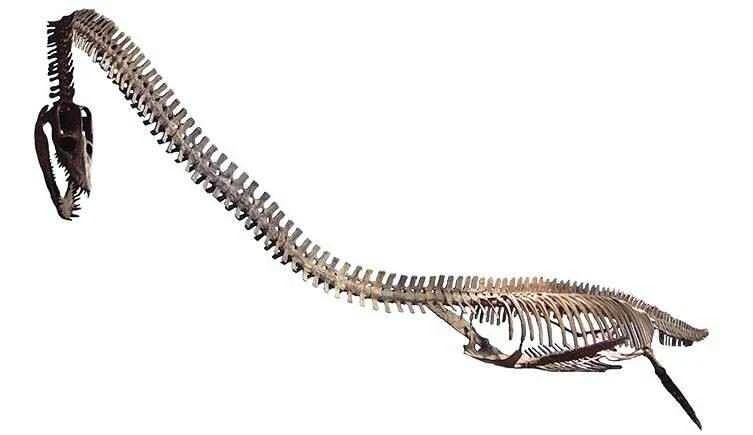
Plesiosaur skeleton with a long neck
Elasmosaurus was a North American plesiosaur that lived 80 million years ago. This marine reptile was ten meters long, with its exceptionally long neck making up more than half of its length.
When we talk about Cretaceous dinosaurs, we usually think of Triceratops and Tyrannosaurus Rex, even though these dinosaurs only lived at the end of the Cretaceous period, about 68-66 million years ago.
“The Cretaceous period lasted 80 million years, so there was a lot of turnover during that time,” Susie said.
"The Jurassic period ended 145 million years ago, the era when the Northern Hemisphere truly had large dinosaurs, like Diplodocus and Stegosaurus. Those appear to have gone extinct or at least declined in the Early Cretaceous, being replaced by Iguanodon and Ceratopsians."
During the Early Cretaceous, Iguanodon were among the first dinosaurs to evolve complex chewing mechanisms, rather than simply swallowing food like other reptiles.
During the Late Cretaceous period, hadrosaurs—which did something similar—grinded large amounts of plant matter with their hundreds of tiny teeth. Susie called them "the cows of the Cretaceous."
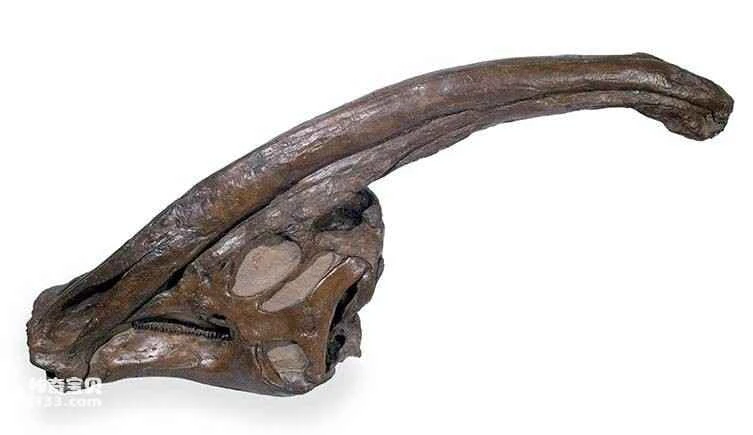
Paractenoid skull
Parasaurolophus, a hadrosaur, lived in North America 76-74 million years ago. It had a large crown on its head, which may have been used to produce a trumpet-like sound.
The largest dinosaurs in the Northern Hemisphere lived during the Jurassic period, while the largest reptiles appeared in the Southern Hemisphere during the Cretaceous period. In fact, some of the largest land animals ever to have existed existed during this period. The largest of these belonged to a group of sauropod dinosaurs called Titanosaurs.
Patagotitan, a 37.5-meter-long dinosaur from Argentina in South America, is possibly the largest dinosaur ever discovered. But it's possible that one day we will discover even larger dinosaurs.
“I think before Patagotitan, we’d say dinosaurs were on the edge of physical possibility, and then you’d find something much bigger,” Susie said.
It remains unclear why some dinosaurs and pterosaurs (such as Quetzalcoatl) became so large during the Cretaceous period. Some believe it may have been related to gases in the atmosphere, while others suggest that an evolutionary arms race between prey and predators was the cause.
“Large dinosaurs couldn’t really run, so they had to protect themselves in other ways. So, the prey got bigger, then the predators got bigger, and so on,” Susie explained.
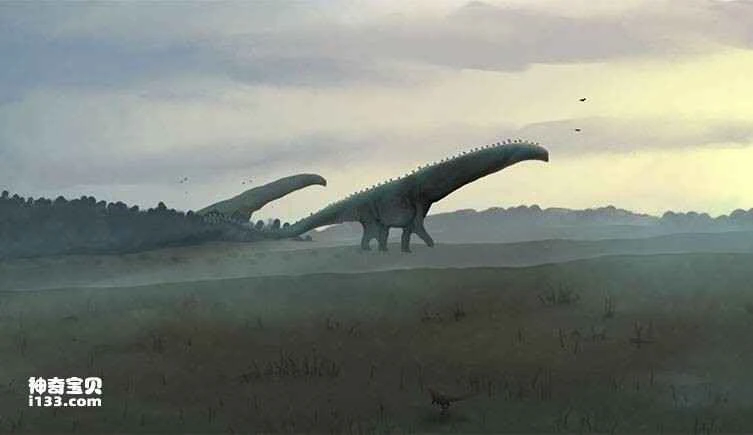
Two Patagotitan dinosaurs traverse the open landscape.
Patagotitan, a Titanosaur discovered in Argentina, may be the largest dinosaur in the world. Come to the museum to see this giant in person. ©PaleoEquii (CC BY-SA 4.0) from Wikimedia Commons
IV. How did giant dinosaurs affect their environment?
Sauropods likely lived and traveled in large groups. But how could the Cretaceous environment have supported so many giant herbivores?
“We have this mammal-centric worldview, but sauropods are very different from mammals. I suspect their metabolism is very different and they may not need to eat as much food. They may also survive on low-quality plants,” Susie said.
"They hatch from eggs that are only slightly smaller than a football and can grow into these animals that weigh up to 60 tons. We can see that they deposit bone tissue very quickly, so they grow very fast, and they probably have to eat a lot to promote their growth."
"Some have suggested that their metabolism changes as they grow. So in the early stages, their metabolism is very fast, but as they grow, their growth rate slows down, and in fact, their metabolism is much slower."
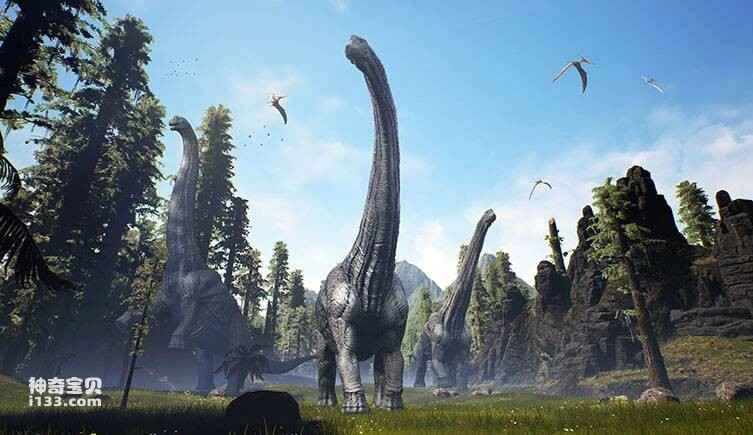
Three Alamosaurus dinosaurs are crossing the forest. One is feeding to get food from the treetops. Pterosaurs are flying above them.
Alamosaurus was a giant dinosaur that lived in North America during the Late Cretaceous period. It was one of the last dinosaurs to be discovered, excluding birds.
Giant sauropods strip the cellulose-rich leaves from coniferous trees, which can take a long time to process in their digestive system. They may also eat the cones from these trees.
“The cones contain seeds. They are different from leaves because they contain starch, not just cellulose, so it’s more cost-effective to eat them,” Paul said.
Herbivorous dinosaurs—dinosaurs that fed on plants—may have also been ecosystem engineers, meaning they altered their habitats through their behavior. When these dinosaurs ate plant seeds, they may have already passed them through their internal organs and excreted them in their feces, which helped disperse the seeds into the habitats of other animals as they moved around.
“If you think of analogies to the modern world, like elephants, then seed dispersal was probably an important function for large dinosaurs,” Paul points out.
But what ways did Cretaceous plants manage to avoid becoming dinosaur dinner? Paul points out several groups of plants that might have done just that!
Of the approximately 370 species of cycads still alive today, almost all are toxic to most mammals, with only a few primates able to digest them. If cycads possessed this toxicity during the Jurassic and Cretaceous periods, it might have been enough to deter dinosaurs from consuming them.
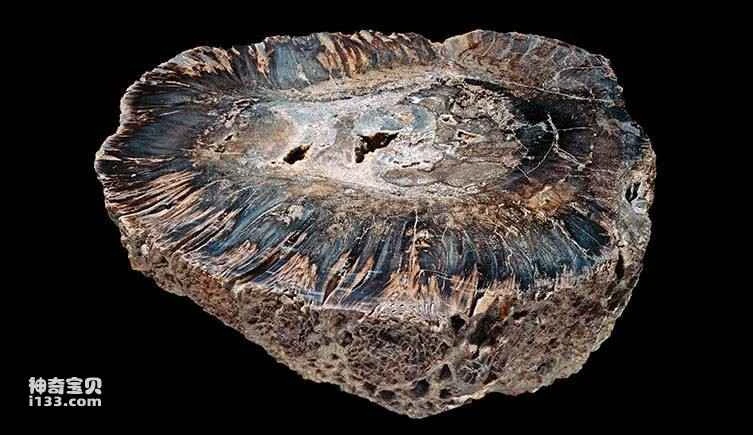
fossilized trunk of the Bennettitales shrub
During the Mesozoic Era, cycads and Bennettitales were the most diverse. The fossilized trunk of this Bennettitales shrub, exceeding 50 cm in length, dates back to the Early Cretaceous. It is 144–149 million years old.
Bennettitales is a group of extinct plants that look very similar to cycads.
“Cycad cones are produced at the top of the plant, while in many Bennettitales, the cone-shaped structures are embedded in the trunk,” Paul explained.
"It is possible that these plants protected their reproductive parts by encasing them in armor-like trunks, rather than leaving them exposed and vulnerable to dinosaur predation."
Some plants may have survived because of their robustness. For example, the monkey jigsaw tree, *Araucaria araucana*, looks almost like armor, covered with thick, scaly leaves with sharp edges. This plant belongs to a group that was most diverse during the Jurassic and Cretaceous periods.
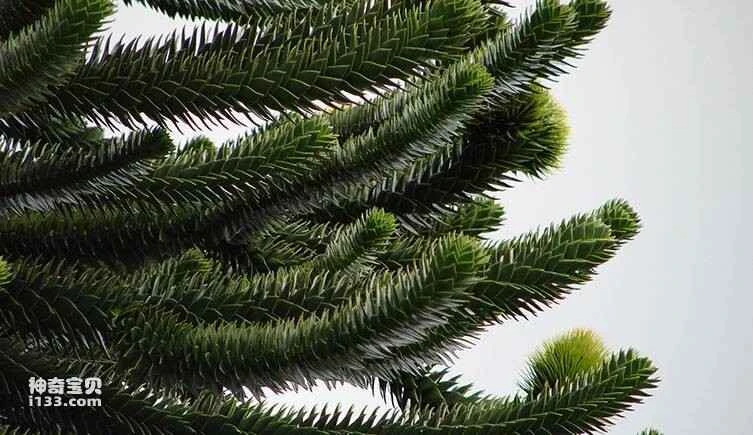
Branches of the monkey puzzle tree
The monkey puzzle tree is native to Chile and Argentina. It is now commonly planted in gardens in England. It is a hardy coniferous species whose close relatives lived during the Cretaceous period.
V. Cretaceous Britain
The name Cretaceous comes from the Latin word "creta," meaning chalk. It was named after the vast amounts of chalk that were laid across Western Europe at that time. The famous White Cliffs of Dover in England are just one of many Late Cretaceous chalk deposits.
Chalk deposits in marine environments can contain fossils that tell us about the creatures that lived in the ocean. But this also means that scientists know relatively little about the plants and terrestrial animals that lived in Britain at the end of the Cretaceous period.
We have gained a better understanding of what lived on land during the Early Cretaceous, thanks in particular to the rocks known as the Wealden Group near Bournemouth in southern England. This area is famous for its Iguanodon discoveries. In fact, Britain is especially known for its Iguanodon, with 12 genera of Early Cretaceous species found here.
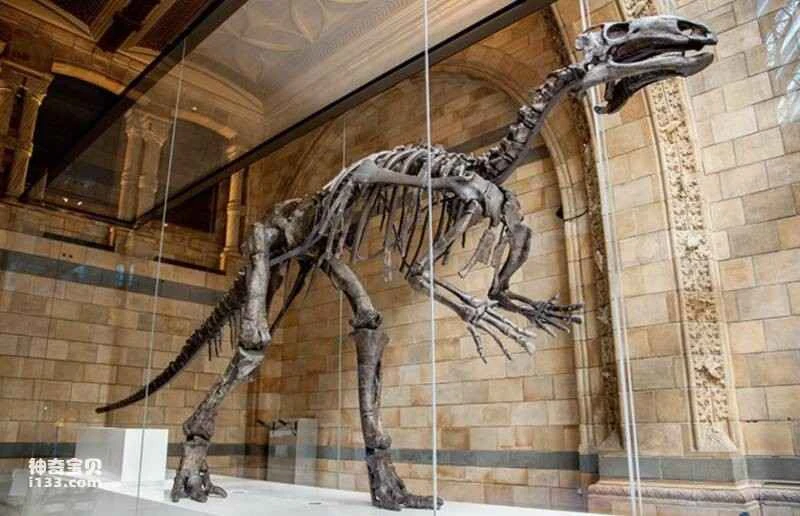
Mantria skeleton on display at the museum
Mantelosaurus was an iguanodontid dinosaur that lived between 130 and 120 million years ago. The holotype was discovered on the Isle of Wight in 1914—the specimen to which all other specimens were compared.
We know from the fossil record that the landscape of Britain during the Cretaceous period was not characterized by dense deciduous woodlands, but by conifers, with ferns and cycads growing under the trees.
These landscapes were originally relatively open. Today, large areas dominated by grass and sparsely wooded are known as savannas. In the Cretaceous period, such open terrain was primarily inhabited by ferns rather than grasses.
Paul said, "We think of ferns as delicate little things that like damp places, but back then ferns were very robust and lived in semi-arid environments."
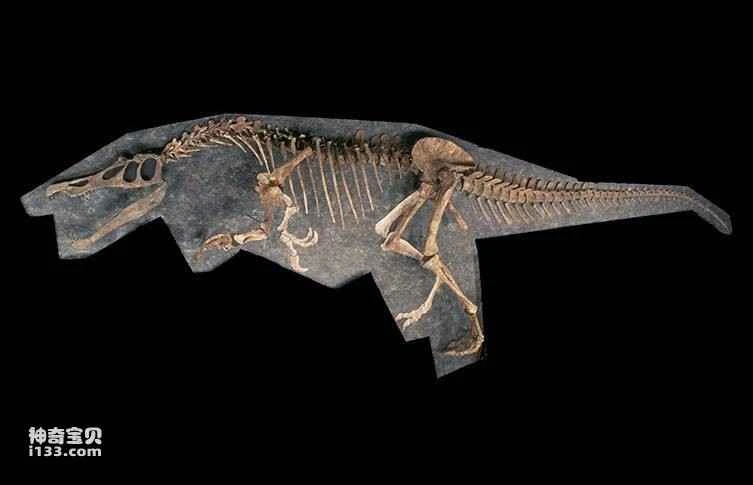
Baryonyx skeleton
Baryonyx lived in southeastern England during the Early Cretaceous. This carnivorous dinosaur was closely related to Spinosaurus, and some believe that Spinosaurus may have hunted underwater.
VI. How did the Cretaceous period end?
The Cretaceous-Paleogene extinction event 66 million years ago is perhaps the most famous mass extinction event. It was caused by a large asteroid crashing off the coast of Mexico, which dramatically altered Earth's climate.
“It evaporated carbonate and sulfate rocks, causing acid rain and releasing huge amounts of ash, dust, and grime into the atmosphere, blocking out sunlight. This led to the collapse of the global food chain,” Susie explained.
"There will also be heat pulses that cause wildfires—charcoal in the rock record is evidence of this—and massive tsunamis that wash over ocean basins."
To make matters worse, the Deccan Traps, one of the largest volcanic features on Earth, released large amounts of sulfur that cooled the atmosphere.
The Cretaceous-Paleogene extinction event wiped out approximately 65% of species.
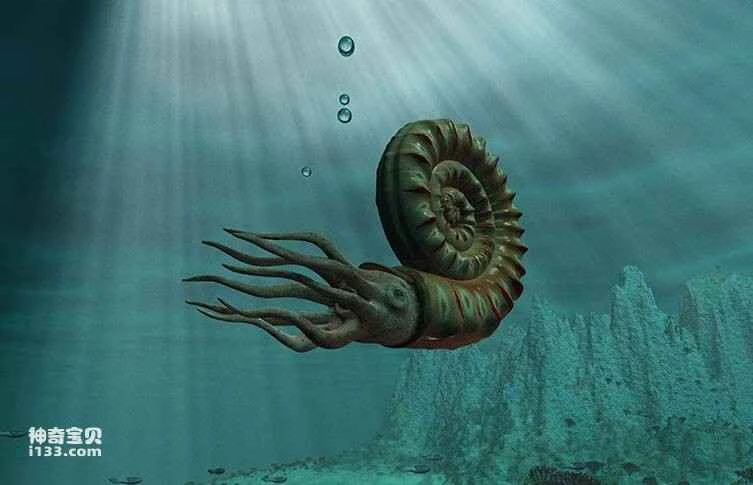
Ancient Art of Living Ammonite
The Cretaceous extinction event wiped out many animals, including ammonites, a type of shelled cephalopod.
Plants were affected, albeit in a different way than animals.
“For animals, the entire population disappears. For plants, you see many species go extinct, but you don’t see entire plant communities disappear,” Paul explained.
"In many ways, plants are more robust and more resistant to physical disturbances than animals."
Paul likens this to mowing the lawn. Even after a plant is cut in half by a lawnmower, it can regenerate, something animals cannot do. In catastrophic situations, plants can regrow from their roots, buds, and other parts.
Plants also have the advantage of producing a large number of seeds, which in some types of plants can survive in the soil for decades until conditions are suitable for them to begin to grow.
Ecological variations within a population can also help in coping with disasters.
You see plants producing large tree-like and shrub-like forms. Your household may grow annuals and long-lived perennials. You may have groups in the same household adapted to both hot and cold climates.
“Plants are likely more diverse at the family level than animals, which is why you don’t see massive losses of these large groups, because some of them have found a way to survive extinction.”
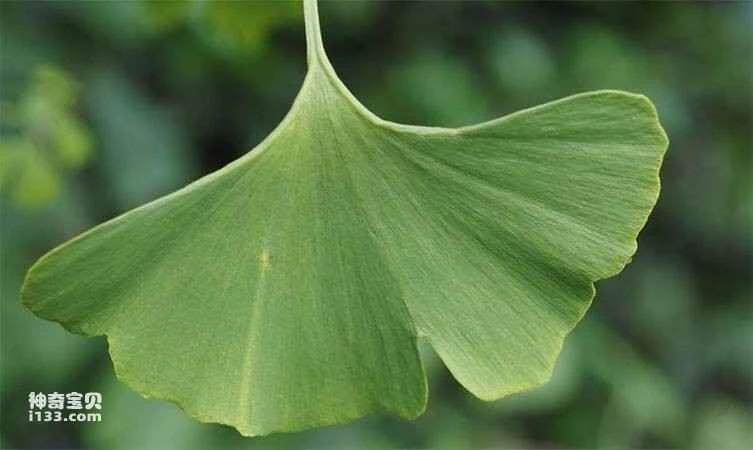
The fan-shaped green leaves of modern ginkgo trees
Ginkgo is the only surviving member of the Ginkgoales order, and its diversity began to decline in the Late Cretaceous. Image courtesy of Max Pixel (CC0).
7. What came after the Cretaceous period?
The Paleogene and Cenozoic eras began 66 million years ago when the Cretaceous and Mesozoic periods ended.
During the Paleogene period, continents drifted closer to their present positions, and in the following Neogene period, the world became cooler, and people experienced seasonal effects more widely.
Many modern plants evolved during this period, and grasses began to spread.
Birds replaced pterosaurs as the dominant animals in the sky, and the extinction of non-avian dinosaurs led to the rapid diversification and growth of mammals.
Although millions of years have passed since the appearance of our ancient human relatives, some of the earliest evidence of primate mammals comes from the Paleogene period.