The mass extinction of dinosaurs at the end of the Cretaceous period remains one of the greatest mysteries in biological history. Scientists have proposed numerous theories to explain it, but none have yet reached a universally accepted conclusion. A popular explanation is that an asteroid impact caused the dinosaurs' extinction, but this theory is flawed. Dinosaurs were the most successful animals on Earth at the time, exhibiting remarkable diversity in size, form, and lifestyle. If an asteroid impact caused their extinction, why have reptiles closely related to dinosaurs—turtles, crocodiles, and lizards—survived the catastrophe and survived to this day? This compels us to explore other avenues for understanding the cause of the dinosaurs' extinction.
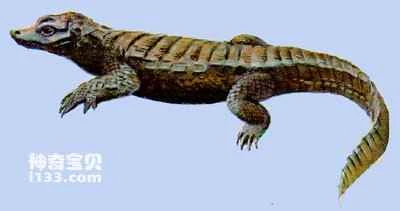
Crocodile
Modern scientific analysis has revealed that in the distant past, when Earth was first formed, the atmosphere contained virtually no oxygen, but a high concentration of carbon dioxide. Later, with the emergence of autotrophic organisms, photosynthesis began the process of consuming carbon dioxide and producing oxygen, thus altering Earth's atmospheric environment. Simultaneously, carbon dioxide is fixed by biological processes and deposited in geological strata as coal and oil, and also through organic and inorganic processes as various carbonates. This deposition process has been ongoing.
Evidence suggests that carbon dioxide concentrations were high during the Mesozoic Era, when dinosaurs lived, but lower during the subsequent Cenozoic Era. Could this change in atmospheric composition be related to the extinction of the dinosaurs?
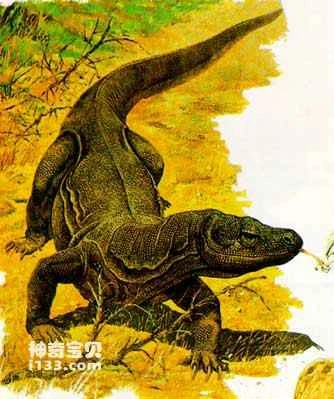
lizard
As we all know, every living organism needs a suitable environment to live normally, and changes in the environment often lead to the rise and fall of a species. When the environment is favorable to a species, it will thrive; conversely, it will decline or even become extinct. Environmental factors include temperature, water, and the composition of the atmosphere. So, will changes in atmospheric composition affect the lives of living organisms? The answer is yes. For example, humans are in danger of death in environments with high carbon dioxide concentrations, and some animals are even more sensitive to changes in carbon dioxide concentration than humans.
During the Mesozoic Era, when dinosaurs lived, the atmosphere had a high concentration of carbon dioxide, indicating that dinosaurs were well-adapted to this environment. Perhaps only in such an environment could they thrive. Although mammals had already appeared at that time, they never achieved significant development, possibly due to the less-than-favorable atmospheric composition and other environmental factors. Therefore, they remained weak and developed slowly throughout the Mesozoic Era. As time progressed, by the end of the Cretaceous period, the atmospheric environment underwent a dramatic change: carbon dioxide levels decreased, while oxygen levels increased. This unfavorable environment for dinosaurs likely manifested in two ways: 1. Dinosaurs became ill; they were more susceptible to disease in the new environment, and diseases could spread like plagues. 2. The new atmospheric environment was more suitable for mammals, who became more advanced and adaptable competitors. Under the influence of these two factors, dinosaurs ultimately went extinct. The surviving reptiles were among the few species that could adapt to both the old and new environments.
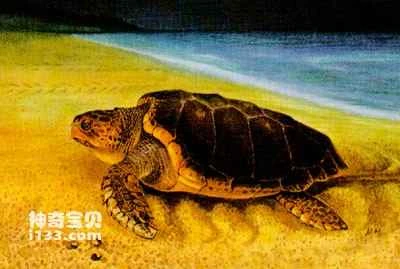
sea turtle
Therefore, while the asteroid impact may have played a role in the extinction of the dinosaurs, it does not appear to be the most crucial factor.
The theory that changes in atmospheric composition caused the extinction of dinosaurs has two starting points. One is that the atmospheric composition during the Mesozoic Era differed from that of modern times, a point that modern science has been able to prove. The other is that every organism needs a suitable atmospheric environment to survive, a point that modern science can also easily verify.
In ancient times, the atmosphere contained almost no oxygen, while carbon dioxide levels were high. Later, with the emergence of life, the gradual decrease in atmospheric carbon dioxide and increase in oxygen levels through photosynthesis can perhaps explain many phenomena in the history of biological evolution. For example, the Cambrian explosion of life is one of the most perplexing mysteries of evolutionary history. Changes in atmospheric composition can also explain this, because animals cannot directly utilize inorganic matter for photosynthesis; their origins lagged behind those of plants and must have occurred when atmospheric oxygen levels reached a sufficient level. Therefore, the Cambrian explosion of life required a certain level of atmospheric oxygen, a fact that has been scientifically proven.