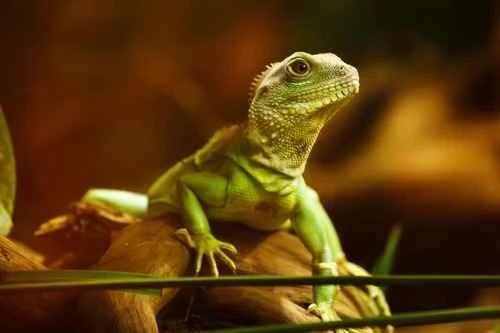
The earliest fossilized skeleton of a large reptile to attract scientific attention was discovered in 1770, about 40 years before Darwin's birth. It was found in Cretaceous strata within a quarry on Mount St. Peter in Maastricht, Netherlands. This reptile was unlike any living animal, with a mandible measuring 1.33 meters long and teeth as sharp as short swords. The discovery was astonishing, and the villagers quickly summoned a father and son anatomists for identification. Due to the skeleton's enormous size and its location between two strata rich in marine fossils, the father declared it a fossil of an ancient whale. However, the son disagreed, perhaps due to a more keen observation or a more refined understanding of anatomy; he thought the animal resembled a lizard. But where at that time had people seen such a large lizard? Who had ever seen a lizard swimming in the ocean? Therefore, rumors began to circulate that they had discovered an animal from before the Great Flood described in the Bible, and even that this animal might have been a sacrifice to the flood!
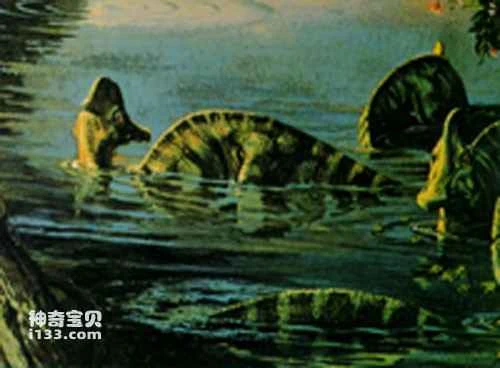
duckbill dinosaur
Above the quarry where the fossils were discovered was a pasture owned by a priest. He used his feudal power to seize the fossils and displayed them in a glass shrine in his country villa. Soon, news of the discovery of the monster from the Great Flood spread far and wide, reaching even the renowned anatomist Cuvier, a brilliant 26-year-old member of the French Academy of Sciences. Napoleon, the French ruler at the time, greatly admired science and actively supported Cuvier's research, even helping him collect fossils from various places. In 1795, when Napoleon learned of the monster fossils and Cuvier's interest, he immediately ordered one of his generals to lead an army to "liberate" the Netherlands, intending to seize the precious fossil intact for Cuvier's study in France. This "liberation army" swiftly stormed the village of Maastricht and occupied the country villa. However, they were greatly disappointed; the fossil had vanished, and the glass shrine was empty.
Fortunately, the general was quick-witted and immediately decided to offer a reward of 600 bottles of fine wine for the capture. A hefty reward always attracts brave men, and several soldiers, accustomed to robbery and plunder, quickly obtained the prize money, and the spoils were successfully delivered to Academician Cuvier's desk in Paris.
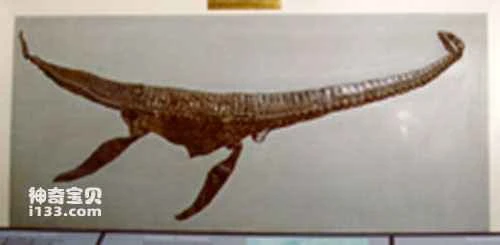
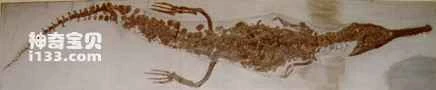
Thin-sliced dragon
At this time, Academician Cuvier had just completed his research on mastodon fossils. He believed that mastodons were not the ancestors of modern elephants, but rather an ancient elephant species that had long since gone extinct in geological history and left no descendants. He then began to try his best to convince people at the time, who had no understanding of evolution, that mass extinctions had indeed occurred in history. This enormous monster fossil from the village of Maastricht provided convincing evidence for his understanding. This marine reptile is the mosasaurus we know today.
Not long after this sensational event subsided, when Darwin was 13 years old, dinosaurs were discovered by the scientific community. This is the story of the Mantels' discovery of Iguanodon.
Other stories about Iguanodon occurred at that time. Using the size of iguana teeth as a reference, Professor Irwin of Oxford University initially estimated that Iguanodon was 30 to 60 meters long—about half the size of a football field! Later, Mr. Mantel and many other amateur researchers continued their excavations, discovering fossils of vertebrae, ribs, and many other bones over 15 years. The size of these bones forced Professor Irwin to revise his initial conclusion, reducing the length of Iguanodon to 7 meters. These fossils also showed that Iguanodon was much larger and heavier than modern monitor lizards; its sternum structure was similar to that of crocodiles, suggesting it had four chambers of the heart, an advancement over the three chambers of other reptiles. Therefore, Professor Irwin concluded that Iguanodon's heart and circulatory system were already comparable to those of warm-blooded vertebrates.
Mosasaurus
When Professor Irwin collectively referred to all these enormous "monster" fossils discovered at the time as "dinosaurs," Queen Victoria of England commissioned a wildlife sculptor to create a statue of an Iguanodon based on Irwin's research, to be displayed at the 1851 World's Fair. Soon, the Iguanodon, a massive, clumsy, four-legged animal, was presented menacingly to the Queen and a succession of visiting dignitaries.
At the time, American scientist Hayden was also collecting dinosaur fossils in the western wilderness near the Judeas River in Montana. He sent the collected teeth fossils to the American Academy of Sciences in Philadelphia, where the president, Reddy, studied them. Reddy found that these teeth were different from those of Iguanodon, so he named one of the herbivorous dinosaurs "Rough Teeth" and the other carnivorous dinosaur "Teeth of Fright".
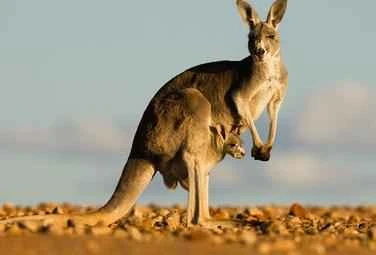
Shortly after, Reddy discovered an almost complete dinosaur skeleton near Hardingfield, New Jersey, which he named Hadrosaurus. Comparative studies of the teeth revealed a close kinship between Hadrosaurus and Iguanodon, despite the significant differences between its skeleton and the sculptors' depictions of Iguanodon. In fact, the forelimbs and hindlimbs of Hadrosaurus and Iguanodon differed considerably, leading Reddy to conclude that they were not quadrupedal animals, but rather kangaroos that could stand on their hind limbs and hop like kangaroos.
From then on, dinosaur excavation became fashionable. In the following decades, excavation teams organized by various conglomerates fiercely competed for dinosaur fossils, striving to satisfy the curiosity of their respective backers. As the battle for fossils intensified, batch after batch of enigmatic fossils were unearthed. These spoils, whose authenticity was uncertain, were collected and presented as tribute to rulers, then displayed in royal or national museums around the world, garnering astonished public praise and ultimately propelling the development of paleontology.
Some fossil skeletons are indeed astonishingly large. Brachiosaurus and Brontosaurus weighed over 50 tons, heavier than eight elephants combined. Some scientists believe that such behemoths could not support their weight on land and could only live in swamps. When submerged in water, they could use their long necks to feed on aquatic plants and breathe air through their nostrils. Among carnivorous dinosaurs, the largest was Tyrannosaurus Rex. They were the largest carnivores to have ever lived on Earth, with teeth as large as pickaxes, standing over 5 meters tall, and a heavy tail dragging on the ground. An average person standing next to them would only reach their knees. How could such behemoths not leave visitors speechless?
Some dinosaurs also had special weapons or external decorations. Stegosaurus had spikes all over its back and tail; Ceratopsian skulls had large neck shields extending towards the neck; Ankylosaurus was covered in heavy armor; Duckbill dragons had strange crests on their heads; and Iguanodon had special claws that it could use to deal with arrogant carnivores and gouge out their eyes.
In this endless battle for fossils, a tiny animal with very small teeth was discovered in Solnhofen, Bavaria, Germany. It had clawed wings covered in long feathers, and its appearance was strikingly similar to the griffin, the lion-headed monster from Greek mythology. Considered one of the most primitive birds, scientists named it Archaeopteryx. By studying the characteristics of sediments and their associated animal habits, scientists discovered that some reptiles, relatives of dinosaurs, were remarkably similar to creatures from mythology. The imagination of the sea-dwelling thallus dragons inspired the legend of the Loch Ness Monster. Pterosaurs, winged reptiles, ranged in size from as small as crows to as large as eagles, with the largest, a sea-flying species, boasting wingspans of up to 15 meters—possibly reaching the limit of what flying animals could achieve. However, pterosaur wings were clearly too heavy and fragile for flight, leading some scientists to believe they could only glide between treetops or cliffs.