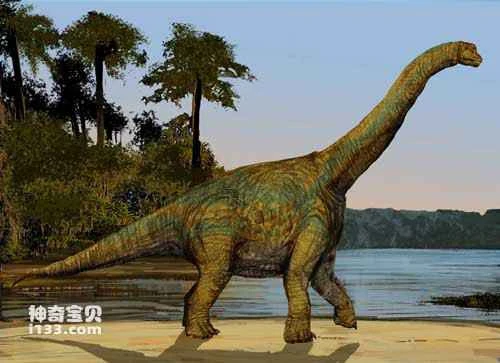
Brachiosaurus was a large dinosaur that lived in the Late Jurassic period. It reached lengths of up to 26 meters, heights of 12-16 meters, and weighed 33-88 tons. Its forelimbs were much longer than its hind limbs, helping to support the weight of its incredibly long neck; a human head would only reach the knees of this behemoth. Due to its hunched shoulders, the entire body of the Brachiosaurus leaned backward along its shoulders, a feature still seen in some tall animals today, such as giraffes. Each foot had five toes, and the inside of its forefeet had large claws.
Brachiosaurus's shoulders were about 5.8 meters off the ground, and when its head was raised, it was about 12 meters above the ground. While it may have been able to forage for branches and leaves high in the trees, some paleontologists believe it wouldn't have kept its head raised for too long—that would have made it very difficult to supply blood to the head. Brachiosaurus, Apatosaurus, and Diplodocus all had their nostrils located on the top of their heads, so it would have been easy for such tall animals to reach the branches and leaves of high trees.
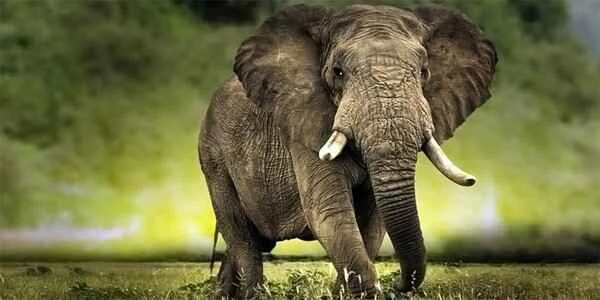
Like other giant herbivorous dinosaurs, Brachiosaurus had a long neck and a small head, with a prominent bump on its head serving as its nose. It possessed a massive body, a long neck, a small head, and a long tail. A large, powerful heart continuously pumped blood from its neck to its cerebellum. Some paleontologists believe it may have had several hearts to circulate blood throughout its enormous body. Along its cervical vertebrae, well-developed muscles helped support its head. Brachiosaurus ate tender leaves from the tops of trees, which were inaccessible to other herbivores. Using its long neck, it could reach the highest leaves, much like today's giraffes. Brachiosaurus had a powerful jaw, filled with 52 teeth with sharp, spoon-like edges, capable of snapping twigs and buds. Brachiosaurus needed to consume vast amounts of food to replenish the energy required for its enormous growth and movement. While an elephant might eat about 150 kilograms of food a day, Brachiosaurus could eat approximately 1500 kilograms daily—ten times the amount consumed by a modern-day behemoth! It may travel in groups every day, wandering across the vast grasslands in search of fresh trees.
How was Brachiosaurus discovered? Riggs first discovered Brachiosaurus fossils in 1900. In 1903, he named this dinosaur "Brachiosaurus," but the fossils were incomplete. In 1907, a German paleontologist, while prospecting in Tanzania, Africa, accidentally discovered a large pile of animal skeletal fossils while digging a pit with workers. The excavation took four years, and a total of 250 tons of fossils were transported. To move these fossils, the paleontologist hired thousands of workers to transport them to the nearest port, where they were then loaded onto ships and shipped back to Germany. After study and processing, several specimens were assembled. One of them was remarkably complete, with the assembled skeleton measuring 23 meters long and its head reaching over 12 meters above the ground—this was Brachiosaurus. This enormous skeletal fossil is currently displayed in a German museum. Despite surviving the ravages of two world wars, it has been successfully preserved intact. Every year, tens of thousands of tourists visit this largest and most complete dinosaur fossil in the world.
Chinese name: Brachiosaurus
Latin name: Brachiosaurus
Age of existence: Late Jurassic
Fossil sites: Colorado and Utah in the United States, Portugal, and Tanzania.
Physical characteristics: 26 meters long
Diet: Plants
Species: Sauropods
Definition: Long-armed lizard