In 1853, twenty Victorian dignitaries hosted a New Year's Eve dinner inside a dinosaur model that had been exhibited in 1851. This model, still preserved in Crystal Palace Park in London, was the world's first realistic dinosaur model, captivating the public and remaining so to this day. However, most people now consider dinosaurs a failure, as their lineage, apart from birds, was nearly extinct. A massive asteroid impact 65 million years ago caused their mass extinction, an event that negatively impacted our understanding of dinosaurs. In reality, dinosaurs were quite successful.
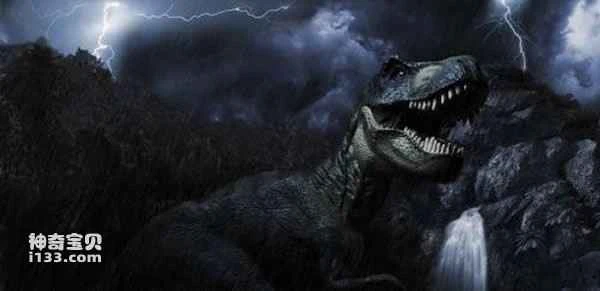
Dinosaurs ruled the land for 135 million years, more than twice the length of the Age of Mammals. During this period, over 1,000 species evolved, inhabiting every corner of the land, including Antarctica. Their sizes varied wildly, from penguins weighing less than a kilogram to herbivorous dinosaurs weighing up to 70 tons. While all attention is focused on their extinction, an even more intriguing question arises: how did dinosaurs achieve such success?
A research team from the Birmingham and Lapworth Museums hopes to elucidate the story of the origins of Triassic dinosaurs. In the last two decades, the discovery of dinosaur fossils and genera has increased rapidly, with a new species being discovered approximately every 1.5 weeks. This team has described a total of 11 new species since 2005. The earliest dinosaur fossils date back to the Middle Triassic, 240 million years ago, and recent evidence suggests that dinosaurs originated during a long period of ecological recovery following the P/T boundary mass extinction event, the largest extinction event in Earth's history, likely caused by volcanic eruptions and related climate change. This extinction event led to the disappearance of the vast majority of early reptiles and amphibians, leaving a corresponding ecological space for dinosaur evolution. For the first 40 million years after the emergence of dinosaurs, the world was still dominated by other reptiles, such as therapsids, entosuchians, and rooibos. The research team's work focuses on understanding this "long adjustment period," and by linking data such as size to evolutionary phylogenetic trees, the researchers have clearly defined the timing, speed, and process of dinosaur radiation.
At the end of the Triassic period, 200 million years ago, many other reptiles went extinct in the Triassic/Jurassic extinction event, which was also related to volcanic activity and climate change. Dinosaurs, however, survived and rapidly diversified, undergoing significant changes in size, officially ushering in the Age of Dinosaurs. Why dinosaurs survived this extinction event remains a mystery, but paleontologists speculate that their rapid growth rate and efficient respiration may have been key to their survival.
Therefore, the story of dinosaur evolution is dominated by three large, rapid extinction events caused by abrupt climate change: the first was at the end of the Permian period, which made room for dinosaur evolution; the second was at the end of the Triassic period, which allowed dinosaurs to begin to dominate and exhibit different body sizes; and the third was at the end of the Cretaceous period, which ultimately led to the extinction of dinosaurs. Focusing on these extinction events may provide us with a different perspective on evolutionary history.