Due to environmental pollution and overfishing, many rare marine animals are facing extinction. This article introduces ten rare marine animals, including the vaquita, gray whale, sea otter, monk seal, manatee, blue whale, leatherback sea turtle, great white shark, whale shark, and bluefin tuna. Let's learn more about them below!
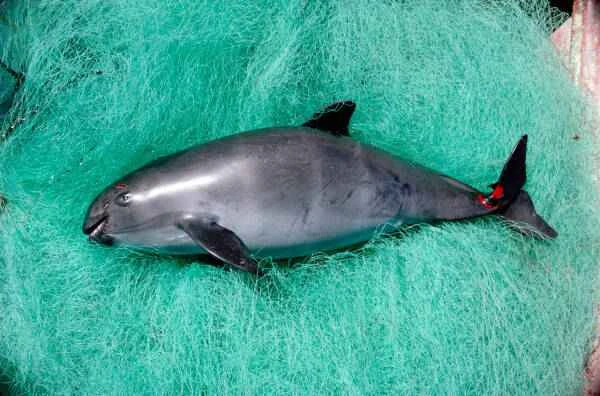
1. Vaquita dolphins (less than 30 individuals)
The vaquita is one of the smallest members of the cetacean family. It has a robust body and a prominent dorsal fin, almost resembling a shark's. Its head is round with almost no prominent beak. It has dark eye rings. Its body has complex, dull gray markings that appear olive or yellowish-brown in certain lighting conditions, often described by observers as "dark." Limited habitat and susceptibility to entrapment in fishing nets are the main reasons for its endangered status. Wild populations have ranged from over 1,000 to as few as 39, and further declined to just 12 by 2018.
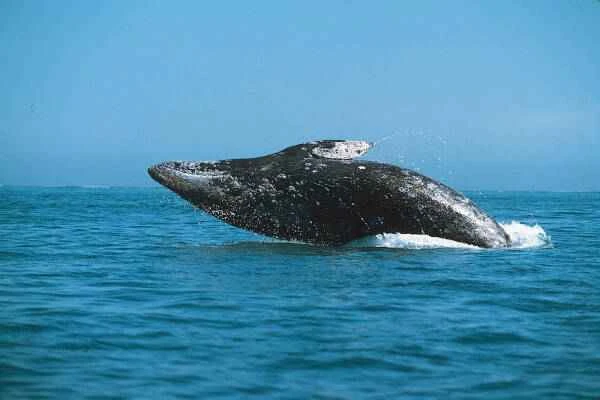
2. Gray whales (100-300 individuals)
The gray whale belongs to the family Graywhaleidae within the suborder Baleen whales of the order Cetacea. Compared to other baleen whales, it is relatively large, but smaller than the right whale. Adult gray whales can reach 10 to 15 meters in length and weigh over 35 tons. They have a spindle-shaped body with a massive torso, most robust near the flippers, tapering towards the tail. Juvenile gray whales are dark gray, while adults are brownish-gray to light gray. Their bodies are covered with light-colored markings and white to orange-yellow patches formed by whale lice and barnacles. These ectoparasite patches are one of the species' unique characteristics. In the western Pacific, the gray whale population is estimated at only 100 to 300 individuals, and it is listed as a critically endangered species.
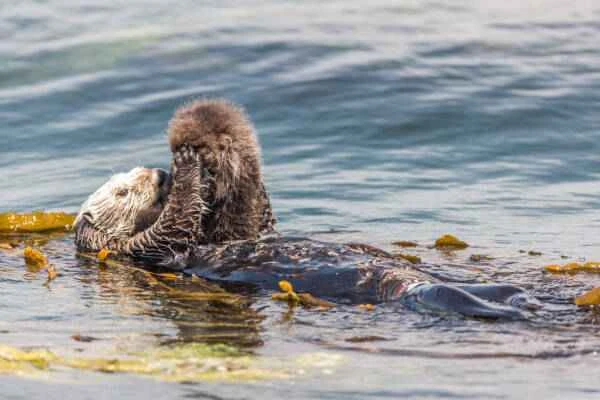
3. Sea otters (1000 individuals)
Sea otters are animals belonging to the genus *Otterus* in the family Mustelidae. They are approximately 130-150 cm long and weigh between 30-50 kg, with a tail about 30-40 cm long. Male sea otters are slightly larger than females. Their forelimbs are short and bare, while their hind limbs are long and flat, with webbed toes forming flippers, making them highly adapted for swimming and diving. At night, they wrap themselves in seaweed and sleep on the waves to prevent being washed away, while several otters take turns keeping watch. They are mainly distributed in the cold waters of the North Pacific Ocean.
Sea otters have relatively thin subcutaneous fat, but their fur is incredibly dense, with an astonishing 125,000 hairs per square centimeter of skin—the most in the animal kingdom. This high-quality fur attracted human hunters. By 1911, only about 1,000 sea otters remained worldwide, and their numbers have since recovered through conservation efforts.
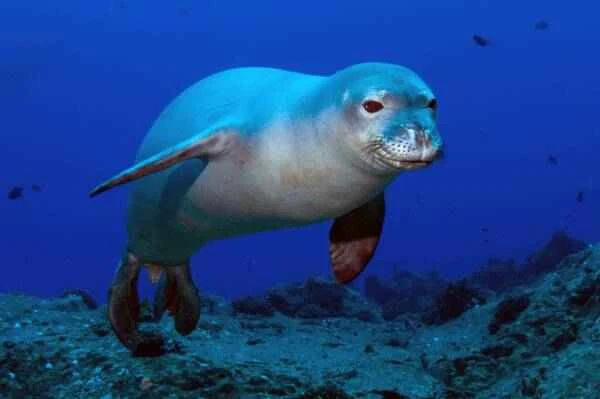
4. Monk Seals (1500)
The monk seal is an ancient and rare seal, and the only seal species in the world that lives its entire life in tropical waters. Compared to ordinary seals, monk seals are slightly larger, with a short, broad snout and a high, rounded forehead. They lack external ears but possess excellent hearing. Monk seals have thick, black whiskers and large, bright eyes. There are three species of monk seals worldwide: the Hawaiian monk seal, the Mediterranean monk seal, and the Caribbean monk seal.
The Caribbean monk seal has not been observed since its discovery in the 1850s, raising doubts about its extinction. The Mediterranean monk seal, once abundant, is now critically endangered, with an estimated population of only about 500. The Hawaiian monk seal is also in dire straits, with only about 1,500 remaining.
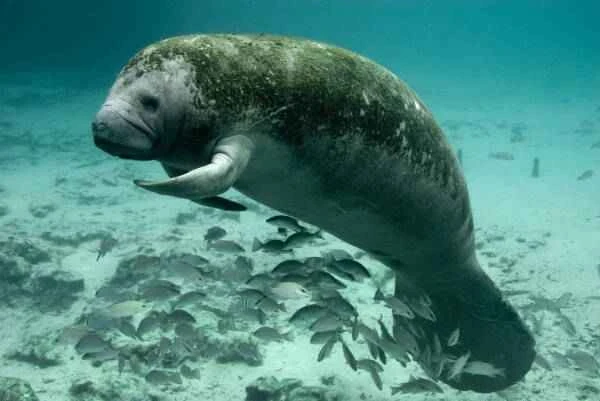
5. Manatees (2600 individuals)
The American manatee, also known as the North American manatee, Caribbean manatee, West Indian manatee, and Florida manatee, is a docile and gentle animal primarily found in the mid-to-low latitudes of the Americas along the Atlantic coast and near the Caribbean Sea. Historically, people believed that female manatees nursed their calves upright in the water, much like humans, hence the nickname "mermaid." Manatees have relatively poor hearing.
According to reports, hundreds of manatees die each year around the Florida peninsula alone, killed by propellers and high-speed boats. To prevent manatees from becoming like dinosaurs, various organizations and clubs have been established to promote and protect them. Currently, the Caribbean manatee population is estimated at around 2,600, though some estimates suggest only about 1,000.
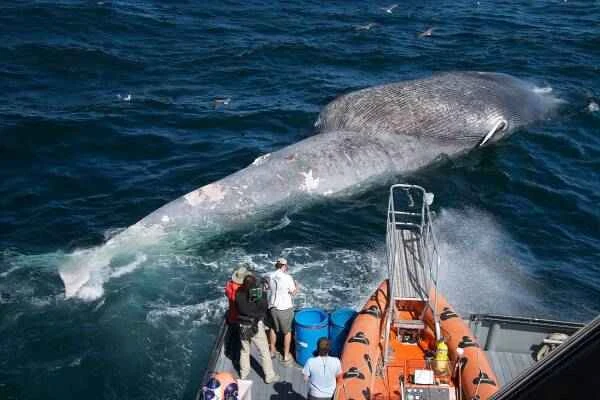
6. Blue whales (3000-4000 individuals)
The blue whale is a marine mammal belonging to the suborder Baleen whales, which has four subspecies. It is believed to be the largest known animal on Earth, reaching lengths of up to 33 meters and weighing up to 181 tons. They have slender bodies and bluish-gray backs, although the color sometimes appears paler when observed underwater.
At the beginning of the 20th century, blue whales were present in a considerable number in almost all of the world's oceans. However, over the next 40 years, rampant whaling nearly drove them to extinction. Their numbers only began to recover after the international community began protecting them in 1966. Since the whaling ban was implemented, the global blue whale population has remained relatively stable at around 3,000 to 4,000 individuals.
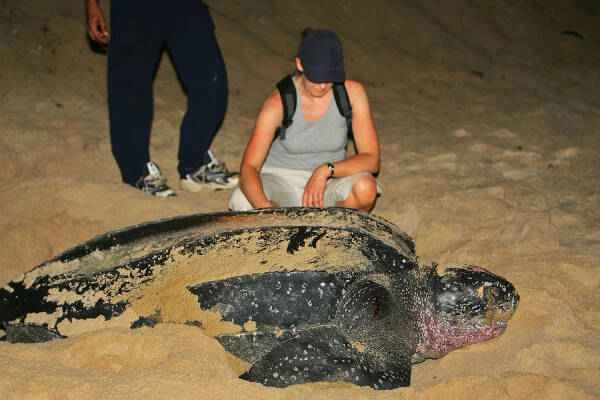
7. Leatherback turtles (2000-5700 individuals)
Leatherback turtles are reptiles belonging to the family Dermochelyidae and the genus Dermochelys. They are large, among the largest species in the order Testudines. Leatherback turtles have a broad head, short neck, and short tail. Their limbs are paddle-shaped and clawless, with the forelimbs being particularly well-developed. Leatherback turtles are cold-blooded, excellent swimmers, and omnivorous. They lay 90 to 150 eggs annually between May and June. Leatherback turtles primarily inhabit the upper and middle layers of tropical waters, distributed in the Atlantic and Pacific Oceans.
According to a 2010 report, American animal rights activists launched a campaign to save the Pacific leatherback turtle, aiming to protect the world's remaining 2,000 to 5,700 individuals. This initiative aims to ensure the survival and reproduction of this precious species. Let's work together to protect these leatherback turtles and safeguard the diversity and health of marine ecosystems!
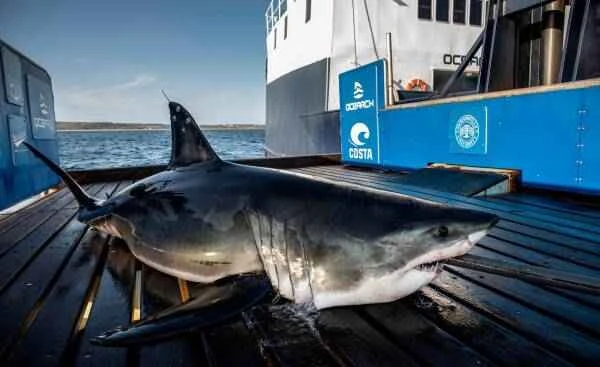
8. Great white sharks (less than 3000)
Great white sharks are world-renowned ferocious sharks, even featured in numerous films and video games. However, their survival is extremely precarious; their numbers are dwindling, they are on the verge of extinction, and they are listed as a protected species worldwide. In the 1990s, the slaughter and fishing of great white sharks was rampant, with 98% of the killings being for their fins and meat to satisfy the enormous demand for shark fin soup. Because of their slow reproductive rate, the great white shark population has never recovered. As of 2019, there were fewer than 3,000 great white sharks left in the world, fewer than the number of wild tigers.
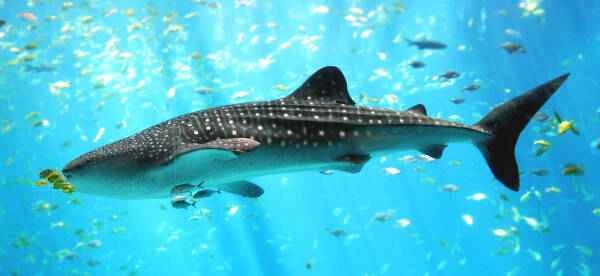
9. Whale sharks (approximately 7,000 individuals)
Whale sharks are among the largest known fish, reaching lengths of over 20 meters. Due to their enormous size and skin up to 15 centimeters thick, they are virtually immune to predators. However, human fishing activities are a major contributing factor to their decline. Whale sharks become targets for the aquaculture industry in areas where they congregate seasonally. Southeast Asia and Taiwan are the main fishing grounds, where caught whale sharks are primarily used for their meat, and sometimes their fins are harvested for shark fin soup. Over the past 80 years, the global whale shark population has plummeted by 50%, leaving only approximately 7,000 wild individuals in 2019.
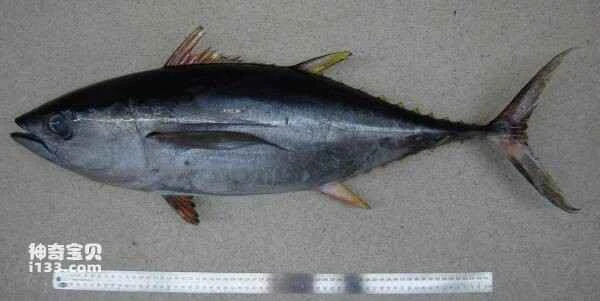
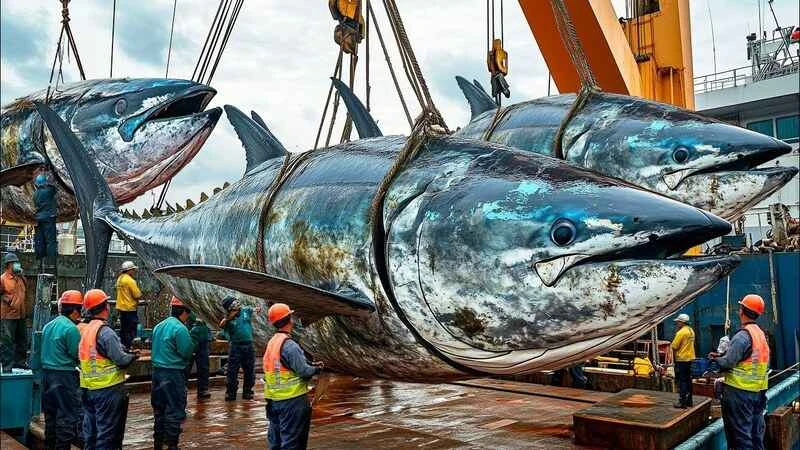
10. Bluefin tuna (less than 10,000 pieces)
Bluefin tuna is one of the largest tuna species and is very popular in Japanese seafood sashimi. However, due to its slow growth and overfishing, the global bluefin tuna population has drastically declined. EU fisheries experts have warned that if fishing is not restricted, bluefin tuna could face extinction. The International Union for Conservation of Nature (IUCN) lists bluefin tuna as the most endangered species in the wild. By 2019, the global bluefin tuna population was less than 10,000 individuals, a worrying figure.

This list of the top ten rarest marine animals is primarily based on information such as the number of animals and their level of endangerment, while also referencing relevant online rankings/lists. This list is for reference only and aims to help you understand which marine animals are rare. If you have any questions, please feel free to comment/criticize at the end.