This article introduces you to the ten most spectacular wild animals on Earth.
10. Whale shark

The world's largest fish was once considered a solitary giant, but its reputation as a "loner" has recently been completely overturned. Large groups of whale sharks, reaching lengths of up to 12 meters, have been discovered off the east coast of Mexico, particularly in the eastern Yucatan Peninsula. In a 2009 aerial survey, 420 sharks were spotted. Scientists have discovered that these aggregates, known as "Afuera," feed on dense clusters of eggs.
9. Wildebeest
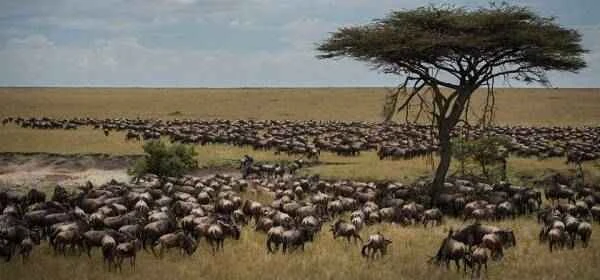
The famous wildebeest migration in Africa's Serengeti is actually a massive, endless clockwise rotation, and yes, wildebeest, along with zebras, gazelles, oryx, and impalas—an estimated 1.5 million animals. Of course, you won't see them all at once, but where should you go to get the largest numbers? Well, arguably, it's where they have to cross the Mara River—travel agencies say it's not uncommon for 10,000 wildebeest to cross the Mara in a single day, with records showing 100,000.
8. Common dolphins
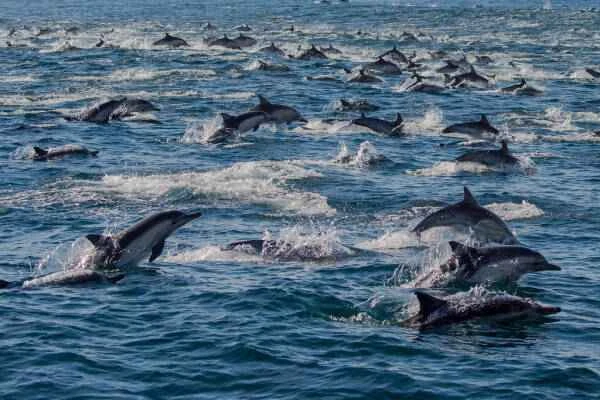
Dolphin populations can be among the largest of any marine mammal in the world. Reports indicate that pods of 1,000-2,000 bottlenose dolphins have been spotted off the coast of Pembrokeshire, Wales, and pods of 3,000-5,000 bottlenose dolphins have been observed near Costa Rica. However, an event near San Diego, California in 2013 surpassed both figures—a pod of ordinary dolphins measured 11 kilometers long and 8 kilometers wide, estimated to number 100,000.
7. Snow Goose
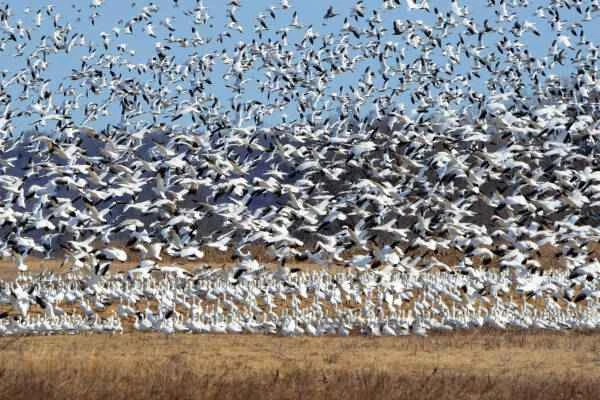
Snow geese are among the most successful bird species on Earth: not only are there approximately 15 million, but their numbers are estimated to have increased fivefold or more in the last 30 years. They migrate between their breeding grounds in the northern Arctic tundra and their wintering grounds in the southern and eastern United States. A bird census in mid-December 2015 recorded 126,000 geese at Squaw Creek National Wildlife Refuge, though the number could be as high as 400,000.
6. Amur Falcon
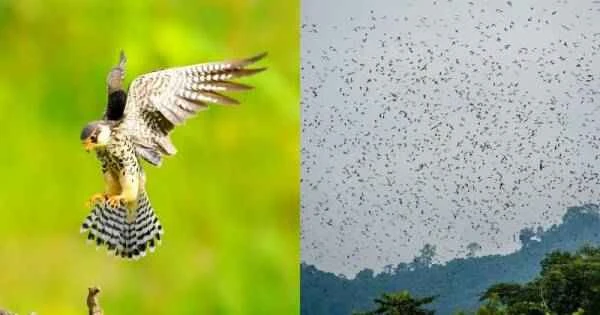
The Amur falcon has the longest migration of all birds of prey, flying approximately 22,000 kilometers annually from Somalia, Kenya, and South Africa to East Asia and back. Their numbers are also enormous, with estimates suggesting as many as one million birds undertake this journey. Along the way, they all reach the Doyang Reservoir in Nagaland, India's northeasternmost state. In 2012, Indian authorities discovered that 120,000 to 140,000 birds were being slaughtered annually for consumption and sale, but swift conservation efforts quickly halted the slaughter.
5. Starling
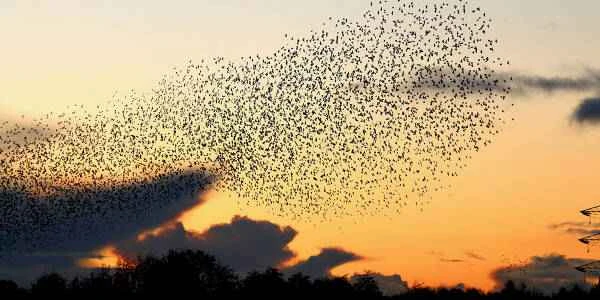
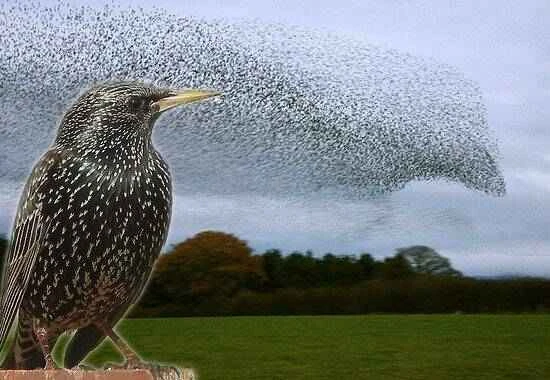
In Britain, these small songbirds are known for forming enormous flocks, known as "whistles," about an hour before sunset in late autumn and winter. In Denmark, the songbirds' calls in spring and autumn are said to be even more spectacular, forming flocks of up to 1.25 million birds in some areas along the west coast of the Jutland Peninsula, with the largest numbers found in Ribes Marsh and Tond Marsh.
4. Atlantic Puffin
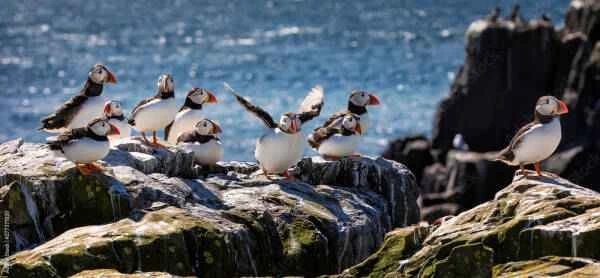
During the summer, Iceland is home to approximately half of its Atlantic puffins – around 3 to 4 million pairs migrate there to breed and raise their young, with an estimated 1.5 to 3 million puffins residing in the Westman region, an island off the south coast. The Látrabjarg cliffs in the Westfirðir, Iceland's westernmost fjord, are also renowned for their enormous flocks of seabirds, including puffins, razor-billed finches, and guillemots.
3. Straw-colored fruit bat
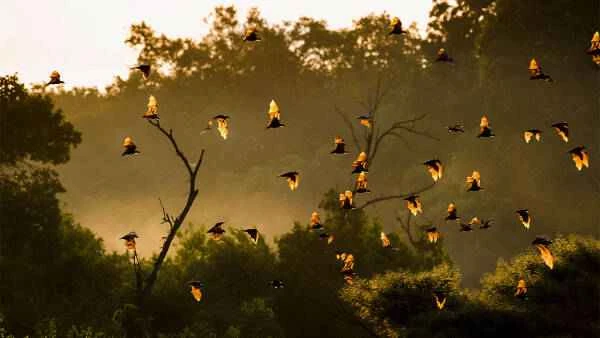
Africa's largest migration doesn't involve wildebeest, or in fact, a quadruped, albeit a mammal. Every November and December, between 5 and 8 million straw-colored fruit bats inhabit Kasanka National Park in Zambia, feeding on seasonal fruits. Moreover, they reportedly feast in the 1-hectare Mushtu Swamp Forest within the park. No one knows exactly how many trees are there, but it's said that up to 10 tons of bats perch in a single tree.
2. Mexican tailless bat
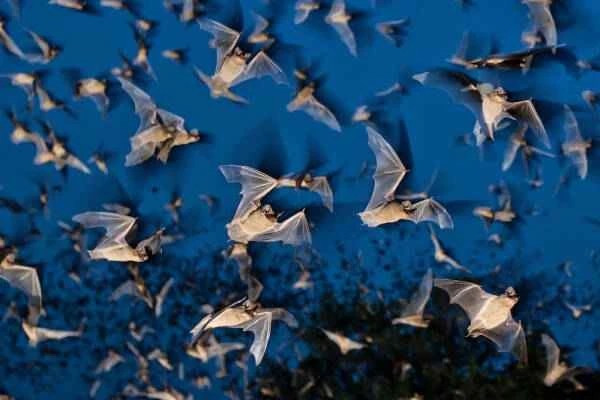
While the African straw-colored fruit bat population is astounding, Bracken Cave in Texas, in the southern United States, boasts even greater numbers. From March to October each year, it is home to approximately 20 million Mexican tailless bats, making it the world's largest known bat colony and possibly the largest concentration of mammals on Earth. These bats emerge every night, feeding on insects, and are also remarkable in other ways: they can fly at speeds exceeding 90 km/h and at altitudes exceeding 3 km.
1. Monarch Butterfly
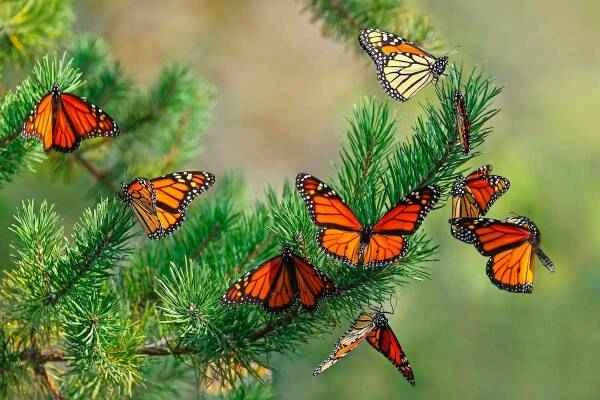

Every year, monarch butterflies migrate approximately 4,000 kilometers from their summer breeding grounds in the northern United States and Canada to their wintering grounds in the fir forests of Michoacán, central Mexico. What makes them remarkable is not only their long migration but also the sheer number of butterflies they migrate in—an estimated 56.6 million butterflies landed at the Monarch Biosphere Reserve during the winter of 2014-15. However, this number represents a significant decline compared to the 909 million projected in 1996-97. Habitat loss, climate change, and pesticide use are the main factors contributing to the decline in monarch butterfly numbers.