Spiders vary greatly in size, from peas to dinner plates. They also exhibit considerable sexual dimorphism, meaning that males and females within the same species differ in physical characteristics. Female spiders can be significantly larger than males. This is partly due to the reproductive advantage of larger bodies—a larger body can carry more eggs. These females can reach some astonishing sizes. Whether you have arachnophobia or are a spider enthusiast, it's hard not to feel awe (and frankly, a little scared) towards the spiders on this list. Get to know the ten largest spiders in the world—you certainly don't want to see them crawling on your carpet!
1. The Goliath Bird Eater (Theraphosa blondi)
Size: 175 grams, leg span up to 30 centimeters!
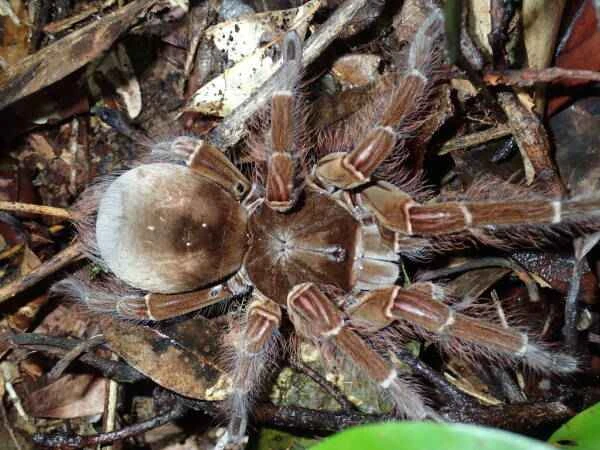
The world's largest spider, and the first on our list, is the impressively named Goliath birdeater. Native to the rainforests of northern South America, this spider is the largest in weight (up to 175 grams) and length (13 centimeters). In terms of leg span, this heavyweight spider is only slightly larger than the next spider on the list. Its name comes from an 18th-century carving depicting different species of wolf spiders eating hummingbirds, leading to the entire genus *Theraposa* being called "birdeater." This species primarily feeds on worms, amphibians, and large insects, but sometimes it will kill and eat birds!
2. Giant Hunter Spider (Heteropoda maxima)
Size: 167 grams, leg span 30 centimeters
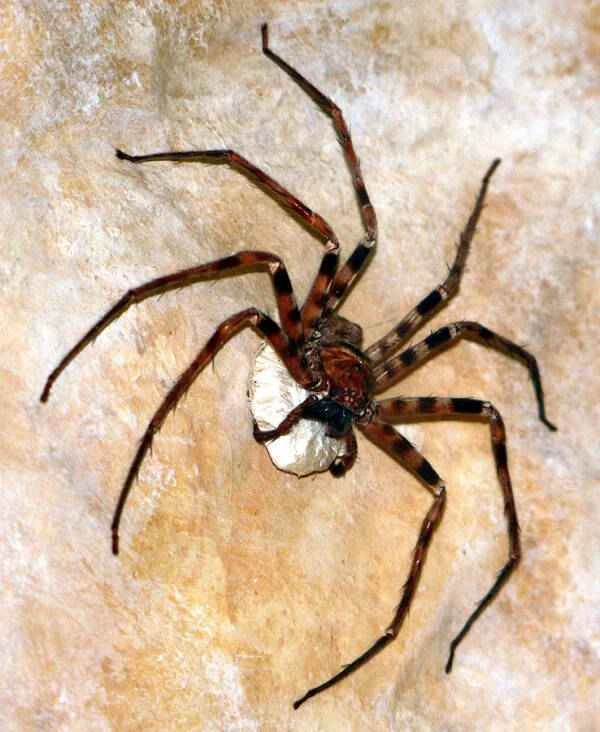
Equally impressive is this species native to Laos in Southeast Asia. The giant hunter spider is known as the spider with the largest leg span in the world, reaching up to 30 centimeters from toe to toe. While some Goliath birdeaters are comparable in size, the giant hunter spider tends to be larger on average, earning them this title. Cannibalism is observed in this species, with larger females consuming the males after mating. This may seem shocking to us, but it is actually quite normal spider behavior and provides nutrition for the females, aiding in reproduction!
3. Brazilian salmon pink bird-eating tarantula (Lasiodora parahybana)
Size: Females can weigh over 100g and have a leg span of up to 28cm.
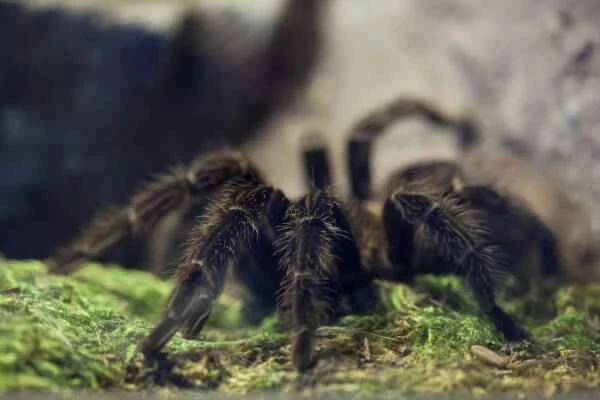
The next species is a bit like a bite, or a handful, and weighs about the same as a banana! As the name suggests, they can be found in the forests of Brazil, but they are also popular as pets around the world. This is because they are quite docile. However, they are not always leisurely; when threatened, they will unleash painful bites or flick their irritating bristles at anyone who tries to become a predator!
4. Brazilian Giant Yellow-brown Wolf Spider (Grammostola anthracina)
Size: Leg span approximately 23cm
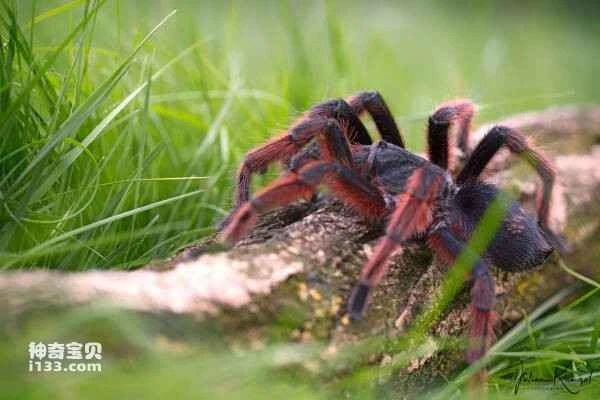
Another species kept as a pet is the Brazilian giant tarantula, a glossy, all-brown wolf spider with a leg span of approximately 23 centimeters and one of the longest-lived wolf spiders (living up to 30 years!). However, this desire can have a devastating impact on wild populations. The species is sold as part of the illegal black market trade in wolf spiders, a lucrative industry that encourages poachers to meet demand, causing losses to local residents.
5. Chaco Golden Knee Tarantula (Grammostola pulchripes)
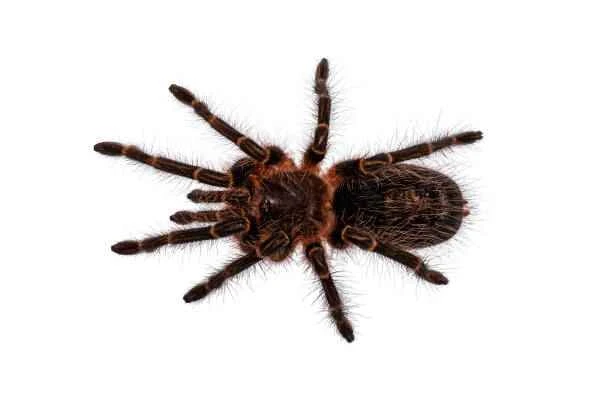
Size: Maximum leg span 20.3 cm
These particularly beautiful (and hairy) wolf spiders have been found running across the warm grasslands of Argentina and Paraguay. You might be wondering what a wolf spider actually is? Wolf spiders are any member of the arachnid family. They are large and often hairy, like this one. This genus (Grammostola) is just one of 156 genera in this family, which contains a total of 1,040 described species.
6. Baboon King Spider (Pelinobius muticus)
Size: Maximum leg span 20 cm
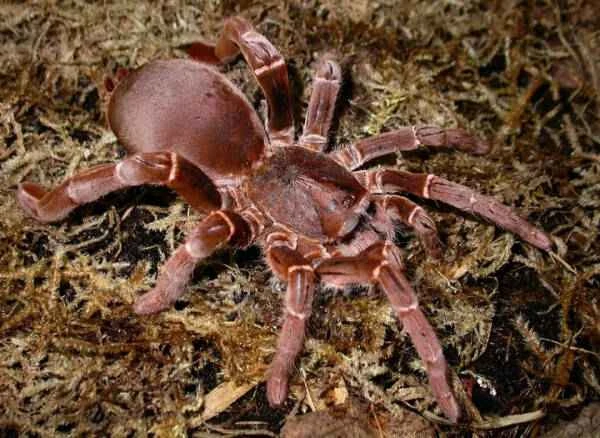
Another strikingly beautiful wolf spider is the king baboon spider, with its velvety, rusty brown coloration. Native to Uganda, Tanzania, and Kenya (the first African spider on our list), these spiders possess a unique defense mechanism. In addition to producing a painful venomous bite, they use a technique called vocalization to deter predators. By rubbing the hairs on their forelegs, they can produce a piercing hissing sound, hoping to instill fear in anyone nearby.
7. Colombian Giant Tarantula (Megaphobema Robustum)
Size: Leg span approximately 20cm
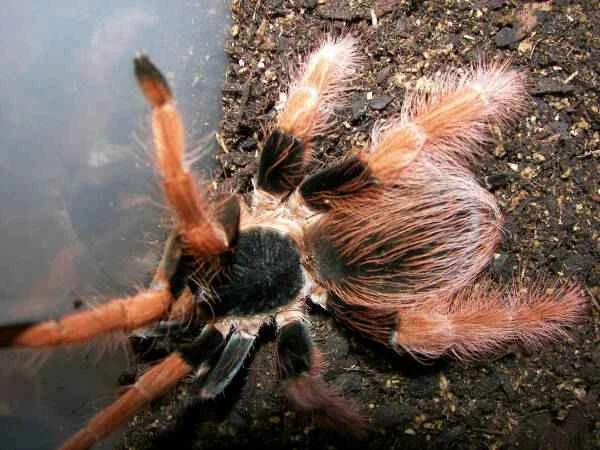
The Colombian giant tarantula is a shy spider that, despite its considerable size, prefers to flee and hide rather than hold its ground. However, it does possess some interesting defense strategies: it swings up and down as an initial warning, then circles to confuse the attacker and kicks out with its stinging hind legs. This species is found in the rainforests of Brazil and Colombia.
8. A tarantula the size of a face - (Poecilotheria rajaei)
Size: Maximum leg span 20cm
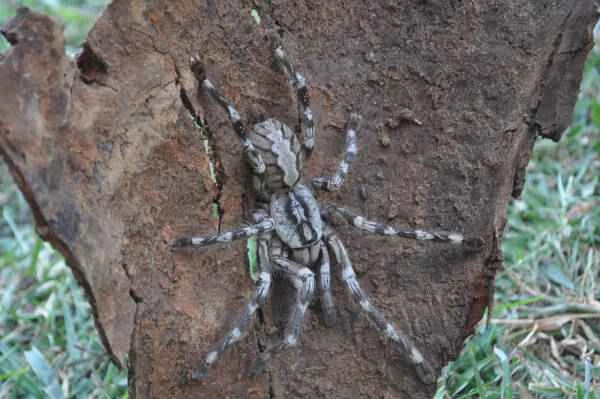
This species undoubtedly won the award for the most terrifying name! With a leg span of up to 20 centimeters, the name seems quite fitting, but hopefully you'll never find it... This Sri Lankan spider is another member of the tarantula family, and like many spiders, they use venom to maim and kill prey, including lizards, snakes, birds, and small rodents. However, the venom is not potent enough to kill a human (if you find venom on your face!).
9. Brazilian wandering spider (Phoneutria sp.)
Size: Leg span can reach up to 18cm
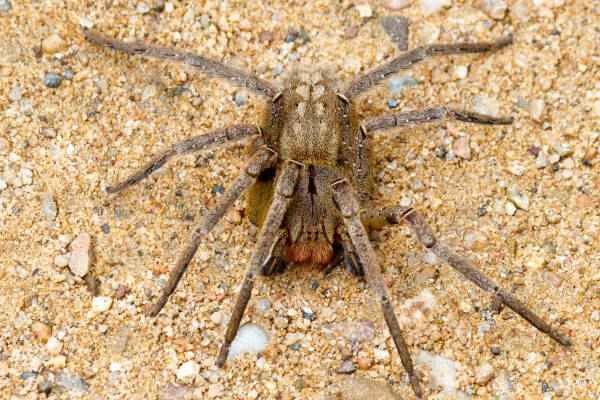
Spiders in this genus vary greatly in size, but some can have a leg span of up to 18 centimeters and a body length of about 5 centimeters. Although known as the Brazilian wandering spider, they can be found throughout South America, from Costa Rica southward. They are sometimes called banana spiders because they prefer to hide in dark, damp places, including banana plants. This also results in them occasionally being found in banana shipments around the world. In 2005, a man was bitten by a wandering spider that was hiding in a box of bananas destined for a pub in England.
10. Sand-dwelling hunter spider (Cerbalus aravaensis)
Size: Maximum leg span 14cm
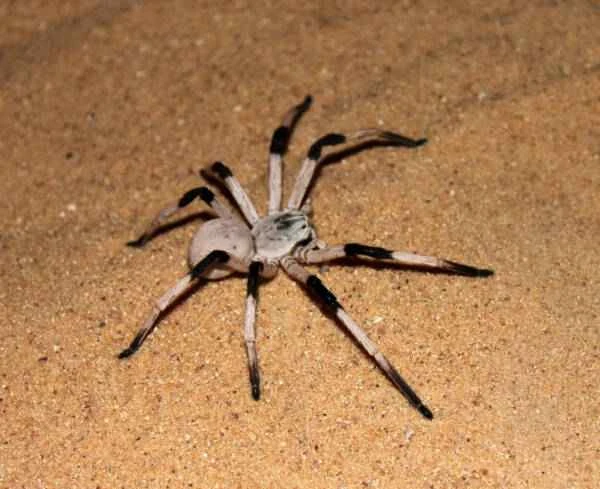
This rare and enormous spider was recently discovered in the sand dunes of Israel and Jordan. Israeli spider scientists first described the phenomenon in 2007. These spiders actually live in the sand dunes, building ingenious underground nests with hinged trapdoor entrances made of silk and sand to avoid predators and the scorching sun. Unfortunately, the sand dunes they inhabit are rapidly disappearing due to mining projects, making the future of this species uncertain.