Rove beetles, scientifically known as *Phasmatodea* (or stick insects, katydids), are a type of insect belonging to the order Orthoptera. They are famous for their unique appearance, possessing extremely strong camouflage and mimicry abilities, allowing them to blend well into their environment.
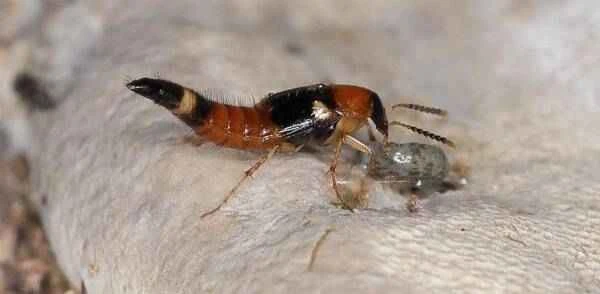
Rove beetles have slender, flexible bodies that typically resemble branches, twigs, or blades of grass, making them extremely difficult to detect when resting or foraging. Their tree-like textures, colors, and morphological variations closely mimic their surroundings, creating the illusion of being plant-like.
Rove beetles vary in size and shape, with some species growing to several centimeters in length, while others can reach tens of centimeters. They typically have flat bodies, especially their backs, which allows them to better conceal themselves among leaves or branches.
Rove beetles are herbivorous insects that feed on a variety of plants, including leaves, buds, and bark. They feed using their chewing mouthparts, and some species specifically choose one or a few types of plants as their food source.
In terms of reproduction, rove beetles are usually oviparous, with the female laying sturdy eggs on leaves or bark of plants. These eggs hatch after a period of time, and the hatched larvae resemble the adults in appearance but are smaller. The larvae then molt several times, gradually growing into adults.
In summary, rove beetles are remarkable for their exceptional camouflage and unique appearance. They play an important role in the ecosystem and demonstrate the diverse morphological adaptations and survival strategies of organisms in nature.