Although humans have existed on Earth for millions of years, our understanding of marine and river life remains very limited. Many of the world's most mysterious and ancient fish fascinate us. These include the dragonfish, sturgeon, *Elaphe dingii*, *Ghostfish*, *Aitenbergii*, coelacanth, hagfish, arapaima, and *Pyracantha senegalensis*. These fish have a long history and hold significant value for archaeology and research. Let's learn more about these enigmatic fish.
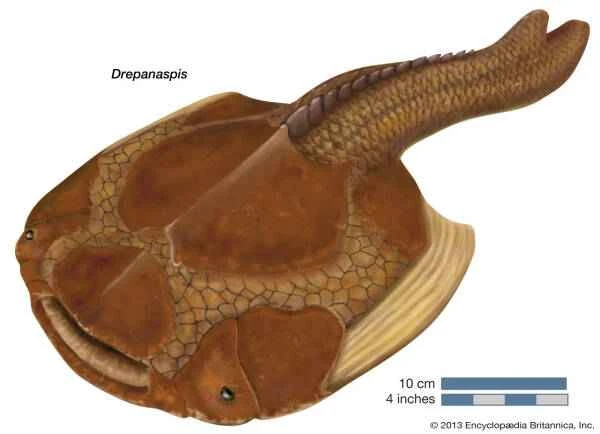
1. Armored Fish (approximately 440 million years ago)
Armored fish are an ancient type of vertebrate, first appearing in the Ordovician period, flourishing at the end of the Silurian period, and then becoming extinct at the end of the Devonian period. Most armored fish had a hard, bony armor covering their anterior end, making them resemble fish, but they lacked paired fins, thus limiting their mobility. They also lacked upper and lower jaws, restricting their ability to actively hunt and resulting in a narrower diet. Armored fish belong to the class Cyclostomata and are ancestors of the hagfish, with a certain degree of kinship between the two.
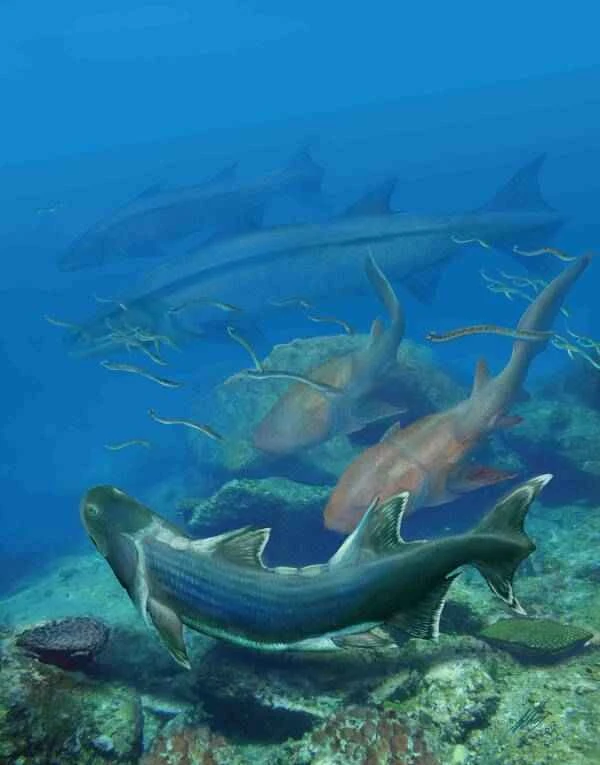
2. Ding's scale-scaled fish (approximately 420 million years ago)
*Ding's armored fish*, a unique creature, dates back to the Silurian period of the Paleozoic Era. Its distinctive feature lies in its armor-like body, formed by dense and strong scales. Its body is covered with characteristic rhomboid scales, a feature somewhat similar to the *Ghost Fish*, but upon closer inspection, significant differences emerge.
The scales on the sides of the Ding's scales decrease proportionally from front to back, but this change is not as obvious as that of the Dream Ghost Fish. On the surface of the scales, nearly parallel ridges can be seen, with no holes between the ridges. This subtle feature again shows its similarity to the Dream Ghost Fish.
However, it should be noted that although *Ding's scale-scaled fish* and *Dreamfish* share some similarities in appearance, they also have many differences. These two are the only known species of Silurian bony fish with complete fossil specimens to date, providing important data for the study of Silurian ecology and biodiversity.
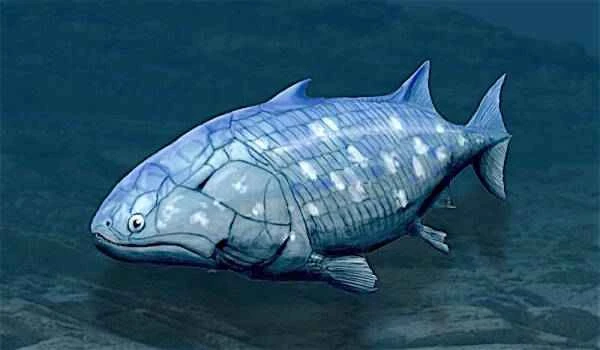
3. The Dreamy Ghost Fish (approximately 420 million years ago)
The Dream Ghost Fish, a unique creature that existed in the ancient Silurian period, possesses a magical quality that seems to imbue it with a "dreamlike" charm. This charm lies in the fact that it retains many primitive fish characteristics found in early jawed animals, making it an organism of great research value.
For example, the internal skull structure of the ghostfish shows a significant similarity to that of lobe-finned fish, especially spotted fish. Furthermore, the ridge-like patterns on its membranous bones are more reminiscent of those of ray-finned fish. In addition, its dorsal fin and pectoral girdle exhibit the same spiny features as placoderms, acanthodians, and cartilaginous fish.
Looking back to 2008, a team led by Chinese scientist Zhu Min successfully obtained a new fossil specimen of the extinct *Ghost Fish*. This specimen is the most complete jawed vertebrate fossil ever found in the world, and also a precious record of bony fish, playing an important role in the study and understanding of paleontology.
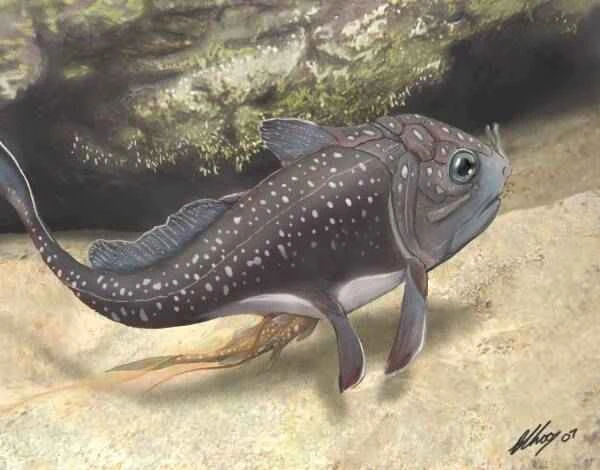
4. Attenborough fish (approximately 380 million years ago)
Attenborough's fish was a creature that lived in ancient Western Australia during the Late Devonian period. The earliest specimen of Attenborough's fish was discovered in Western Australia in 2005 and remains the only known specimen. This remarkable specimen contained an unhatched embryo and displayed a distinct placental structure, making it the oldest known viviparous vertebrate.
This Attenborough fish, measuring approximately 25 centimeters in length, provides a complete fossil record of a "mother" giving birth. In this scene, the umbilical cord is still attached to the newborn offspring. Interestingly, this fish was born tail-first, a method that may share similarities with some species in the ocean today, such as sharks and stingrays.
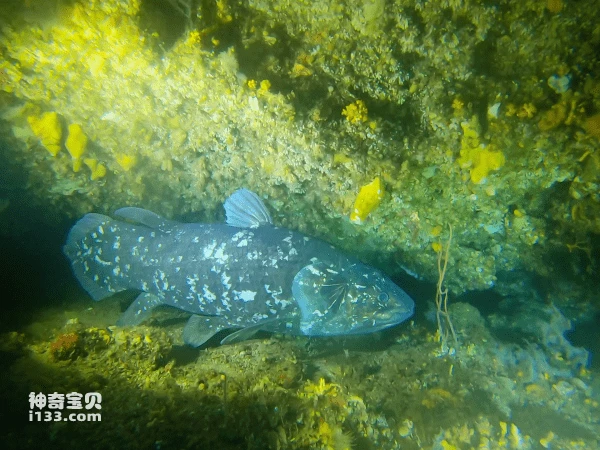
5. Coelacanth (approximately 377 million years ago)
Coelacanths primarily inhabited the ancient Devonian period and, like other fish of their kind, had relatively underdeveloped skeletons. They were among the earliest fish to live in freshwater environments, but transitioned to a marine lifestyle at an earlier time. Coelacanths were large, typically reaching 1.5 meters in length. They had relatively small heads and limb-like fins, which allowed them to crawl along the seabed and feed on other fish.
The most important discovery of the coelacanth to date occurred in 1938, when it was hauled up in the waters near East London, South Africa. The renowned South African ichthyologist, Smith, rushed to the scene upon learning of its presence, but by the time he arrived, the coelacanth had already been eaten by local fishermen, and he missed the opportunity to study it. Despite numerous subsequent searches, the coelacanth has not been found again.
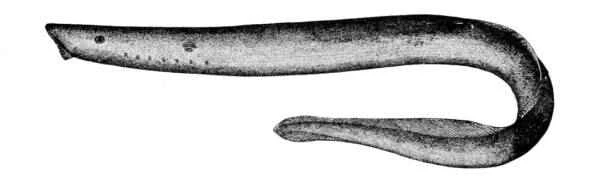
6. Hagfish (approximately 360 million years ago)
The lamprey is a peculiar fish that lived during the Devonian period, belonging to the class Lampreys, and is considered one of the most primitive vertebrates. Its most distinctive feature is its cylindrical mouth, lacking upper and lower jaws, and containing sharp teeth. The lamprey is a strange creature that feeds on the carcasses of other animals by gnawing, and can even remain inside them for up to three days.
Currently, more than 30 species of hagfish have been identified globally, all belonging to the order Hagfish. Although hagfish fossils from 360 million years ago are almost identical to modern hagfish, some questions remain. Whether hagfish and hagfish share a common ancestor and whether they diverged during their evolutionary journey hundreds of millions of years ago remains inconclusive.
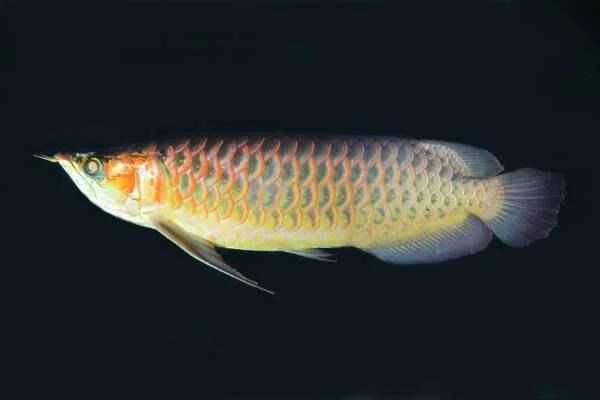
7. Arowana (approximately 200 million years ago)
The arowana is an ancient fish that remains widely known and has become the brand ambassador for one of the most famous modern brands – "Golden Dragon Fish Oil". The existence of arowanas can be traced back to the distant Carboniferous period. Around 140 million years ago, arowanas began migrating to Asia and the Indian subcontinent, and with the evolution of the Earth's crust, they gradually spread to various parts of the globe.
Today, the arowana is a large freshwater fish covered in large, round scales. These scales reflect brilliant light in the sunlight, and its fins display a variety of colors. Different varieties of arowana possess unique and beautiful body colors. For example, the golden arowana, red arowana, green arowana, and spotted pearl arowana each display their own captivating hues.
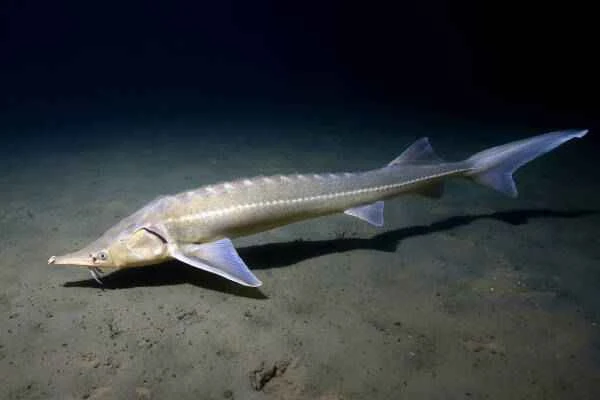
8. Sturgeon (approximately 145 million years ago)
When it comes to sturgeon, the Chinese sturgeon is undoubtedly the most famous species in my country, known as the "King of the Yangtze River Fish." China is also one of the countries with the richest variety, widest distribution, and most abundant resources of sturgeon in the world. In addition to the eight native wild sturgeon species, China has also introduced more than a dozen species, including the Russian sturgeon, the European sturgeon, and the paddlefish, for research and artificial breeding. While sturgeon are renowned, the fact that they live longer than humans is little known. Their existence can be traced back to the Jurassic period of the dinosaur era, making them one of the oldest living vertebrates.
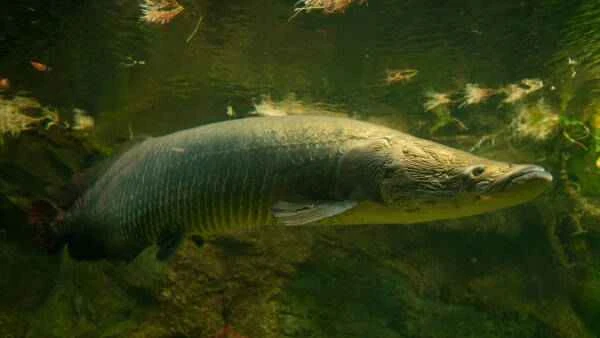
9. Arapaima (approximately 100 million years ago)
The arapaima is an ancient freshwater fish, believed by scientists to have first appeared 100 million years ago. It is primarily distributed in the floodplains of the Amazon River basin, but its exact age of distribution, especially in the lower part of the basin, remains unknown. The earliest record of the arapaima comes from the Essequibo Basin in Guyana, and fossil evidence suggests they once existed in the Magdalena River basin near Rio de Janeiro, Colombia. In addition to its native range, the arapaima has been introduced into rivers and fisheries in Asia and is kept in captivity for aquariums. Its flesh can be dried or salted and has become a popular food item.
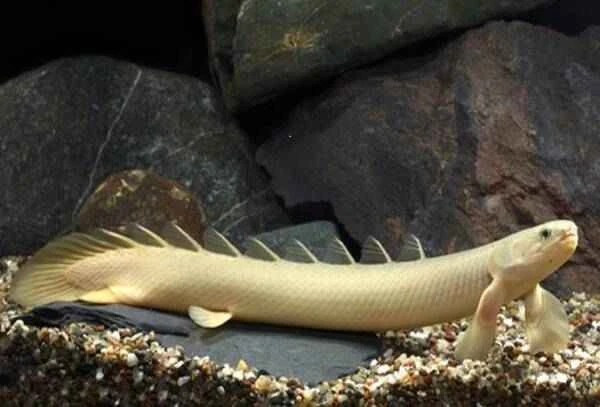
10. Senegalese Polyfin (approximately 66 million years ago)
The Senegalese polyfin is an ancient fish native to Africa, dating back to the Cretaceous period, and still exists today. This fish possesses an incredible reproductive capacity, earning it the nickname "the invincible fish." The Senegalese polyfin has exceptional survivability; its body is covered in very dense scales, allowing it to retain water far better than other fish. Therefore, it does not easily die even when out of water for extended periods. Furthermore, the Senegalese polyfin has up to eight dorsal fins, earning it the nickname "nine-sectioned dragon."
This list of the world's ten most mysterious and ancient fish is based primarily on fish from the Ordovician, Silurian, Devonian, Paleocarbonaceous, Jurassic, and Cretaceous periods, as well as some extant ancient fish species. It also references data from the China Association for Science and Technology, Global Times, and other sources. This list is for reference only; please feel free to comment and discuss any questions at the end.