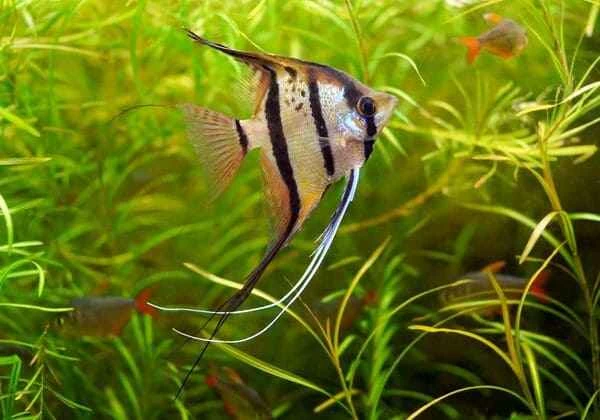
Angelfish are characterized by their tall, pointed fins and distinctive markings on their scales. This species is a popular choice for freshwater aquariums. Angelfish come in various patterns, including marbled, striped, spotted, and even all-white varieties, and there are many different types to choose from.
What are angelfish?
Angelfish are a type of cichlid found in the Amazon River system and several South American countries. Their distinctive appearance comes from their long fins, which allow them to move gracefully through the water as they swim, and varieties are typically identified by different types of stripes or markings.
Through years of artificial breeding and crossbreeding, angelfish have acquired many new strains. Based on the length of their tail fins, they can be divided into three main categories: short-tailed, medium-long-tailed, and long-tailed. Furthermore, based on variations in body markings and coloration, they have developed into a wide variety of variants. Common varieties seen in the domestic market include white angelfish, black angelfish, gray angelfish, marble angelfish, half-black angelfish, clown angelfish, tricolor angelfish, golden-headed angelfish, glass angelfish, diamond angelfish, panda angelfish, and red-eyed angelfish, among others. However, the Egyptian angelfish is not very popular in the domestic market, and its popularity is relatively low.
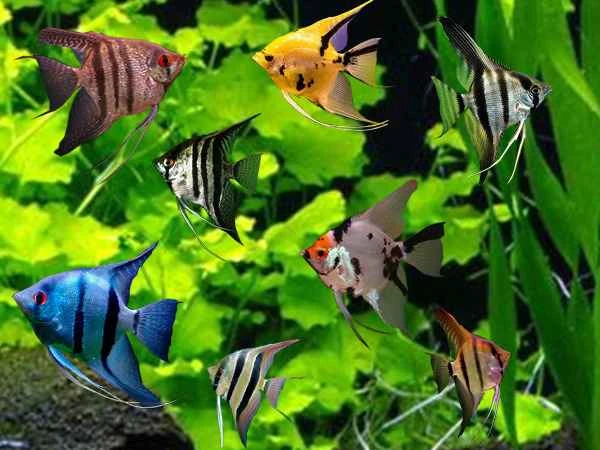
Domesticated freshwater angelfish are the result of years of selective breeding and have a variety of attributes, such as background body color, stripes, spots, marble color (orange and black), and even gill cover pigmentation.
1. Silver Angelfish
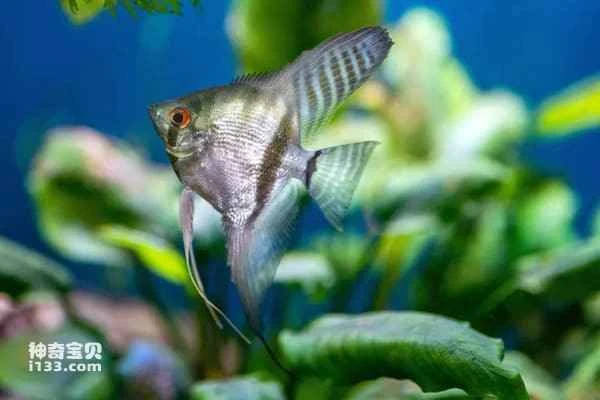
Silver angelfish have long been a mainstay of the freshwater angelfish trade. Their color variations are most similar to the "wild" type of the species, P. scalare. They are very hardy and are among the easiest angelfish to care for. The three vertical black bands will fade or darken depending on the fish's mood.
Species Overview
Length: Maximum 15.24 cm (maximum 25.4 cm in the wild)
Physical characteristics: Silver body, red eyes; three main dark black bands—one across the eye, and two across the body.
2. Zebra Angelfish
This interesting variation is known as the zebra angelfish. Zebra angelfish have four to six rings, unlike the silver angelfish which only has three. Red eyes in angelfish are a sign of full maturity and health. However, not all varieties develop red eyes.
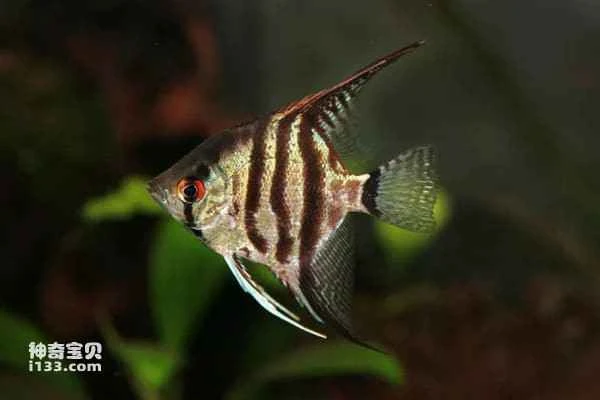
Species Overview
Length: Maximum 15.24 cm
Physical characteristics: Four rings in total; one through the eye, and the other three to five on the body.
3. Koi and Angelfish
The coloration of the Koi Angelfish is similar to that of Japanese Koi, with a white body marked with black and orange/red spots. When young, the area below the eyes may be red, fading with age. The amount of orange seen varies depending on the fish's stress level; the orange will darken under higher stress. This Koi variety is similar to the Golden Marble variety, but without the stripes.
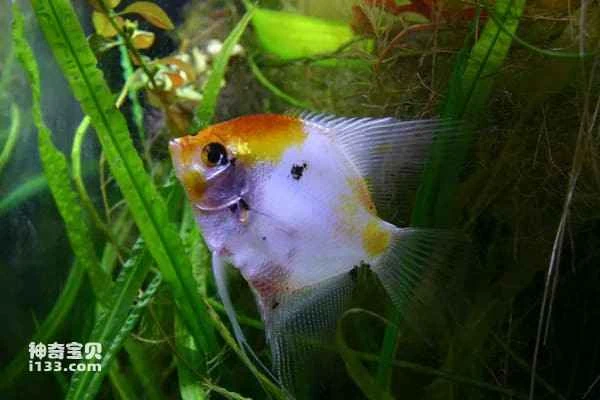
Species Overview
Length: Maximum 15.24 cm
Physical characteristics: White with black spots; varying amounts of orange on the head depending on the selected gene; black marble pattern coverage ranging from 5% to 40%.
4. Black Lace Angelfish
The Black Lace variant is a silver or zebra angelfish with additional black genes. It is black with flowing, lace-like fins. It is considered one of the most attractive of all angelfish. The Lace angelfish was first bred in the 1950s.
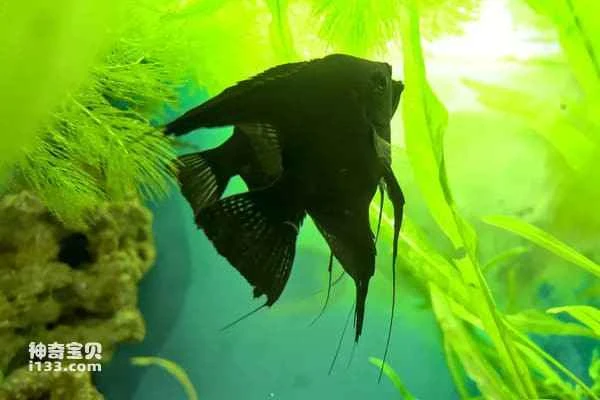
Species Overview
Length: Maximum 15.24 cm
Physical characteristics: A fish with very dark colors and elegant lace patterns on its fins.
5. Golden Angelfish
In the late 1960s, a Milwaukee angelfish breeder was surprised to find strangely colored fry among a spawning of black lace angelfish. The recessive gene in this fish eventually produced the golden cobra, which became the first golden angelfish traded in aquariums. Golden angelfish are now relatively common and are crossbred with other varieties to create specimens with unusual colors.
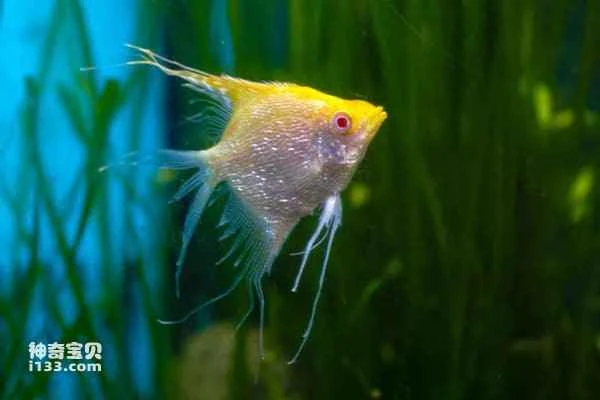
Species Overview
Length: Maximum 15.24 cm
Physical characteristics: The body is light golden, and the crown is dark yellow or orange.
6. Blushing Angelfish
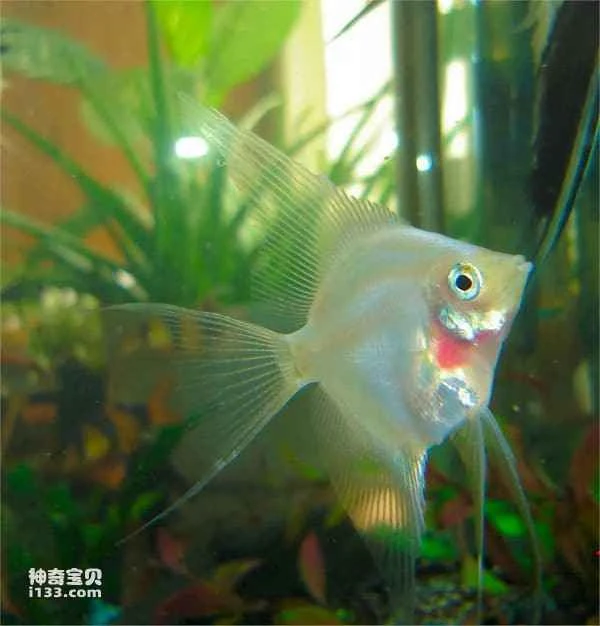
In these angelfish, the blushing gene is fully displayed. The term "blushing" refers to the lack of pigmentation on the gill covers (gill covers), which makes the red color of the gills stand out. Many other color variations possess the blushing gene to some extent, but the variety simply called "Blushing Angel" usually lacks any dark markings or stripes. The only color is beneath the fish's transparent cheeks.
Species Overview
Length: Maximum 15.24 cm
Physical characteristics: Silver or white, with rosy cheeks.
7. Marble Angelfish
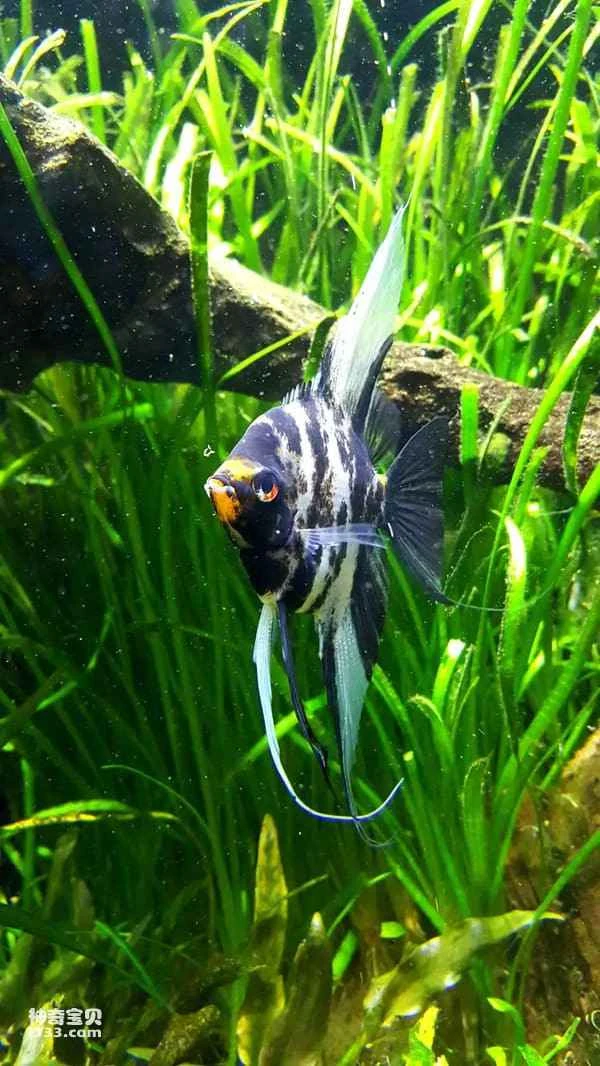
There are many color variations, including the marbled gene—a mottled arrangement of colors that creates a unique pattern on each fish. The classic marbled angelfish displays a distinctive marbled pattern, complemented by stripes on its fins. This specimen has a touch of gold added, making it particularly attractive.
Species Overview
Length: Maximum 15.24 cm
Physical characteristics: Unique black, white, and gold marble-like texture.
8. Golden Marble Angelfish
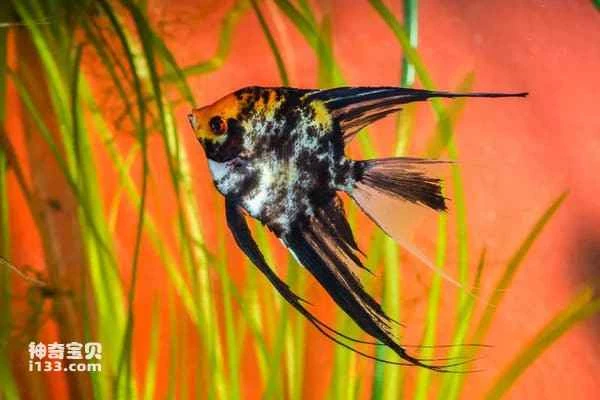
Marble angelfish exhibit a wide range of marble patterns in their coloration—no two fish will be exactly alike. Golden marble angelfish are generally considered a subtype of koi angelfish.
Species Overview
Length: Maximum 15.24 cm
Physical features: gold patches and unique marble pattern
9. Half-black angelfish
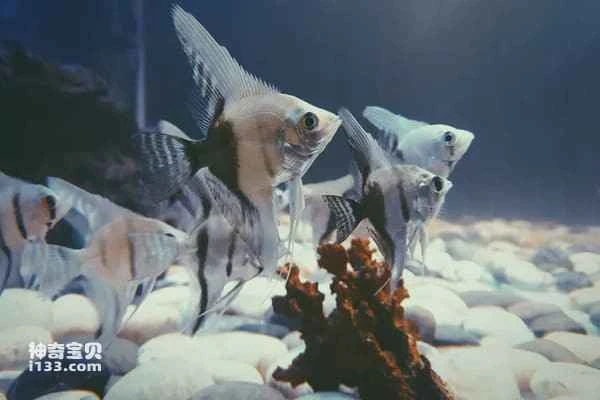
This fish, known as the half-black angelfish, has existed for over half a century. Its body and tail are black, not just marked by a black stripe. Sometimes other color features are also seen, such as marble patterns or a reddish tinge. Breeding the half-black angelfish is challenging.
Species Overview
Length: Maximum 15.24 cm
Physical characteristics: Silver, darker at the back
10. Altu Angelfish
Angelfish, more simply called angelfish, are not commonly found in the aquarium trade. They are larger, deeper, and flatter than the common species *P. scalare* and all hybrids. Altome angelfish are more sensitive to changes in water conditions and require larger, deeper tanks.
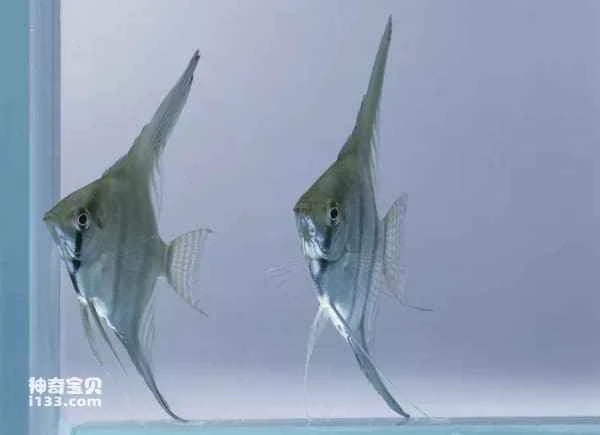
Species Overview
Length: Maximum 17.78 cm, maximum 22.86 cm
Physical characteristics: Silver in color with brown or black longitudinal stripes; when stretched vertically, its height is greater than its length.
Whatever type of angelfish you choose to add to your aquarium, make sure they are in a tank large enough to accommodate their full size, as well as any other fish you may add. They prefer warm, soft water, so make sure the other creatures in the aquarium are also suitable for them.