Crickets are insects belonging to the order Orthoptera, suborder Ensifera, and family Gryllidae. They are a group of insects widely distributed throughout the world. Crickets are generally small in size and are known for their unique "singing" ability, a behavior in which male crickets attract females by rubbing their forewings together.
Basic features
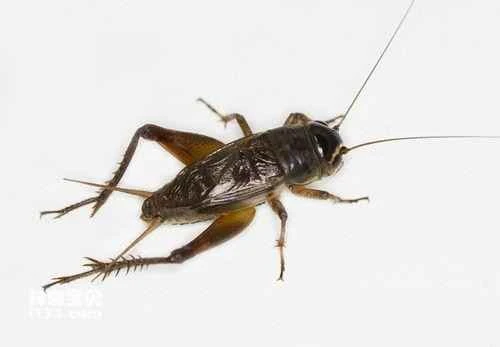
Appearance : Crickets have relatively long antennae that are clearly segmented. Compared to their close relatives, grasshoppers, crickets generally have longer antennae, sometimes even exceeding the length of their bodies. For example, the spotted-winged cricket (the common house cricket).
Body structure : The cricket's body can be divided into three parts: head, thorax, and abdomen. The thorax has three pairs of legs and two pairs of wings. The forewings are well-developed and are often used to make chirping sounds, while the hindwings are flat and used for flight.
Sound production : Male crickets produce sound by rubbing two special parts of their forewings (the wing and the chirping area), a behavior known as "chirping".
Lifestyle
Diet : Crickets are omnivorous, and their diet includes plants, fruits, seeds, insects, and even other dead insects.
Nocturnal : Crickets are active at night and usually hide in dark places during the day, such as under rocks, in wood, and at the roots of plants.
Environmental adaptation : They can survive in a variety of environments, including grasslands, trees, caves, and even high mountains.
Chirping : Different species of crickets have their own unique chirping methods and purposes, including attracting mates, asserting territory, or warning other crickets.
Reproduction
Mating : Chirping is the primary way male crickets attract females. After mating, the female cricket lays her eggs in soft soil.
Development : Cricket larvae look similar to adults but are smaller and lack fully developed wings. They slowly grow into adults through multiple molts.
Current situation and protection
Crickets are generally not considered an endangered species, as they are numerous and widely distributed. However, under certain circumstances, the overuse of pesticides and habitat destruction can lead to a decline in endemic cricket populations.
Relationship with humans
Cultural significance : In many cultures, crickets are seen as a symbol of good luck and often appear in literature and art.
Edible and medicinal uses : In some cultures, crickets are used as food and traditional medicine.
Pets : Historically, especially in China, keeping crickets as pets or for cricket fighting was a form of entertainment.
Biological research and application
In the field of biology, crickets are also used as important model organisms in behavioral and ecological studies, particularly in the study of acoustic communication. Therefore, understanding these small insects and their interactions with the natural environment not only enriches human knowledge of the natural world but also promotes scientific progress.