Human parasites refer to parasites that use humans as hosts. They are generally divided into two main categories: internal parasites and external parasites, primarily including different classes such as protozoa, nematodes, flatworms, annelids, and arthropods. In parasitology, protozoa are usually called protozoa, while nematodes and flatworms are collectively called helminthes. Important types of internal parasites include protozoa, nematodes, trematodes, and tapeworms.

These parasites typically enter the human body through ingestion. Some parasite larvae, such as cysticercosis, may also be found in the lungs, under the skin, and even in the brain and eyes. The harm caused by parasites to the human body is usually negative; they deprive the body of nutrients, cause inflammation, and lead to various pathological problems such as blood vessel blockage.
1. Hookworm
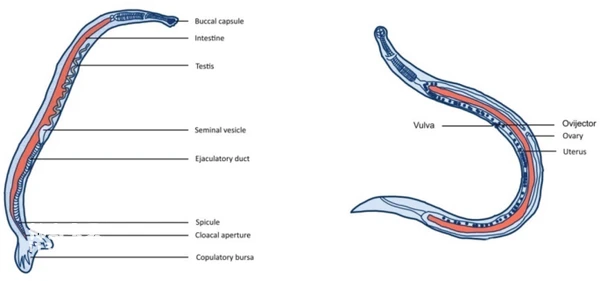 This parasitic nematode's life cycle begins outside the human body, often entering through contaminated water, fruits, and vegetables. Once inside, the hookworm larvae grow in the host's internal organs. They attach to the host's visceral walls, feeding on the host's blood, sometimes causing intestinal parasitic diseases, a condition associated with anemia.
Symptoms: weakness, abdominal pain, nausea, diarrhea, anemia
2. Scabies mites
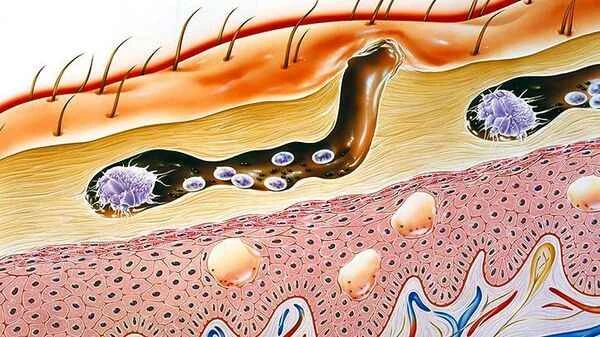 This parasite, commonly known as the human scabies mite, is primarily transmitted through physical contact. Female scabies mites choose human skin as their egg-laying site, which causes skin reactions and inflammation. When a female scabies mite lays eggs under human skin, it triggers a strong reaction in the host, including intense itching and other scabies symptoms.
Symptoms: itching, pain, pus, skin irritation
3. Roundworms
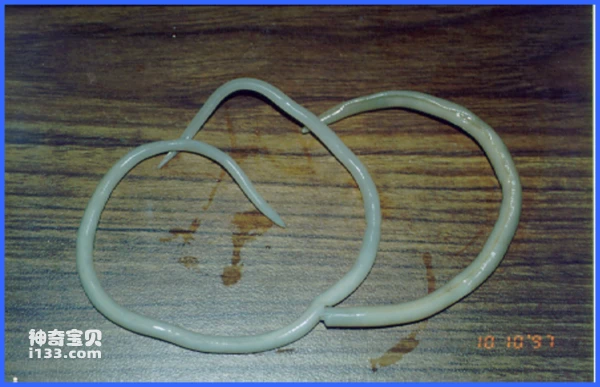
Roundworms are among the most abundant nematodes in the human body, growing to 15 to 35 centimeters in length. They are primarily transmitted through ingestion. Once hatched, roundworm eggs quickly penetrate the walls of internal organs and enter the bloodstream. As the blood flows to the lungs, the roundworms are coughed up and swallowed back into the intestines, re-entering the internal organ region.
Symptoms: fever, fatigue, allergies, rash, vomiting, diarrhea, neurological problems, wheezing and cough.
4. Schistosomiasis
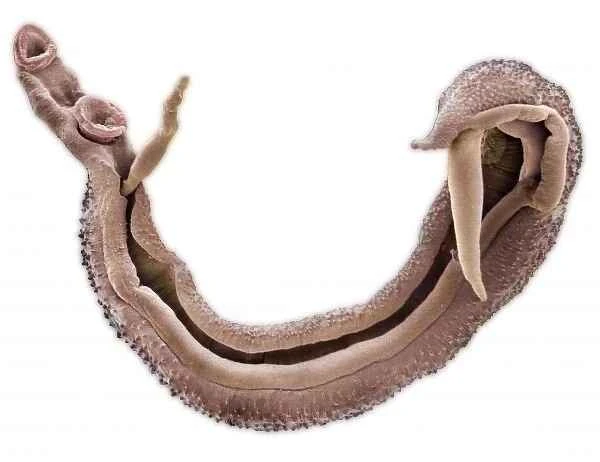
These tiny parasites invade the host's bloodstream, causing schistosomiasis. They typically inhabit water, and when people come into contact with contaminated water, the schistosomes can penetrate the skin. These parasites cause inflammation (swelling), damaging organs, especially the liver. Adult schistosomes can live on a human host for many years, sometimes without showing any symptoms. They leave the host's body through excrement and then spend the rest of their life cycle on a host such as a snail.
Symptoms: fever, pain, cough, diarrhea, swelling, drowsiness
5. Tapeworms
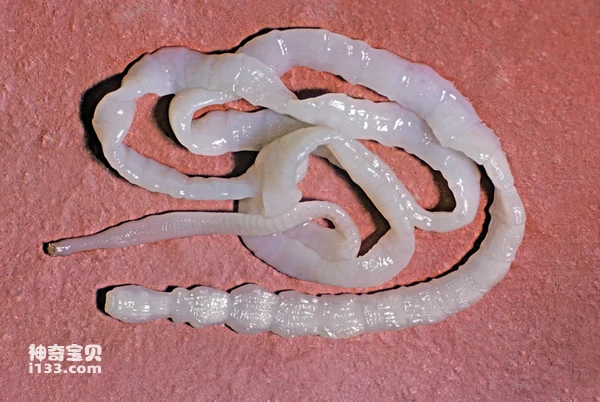
Tapeworms are typically transmitted through food contamination, attaching themselves to the host's internal organs using the "hooks" on their heads. Mature tapeworms can develop in as little as 3 to 4 months, but they can remain parasitic in the human body for up to 25 years. Tapeworm eggs can be excreted in feces, survive in plants, and then be ingested by cattle or pigs, or transmitted to humans.
Symptoms: nausea, vomiting, inflammation of internal organs, diarrhea, weight loss, dizziness, convulsions, malnutrition
6. Pinworms
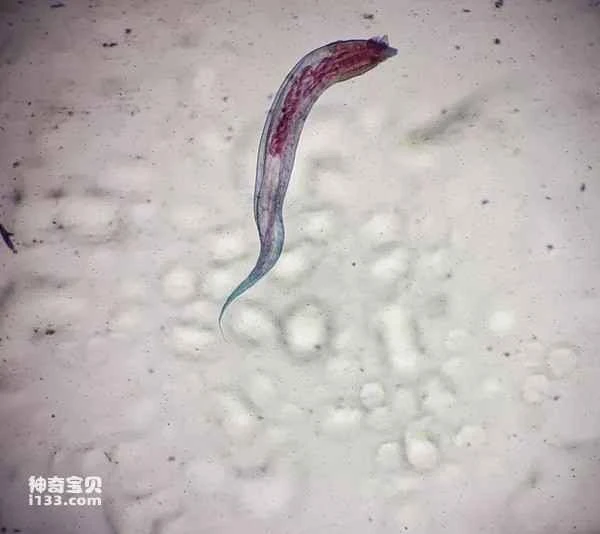
Pinworms are a common human parasite that can cause pinworm infection. Adult female pinworms can range in length from 8 to 13 millimeters. They are named for their long, needle-like tail. They mate through traumatic insemination, where the male worm pierces the female with its penis, causing her death. Pinworms typically choose to settle in the internal organs of their host. Unlike other parasites, they do not enter the bloodstream and cannot survive in other parts of the body. Pinworms lay their eggs in the external environment, usually around the anus, causing itching. The larvae can be transmitted through the hands of someone scratching the area.
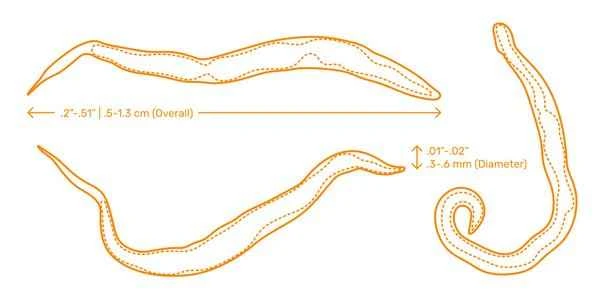
Symptoms: Inflammation and itching
7. *Wu Cephalotaxus banois*
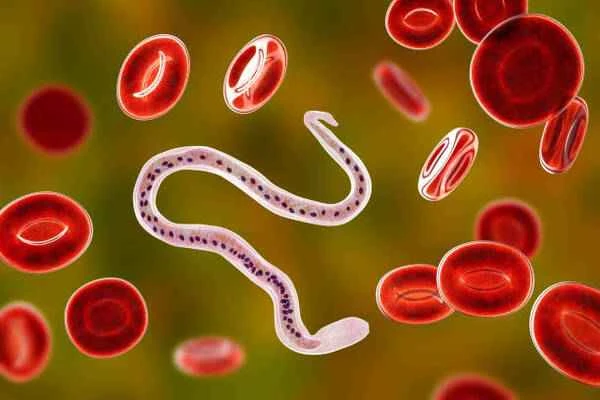 Mosquitoes carry this parasite and release it into the human bloodstream through bites. The larvae of *Wuceta banois* invade lymph nodes, particularly those in the legs and genitals, and take up to a year to mature into adults. They can cause tropical diseases and sometimes lead to elephantiasis.
Symptoms: fever, chills, skin infection, swollen lymph nodes, thickened skin, swelling
8. Toxoplasma gondii
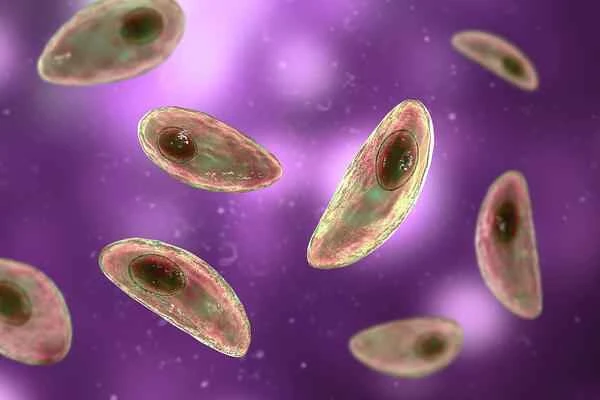
This common crescent-shaped parasite can potentially invade the human central nervous system. Humans can become infected by consuming undercooked meat or through contact with infected pets. While most people have been infected with this parasite and show antibodies, very few experience symptoms. Individuals with weakened immune systems are more susceptible to Toxoplasma gondii infection, and if a pregnant woman is infected, her fetus may suffer serious or even fatal consequences.
Symptoms: Flu symptoms, fever, chills, weakness, headache
9. Giardia lamblia
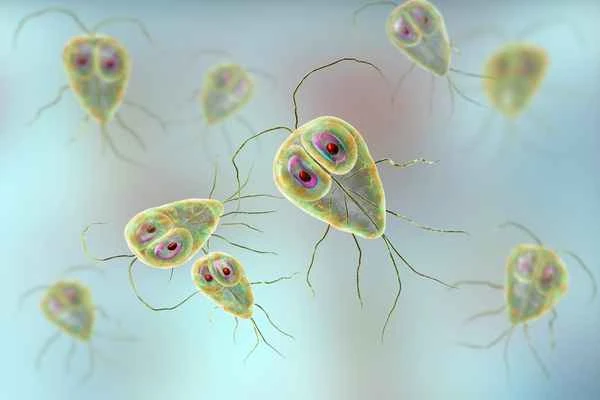
Giardia lamblia is a flagellated protozoan parasite. It parasitizes and multiplies in the human gut, causing giardiasis. Once this parasite infests the human gut, it causes inflammation and other damage, impairing the gut's ability to absorb nutrients, leading to symptoms such as diarrhea. This parasite is commonly found in drinking water and poses a potential hazard.
Symptoms: diarrhea, nausea, abdominal pain, weight loss, and burps that smell like rotten eggs.
10. Dysentery Entamoeba
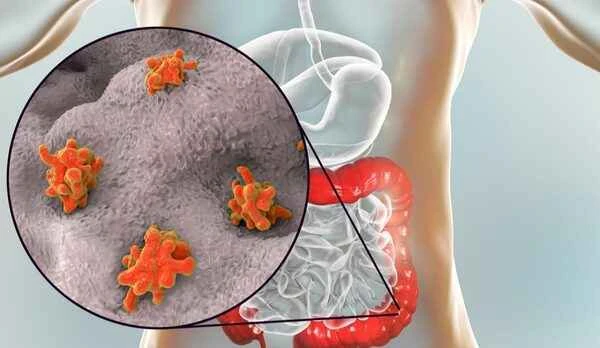
Amoebic dysentery is a disease caused by single-celled organisms and transmitted by amoebas. This parasite primarily infects humans and other primates. Dysentery amoebas can be found in water, damp environments, and soil, potentially contaminating fruits and vegetables. Transmission mainly occurs through feces. Unlike other protozoa such as malaria parasites, amoebic parasites have a higher mortality rate and are more likely to cause serious consequences.
Symptoms: Abdominal pain, weight loss, weakness, diarrhea, liver abscess